Conflicting Strategic Objectives
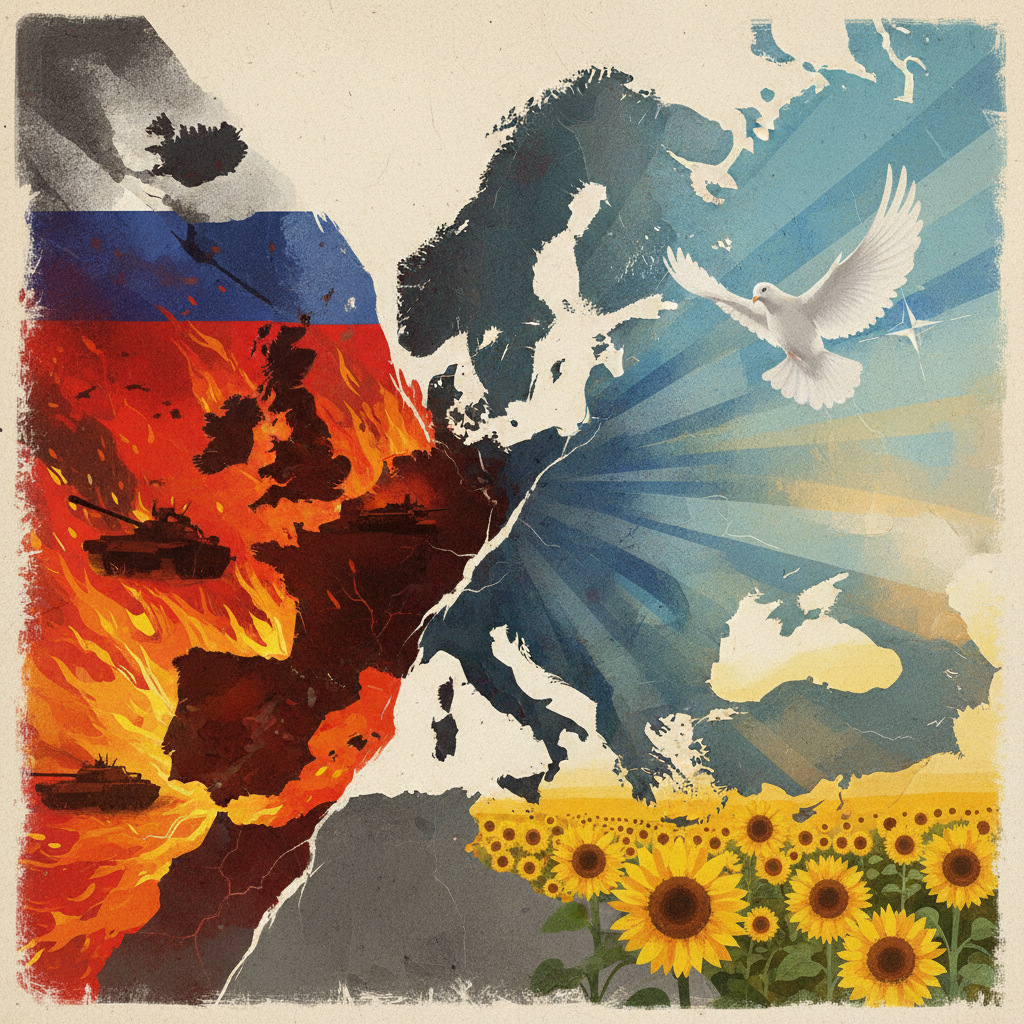
The primary reason for the conflict's continuation lies in the maximalist and fundamentally opposing strategic goals of Russia and Ukraine. Russia aims to demilitarize Ukraine, prevent its integration with Western alliances, and assert its geopolitical influence over its perceived sphere of interest. This often includes maintaining control over occupied territories. Ukraine, conversely, is committed to restoring its full territorial integrity within its 1991 borders, including Crimea, and securing its sovereign independence and future integration with Western institutions. This profound divergence, with neither side willing to compromise on their fundamental security and territorial demands, prevents the groundwork for meaningful peace negotiations.
Military Stalemate and Attrition
Despite significant military commitments from both nations, neither has achieved a decisive battlefield victory capable of compelling the other to capitulate. The front lines, particularly in eastern and southern Ukraine, have largely stabilized into attritional warfare, characterized by incremental gains and high costs, reminiscent of aspects of World War I. This ongoing kinetic activity is highlighted by 13 tracked signals related to Missiles & Strikes, indicating continuous engagement. Ukraine's strategy includes projecting power beyond the front lines, as evidenced by recent GeoGazet tracking signals of "Ukrainian drones hit St Petersburg oil terminal and nearby port," aimed at disrupting Russia's war economy and logistics.
Persistent Pressure and International Dynamics
International economic and military pressure plays a critical role in sustaining the conflict. Western sanctions on Russia aim to degrade its war-making capacity, a dynamic reflected in the GeoGazet signal: "Will economic pressure move the Kremlin towards talks with Kyiv?" Concurrently, substantial military and financial aid from Western partners enables Ukraine to continue its defense and counter-offensives. The conflict's intense international focus is underscored by its Current influence score of 99/100, indicating its profound global impact. GeoGazet monitoring records 90 tracked signals related to Russia and 84 to Ukraine, demonstrating the constant, high-volume engagement from global intelligence.
The operational reality also illustrates a transactional nature to limited tactical interactions. A GeoGazet signal noting "Russia proposes Ukraine halt shelling in Kostiantynivka to handover bodies of servicemen" suggests a focus on immediate, localized objectives rather than broader peace initiatives. With a Total tracked events in GeoGazet graph of 100, the conflict generates constant and significant intelligence data, indicative of its complexity and continuous evolution.
What to Watch For Next
Future developments hinge on several key factors: the sustained provision of military and financial aid to Ukraine from its allies, Russia's capacity to reconstitute and equip its forces, and any significant shifts in domestic political will within either belligerent nation or their primary international supporters. Significant breakthroughs on the battlefield or a demonstrated willingness to compromise on core territorial and security demands would be necessary precursors to a potential de-escalation or negotiated settlement.