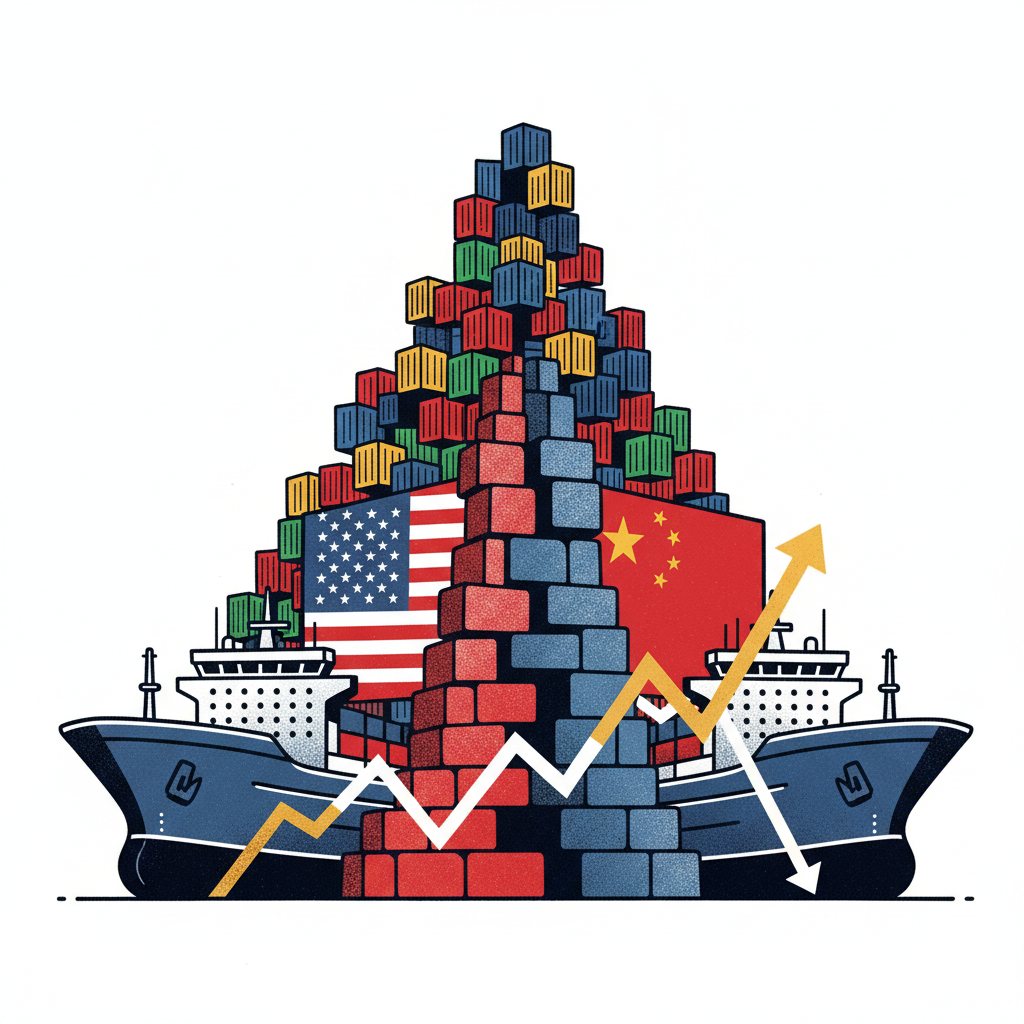
The Persistence of Tariffs and Trade Tensions
The US-China trade war began with the Trump administration imposing tariffs on hundreds of billions of dollars worth of Chinese goods, citing unfair trade practices, intellectual property theft, and forced technology transfers. China retaliated with its own tariffs on American products. The Phase One agreement aimed to address some of these grievances, committing China to increase purchases of US goods and services and to implement certain intellectual property protections. However, the core tariffs remained largely untouched.
Evidence from GeoGazet tracking confirms the ongoing nature of these tensions. "Tariffs & Trade" registers the highest signal volume at 81 tracked signals, far exceeding other related connections, indicating sustained activity and discussion around trade barriers. Recent signals further demonstrate that tariff discussions extend beyond the original US-China scope, with headlines such as "Trump’s Replacement Tariffs Will Have Unintended Consequences for USMCA" and "Trump's Tariffs, Government Revenue, and the Cost of Living: The Case of Food and the Agricultural Tariff Exemptions" highlighting a broader, evolving landscape of tariff policy. The judicial sphere also reflects this persistence, as seen in "US appeals court extends block on ruling against Trump's 10% global tariff."
Evolution Beyond Direct Trade
While the initial phase of the trade war focused heavily on tariffs, the competition has broadened considerably. It now encompasses technology supremacy, particularly in semiconductors and artificial intelligence, supply chain resilience, and national security considerations. Both nations are increasingly pursuing strategies of "decoupling" or "de-risking" their economies, reducing reliance on each other in critical sectors. This transition signifies a fundamental shift from a transactional dispute to a structural rivalry. Historically, economic competition has often been a precursor or integral part of broader geopolitical contests between great powers, and the current US-China dynamic fits this pattern.
Current Geopolitical Status and Influence
The current geopolitical situation suggests that the underlying issues driving the trade war are deeply entrenched and far from resolved. The overall "Current influence score" stands at 21/100, indicating a low level of resolution or high ongoing tension in the broader geopolitical context. With 100 total tracked events in the GeoGazet graph, there is clear evidence of continuous activity related to this complex relationship. The persistent tracking of "China" (38 signals) and "United States" (14 signals) among top connections further underscores their central roles in these unresolved economic and strategic challenges. While the term "trade war" might be used less frequently in daily discourse, the strategic competition and economic friction continue unabated.
What to Watch For Next
Observers should monitor several key areas for indications of future US-China economic relations. These include any potential adjustments to existing tariffs, new export control measures, particularly in advanced technology sectors, and efforts by both countries to diversify their supply chains away from overreliance on the other. The outcomes of ongoing legal challenges related to trade policy and the potential impact of future presidential elections on trade strategy will also be critical factors in shaping this evolving economic landscape.