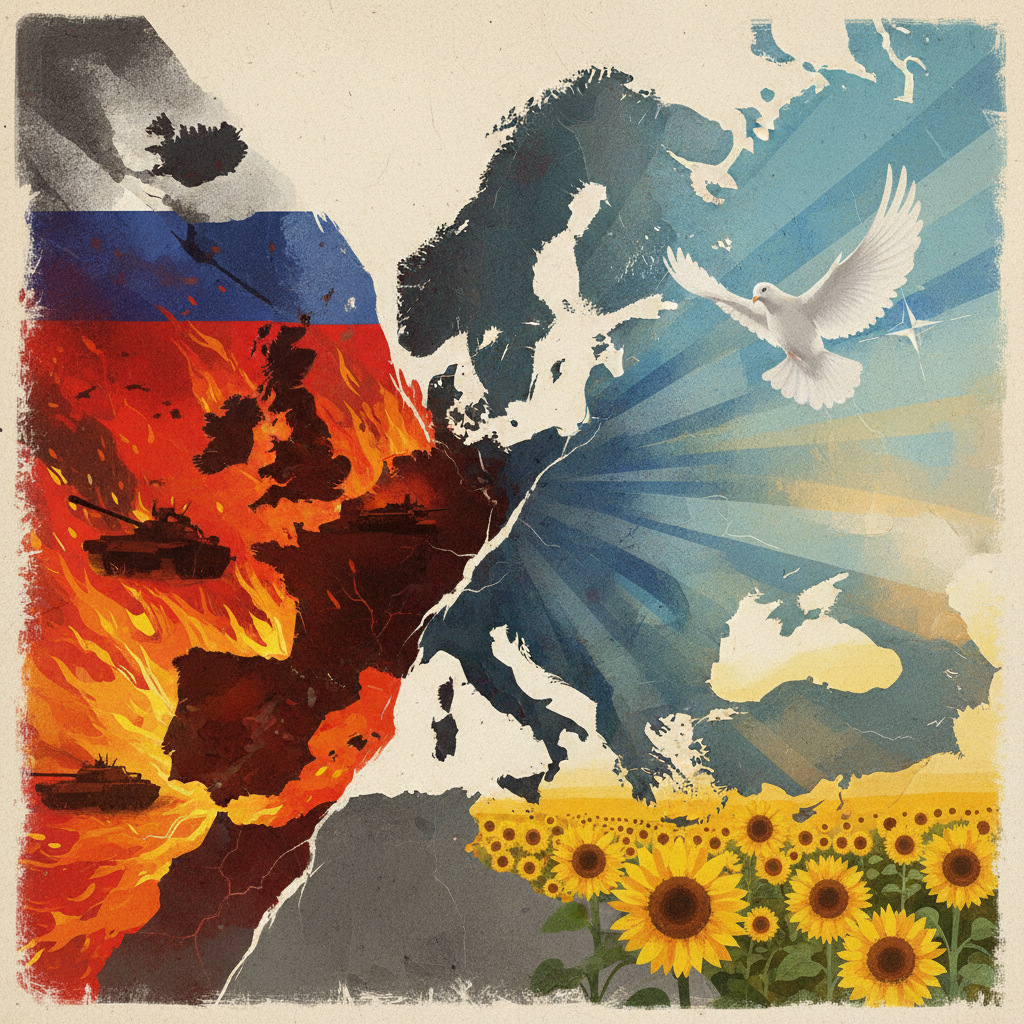
The Evolving Battlefield by 2026
The operational landscape in 2026 will likely reflect a further evolution of attritional warfare, heavily reliant on technological advancements. GeoGazet tracking indicates a high signal volume for Ukraine (88 tracked signals) and Russia (85 tracked signals), with Missiles & Strikes (20 tracked signals) remaining a critical component of military strategy. This suggests a continued focus on long-range precision attacks and air defense. A recent GeoGazet signal, "JUST IN: North Korea Learning Drone Warfare Lessons from Russia-Ukraine Conflict," underscores the global impact of the conflict on military doctrine and the accelerating proliferation of advanced drone capabilities. Both sides are expected to have refined their use of unmanned aerial vehicles for reconnaissance, targeting, and direct engagement, making the airspace a contested domain.
Shifting International Dynamics and Internal Pressures
International support for Ukraine, while enduring, faces persistent challenges. The GeoGazet signal, "Trump surprises Zelensky with public promise on Patriots – but the missiles may not come soon enough," highlights the political complexities and potential delays in critical military aid. Such dynamics suggest that Ukraine's ability to sustain large-scale offensives in 2026 will remain heavily contingent on the consistency and timeliness of Western military and financial assistance, particularly concerning advanced air defense systems.
Conversely, internal dynamics within Russia suggest some shifts. The GeoGazet observation, "More Russians Oppose Use of Nukes Against Ukraine," indicates a potential tempering of the most extreme rhetoric, possibly reflecting public sentiment or a strategic recalibration. However, this does not translate into a weakening of the Kremlin's resolve regarding the war's objectives, which remain deeply intertwined with national security perceptions and domestic legitimacy. The total of 100 tracked events in the GeoGazet graph signifies the multifaceted and continuous nature of the geopolitical forces at play.
Historical Parallels and Future Outlook
Historically, protracted conflicts often settle into periods of static front lines, interspersed with intermittent localized offensives, reminiscent of the Korean War or parts of the Iran-Iraq War. The Ukraine war, by 2026, may mirror these patterns, with neither side possessing the decisive advantage for a comprehensive victory, yet both unwilling to concede. The economic and human costs will continue to mount, exerting pressure on all parties involved.
What to Watch For Next
Observers should monitor several key indicators: the consistency and types of Western military aid deliveries, especially long-range strike capabilities and air defense systems; the evolution of drone warfare and counter-drone technologies; internal political and economic stability within both Ukraine and Russia; and any shifts in the diplomatic engagement from major global powers. The trajectory of energy markets and global food security will also reflect the conflict's ongoing ripple effects.