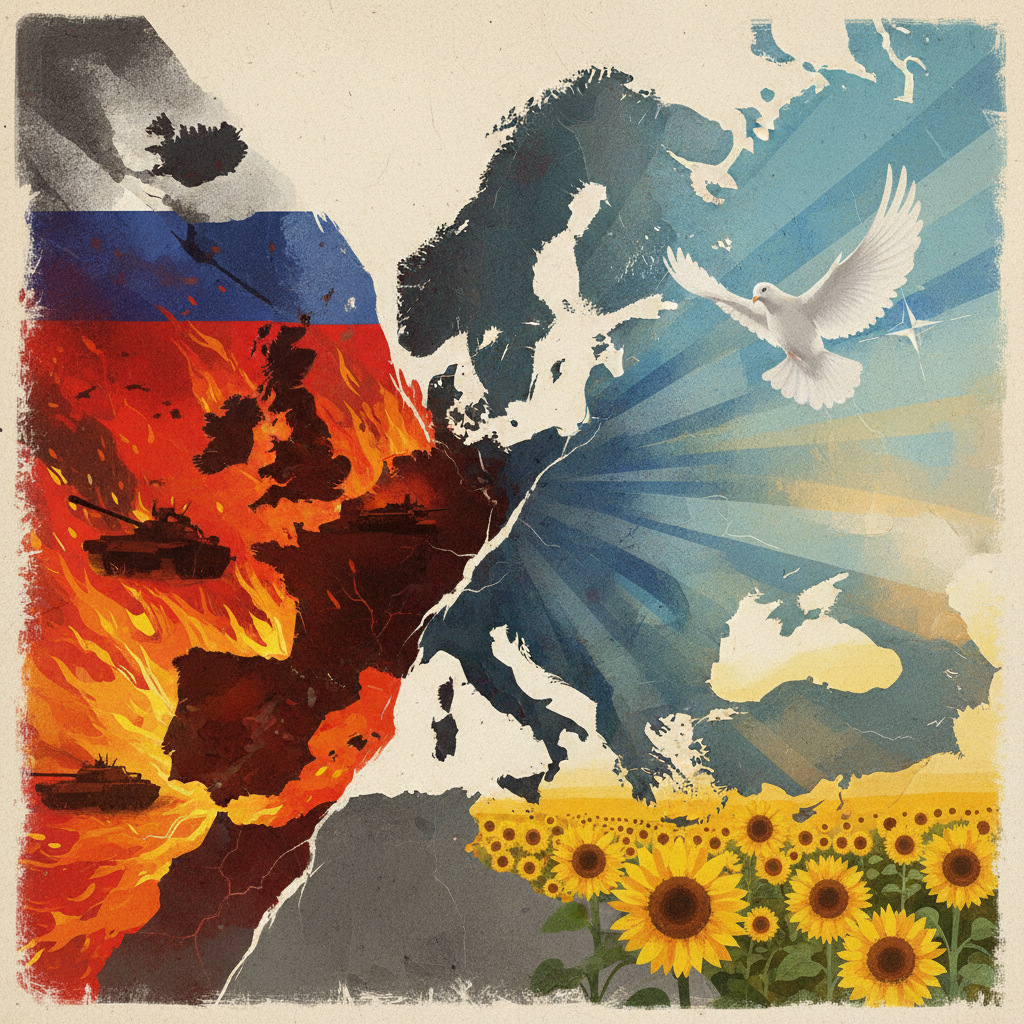
Is the War in Ukraine Over? An Intelligence Assessment
Persistent Conflict and Geopolitical Engagement
Current intelligence signals indicate sustained, high-intensity conflict. GeoGazet tracking reveals a constant exchange of military actions, exemplified by recent signals such as "Ukraine unleashes one of its heaviest drone bombardments, as Russia strikes Ukraine." This underscores a reciprocal pattern of offense and defense, far from a cessation of hostilities. Further evidence of ongoing engagement is seen in the top connections by signal volume, with Russia registering 85 tracked signals and Ukraine 81 tracked signals, demonstrating continuous activity from both principal belligerents. The specific nature of these clashes is highlighted by "Missiles & Strikes," which accounts for 9 tracked signals, confirming the persistent use of kinetic force.
The strategic landscape remains dynamic. GeoGazet tracking recently noted, "Ukrainian drones drive Russia to declare emergency in occupied Crimea," indicating Ukraine's capability to project power into strategically vital areas and disrupt Russian operations. This development, alongside a "Strategic Snapshot: Ukrainian Drone Mastery Changing War’s Tide," suggests evolving battlefield dynamics where technological advancements play a critical role. The total number of tracked events in the GeoGazet graph, standing at 100, reinforces the extensive and complex nature of the ongoing military operations. Geopolitically, the conflict continues to drive international discourse, shape alliances, and influence global economic stability, reaffirming its central role in current world affairs.
Historical Context of Protracted Conflicts
Historical precedents demonstrate that modern conflicts, particularly those involving significant territorial claims, state sovereignty, and external support, rarely conclude abruptly. Instead, they often evolve into protracted struggles characterized by periods of intense fighting interspersed with strategic maneuvering, reminiscent of prolonged regional disputes throughout the 20th century. The current situation in Ukraine reflects this pattern of sustained engagement rather than a definitive end point, highlighting the difficulty in achieving comprehensive military or diplomatic resolutions once such widespread conflict has begun. The absence of a clear victor or a mutually agreed upon peace framework further solidifies the ongoing nature of the war.
What to Watch For Next
Observers should monitor several key indicators to assess the conflict's future trajectory. Significant developments would include any major shifts in territorial control, a marked change in the volume or type of external military aid to Ukraine, or credible progress in high-level diplomatic negotiations involving Russia, Ukraine, and international mediators. Escalatory actions, such as expanded targeting or the introduction of new weapon systems, would also signal a continued, and potentially intensified, conflict. Conversely, a sustained de-escalation of kinetic activity across multiple fronts or a firm commitment to a ceasefire framework could suggest a movement toward a less active phase, although not necessarily a complete end to the war.