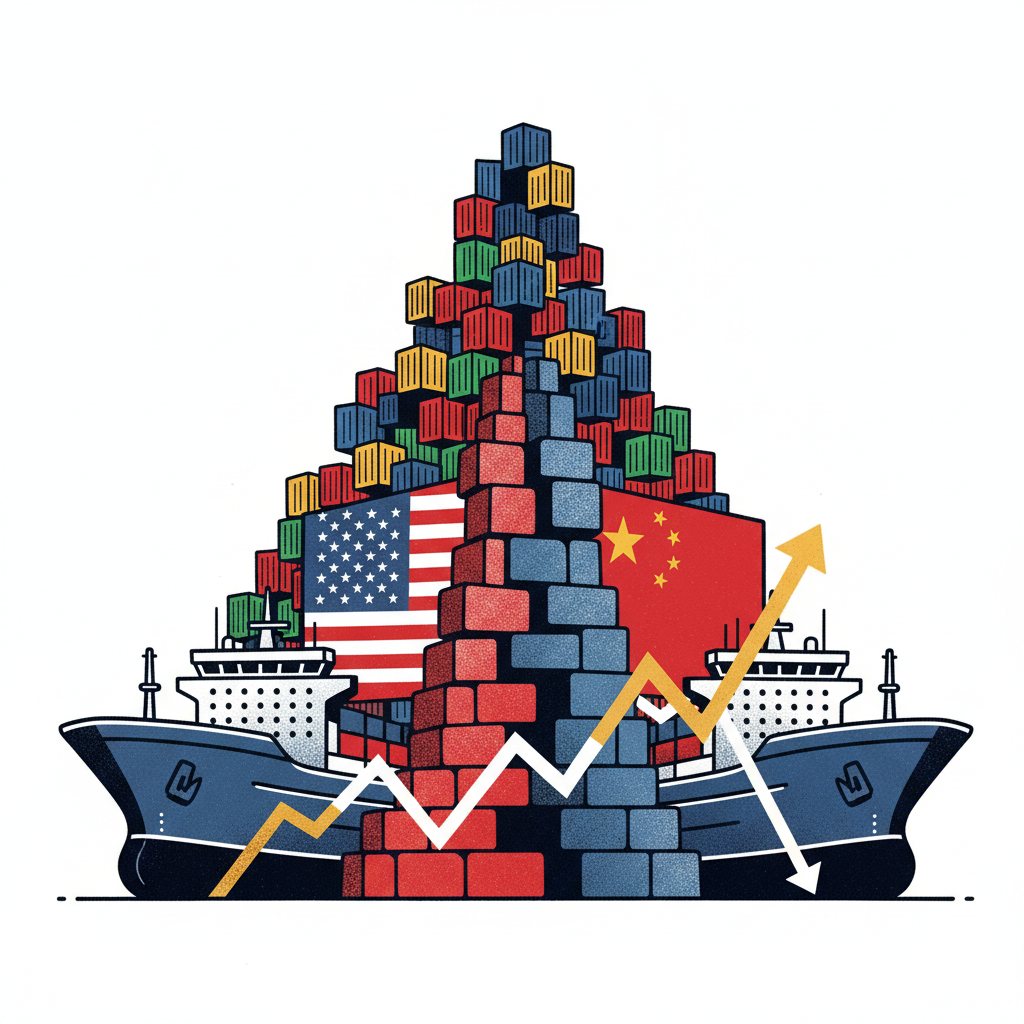
Context of the US-China Trade War
The trade war initiated by the United States under the Trump administration involved the imposition of tariffs on Chinese goods, targeting what Washington deemed unfair trade practices and intellectual property theft. This conflict has since broadened to include technological competition and strategic rivalry across various domains, fundamentally reshaping global supply chains and diplomatic relations. Australia, with its resource-rich economy heavily reliant on exports to China and its strategic alliance with the United States, is positioned at a crucial nexus of these two global powers. GeoGazet tracking indicates the centrality of this dynamic, with "Tariffs & Trade" registering 81 tracked signals, "China" 38 signals, and "United States" 13 signals, reflecting the intense focus on these connections. The total tracked events in the GeoGazet graph stand at 100, underscoring the complexity and global reach of these developments.
Economic Impacts on Australia
Australia experiences both direct and indirect economic consequences from the US-China trade war. Indirectly, the global economic slowdown resulting from trade tensions and supply chain disruptions can dampen demand for Australian exports, particularly commodities. More directly, while Australia is not a direct target of US-China tariffs, the heightened geopolitical friction has often translated into bilateral trade disputes between Australia and China. Beijing has, at various times, imposed tariffs or informal restrictions on Australian goods such as barley, wine, and coal, ostensibly due to political grievances, which analysts often link to Australia's perceived alignment with US strategic interests. This exposes Australia's economic vulnerability, given its current influence score of 18 out of 100 in the global context, suggesting limited capacity to unilaterally reshape the major power dynamics.
Geopolitical and Diplomatic Challenges
The trade war exacerbates Australia's delicate diplomatic balancing act. As a member of AUKUS and the Quad, Australia is a key security partner for the United States, yet its economic prosperity remains deeply intertwined with China. This creates pressure for Australia to avoid taking definitive sides, a strategy that GeoGazet tracking highlights in a recent signal: "Opinion | Many countries are ‘quiet quitting’ the US and China on trade." This suggests a global trend towards diversification and strategic autonomy, a path Australia has increasingly sought to pursue by exploring new markets and strengthening regional trade agreements. Historically, Australia has navigated major power rivalries, but the current economic interconnectedness adds a new layer of complexity compared to the Cold War era's more clearly defined blocs.
What to Watch For Next
Observers should monitor several key indicators. The evolution of US-China trade relations, particularly signals such as the one tracked by GeoGazet, which notes "China’s US envoy calls for 10-fold rise in tariff-free trade under joint board," could indicate potential de-escalation or new frameworks that might ease pressure on countries like Australia. Australia's ongoing efforts to diversify its trade relationships and strengthen economic ties within the Indo-Pacific region will be crucial. Furthermore, the resilience of global supply chains and the overall trajectory of US-China strategic competition will continue to shape Australia's economic and geopolitical landscape.