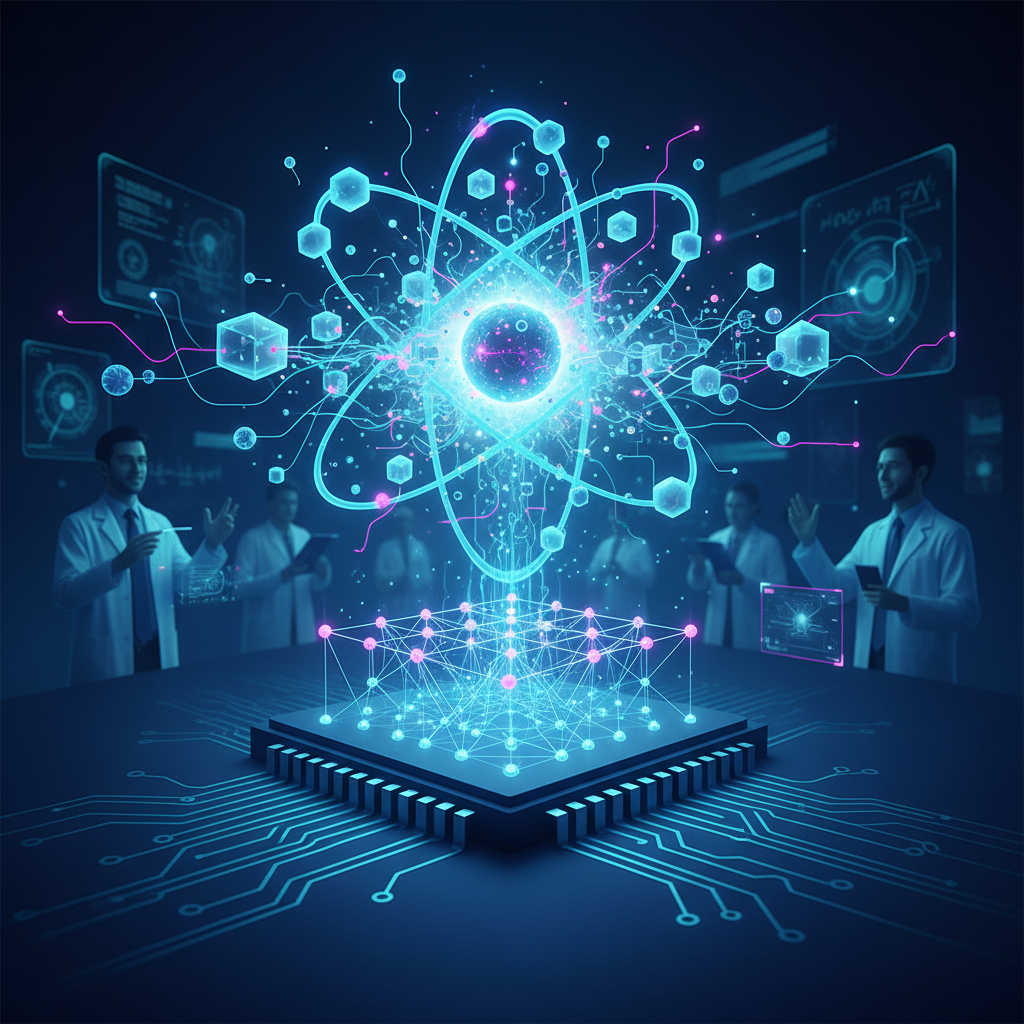
The Quantum Leap for AI
Classical computing relies on bits, which can be either 0 or 1. Quantum computing, however, utilizes qubits, which can exist as 0, 1, or both simultaneously through superposition, and can be entangled with other qubits. This allows quantum computers to explore numerous possibilities concurrently, offering a significant computational advantage for specific types of problems. For AI, this translates into the ability to train more sophisticated machine learning models, optimize neural networks with higher efficiency, and handle immense datasets that overwhelm even the most powerful supercomputers today. Such capabilities are crucial for advancements in areas like drug discovery, financial modeling, and complex logistical challenges.
Live Data and Emerging Evidence
Quantum computing currently holds a GeoGazet influence score of 1/100, signifying its early developmental stage but immense future potential. Analysis of top connections by signal volume reveals significant strategic interest from the United States (12 tracked signals), indicating a national imperative to lead in this domain. Further interest is observed in critical sectors such as Health & Medicine (2 tracked signals) and Nuclear Weapons (2 tracked signals), underscoring its dual-use capabilities and broad applicability.
Recent signals from GeoGazet tracking provide concrete examples of quantum computing's impact and progression. The signal "IBM Just Made A Huge Fusion Energy Breakthrough Thanks To Quantum Computing" illustrates its power in solving complex scientific challenges, a capability directly transferable to enhancing AI-driven scientific discovery. Another signal, "This tiny gold crystal could bring quantum technology out of the deep freeze," points to critical advancements in hardware practicality, potentially reducing the extreme environmental requirements for quantum processors and accelerating their deployment. Furthermore, "Why D-Wave's Two-Qubit Gate Matters for Quantum Error Correction" highlights foundational research in overcoming quantum computing’s most significant hurdle: error correction, which is vital for stable and reliable quantum AI applications. These developments, part of a total of 100 tracked events in the GeoGazet graph, demonstrate a rapidly evolving field with profound implications.
Strategic Implications and Geopolitical Race
The nascent but rapidly advancing field of quantum computing is drawing parallels to the early days of classical computing or the internet, where foundational research led to widespread societal transformation. Nations recognize that mastering quantum AI will confer significant strategic advantages in defense, intelligence, economic competitiveness, and scientific leadership. The geopolitical competition to achieve "quantum supremacy" is intense, with major powers investing heavily in research and development. The mentioned connection to Nuclear Weapons tracking signals exemplifies the profound national security implications, as quantum computing could potentially break current encryption standards or design novel materials for defense applications.
What to Watch For Next
Observers should monitor advancements in quantum error correction, as stable qubits are essential for robust quantum AI applications. Hardware developments, particularly those that reduce operational complexity and cost, will also be critical indicators. Breakthroughs in hybrid quantum-classical algorithms, which leverage the strengths of both computing paradigms, are expected to provide early real-world applications for AI. The geopolitical landscape will continue to shape investment and collaboration, making international policy and national funding initiatives key areas to watch.