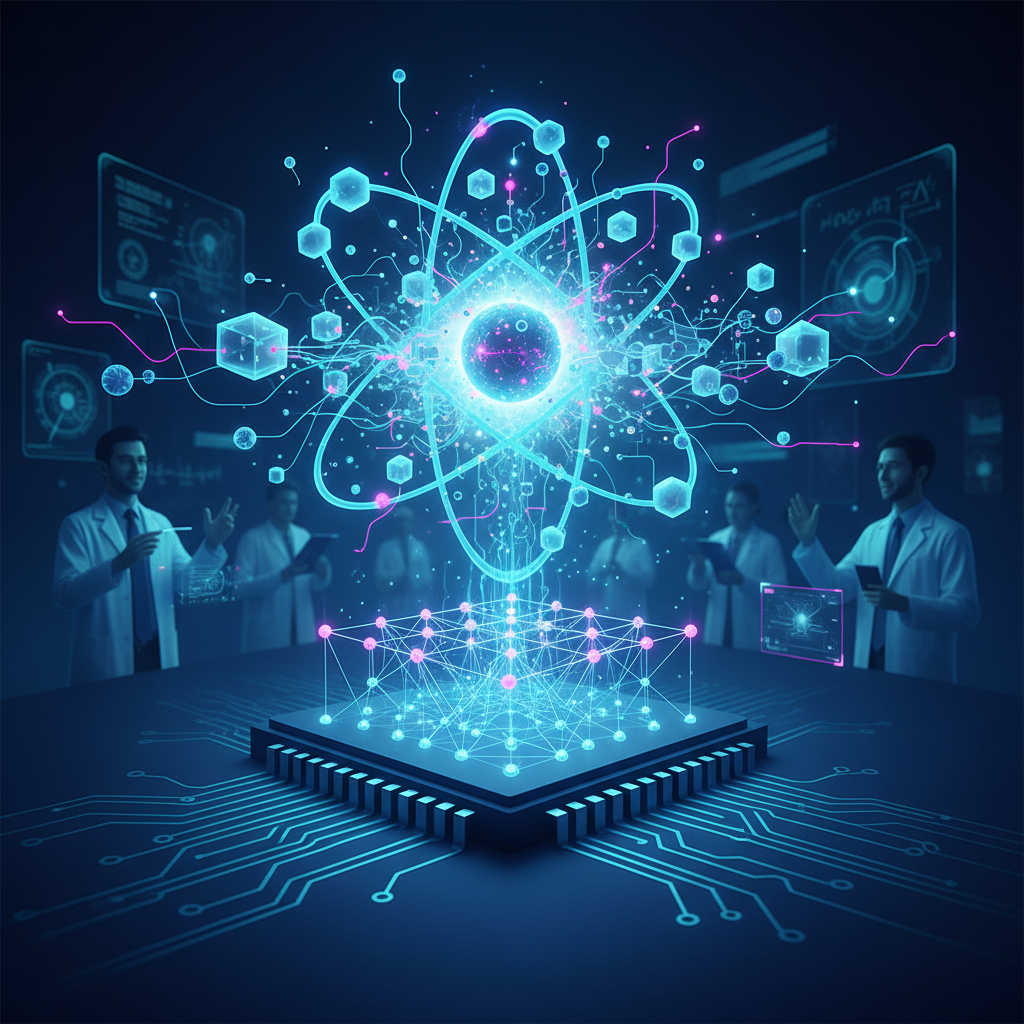
What is Quantum Computing?
Unlike classical computers that use bits representing 0 or 1, quantum computers utilize qubits, which can exist in multiple states simultaneously through superposition. This, combined with entanglement, allows quantum computers to process vast amounts of information in parallel. While classical computing relies on deterministic logic gates, quantum computing harnesses probabilities and interference patterns to arrive at solutions, making it uniquely suited for certain types of calculations, such as complex simulations, optimization problems, and factoring large numbers.
Why Quantum Computing is Geopolitically Important
The strategic implications of quantum computing are profound, driving a global technological arms race reminiscent of the space race or early semiconductor development. Its importance stems from its potential to impact critical sectors. In cryptography, quantum computers could break many current encryption standards, posing significant national security risks and necessitating the development of quantum-resistant algorithms. Economically, breakthroughs could accelerate drug discovery, materials science, and artificial intelligence, offering immense competitive advantages to leading nations. Geopolitical intelligence indicates a "current influence score" of 53/100, reflecting a burgeoning but not yet dominant technology. GeoGazet tracking shows a total of 100 tracked events, highlighting active development.
The Global Landscape and Current Challenges
The development of quantum computing is marked by intense international competition and significant technical hurdles. GeoGazet signal volume indicates the United States as a leading actor with 8 tracked signals, followed closely by China with 4 tracked signals, underscoring the bilateral strategic competition. Interest from the financial sector is also high, with Crypto & Bitcoin registering 4 tracked signals due to quantum computing’s potential impact on blockchain security.
Recent signals from GeoGazet illustrate the dynamic nature of the field. "The Conversation: A New Quantum Computer Sets a High Watermark For Accuracy – Are We on The Verge of a Big Breakthrough?" suggests rapid progress, particularly in reducing error rates, a critical challenge. However, development is not linear, as evidenced by "Researchers cast new doubt on Microsoft’s quantum computing advance," indicating the difficulty and skepticism inherent in pushing the boundaries of this technology. Practical application is also a focus, with "New Discovery Could Unlock Quantum Computers the Size of a Coin," pointing towards potential miniaturization and broader deployment beyond specialized labs.
Future Outlook: What to Watch For Next
The next phase of quantum computing development will likely center on achieving fault-tolerant quantum computers, scaling up qubit counts, and maintaining coherence times. Observers should monitor international collaboration frameworks and national investment strategies, especially from the United States and China. Key indicators will include progress in quantum error correction, advancements in miniaturization, and the emergence of demonstrably superior quantum algorithms for real-world problems. The intersection with existing cybersecurity and financial infrastructures, particularly concerning cryptocurrencies, will also be a critical area to watch for disruptive potential.