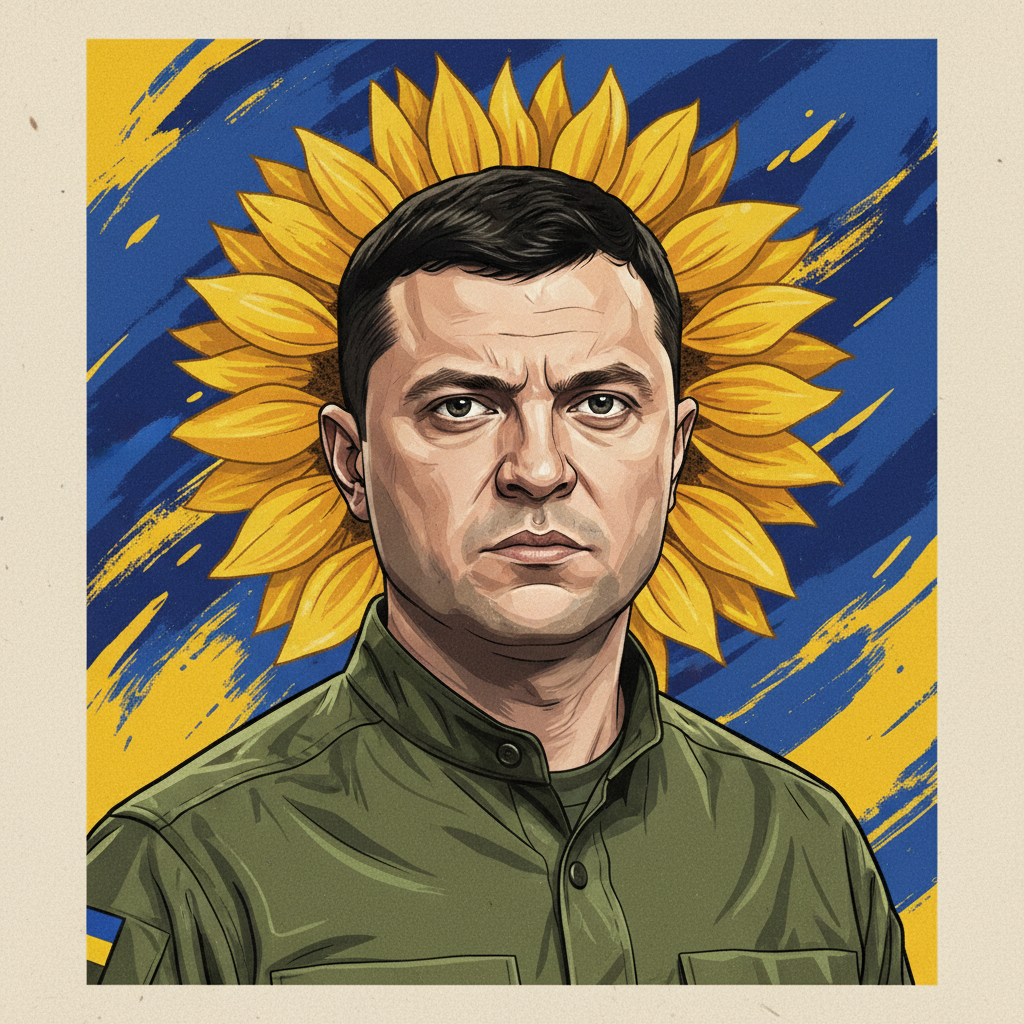
Zelensky's 2022 Apex and International Stature
In 2022, Volodymyr Zelensky emerged as a global icon of resistance following Russia's full-scale invasion of Ukraine. His unwavering resolve and powerful communication rallied unprecedented international support, elevating his status to that of a pivotal wartime leader. During this period, Zelensky successfully forged strong connections with Western allies, particularly members of NATO, securing vital military and financial aid. His leadership was marked by a singular focus on national defense and unity against an external aggressor, largely consolidating domestic opinion behind him.
Navigating Internal Pressures and Political Shifts
The period leading into 2026 presents a distinct contrast, characterized by the protracted conflict and growing internal political dynamics. GeoGazet tracking indicates a highly dynamic political environment, with a total of 100 tracked events underscoring ongoing shifts within Ukraine's governance. Recent signals highlight significant internal power consolidations and administrative reshuffles under Zelensky's direction. For instance, headlines such as "Zelensky Ousts Popular Defense Minister as Ukraine Gains Momentum in the War," "Zelenskyy backs state energy company chief Koretskyi for new Ukraine PM," and "Ukraine defence minister resigns as part of Zelensky's cabinet reshuffle" illustrate a president actively restructuring his administration. These actions, particularly the replacement of key officials amidst wartime, suggest a strategic effort to consolidate power, enhance governmental efficiency, or address perceived internal challenges. His top connections by signal volume reflect these evolving realities: Ukraine generates 80 tracked signals, Russia 40, and NATO 20, indicating a continued primary focus on national governance and defense while maintaining crucial, albeit potentially less intense, external partnerships.
The 2026 Outlook and Geopolitical Reconfiguration
By 2026, Zelensky's role will likely have transitioned further from purely a wartime leader to one grappling with comprehensive reconstruction, domestic political rivalries, and post-conflict societal pressures. His international influence, while still significant for aid and security guarantees, may diminish from its 2022 peak as global attention potentially shifts to other geopolitical hotspots. Historically, wartime leaders often face immense scrutiny and political challenges once the immediate threat subsides; Winston Churchill’s defeat in the 1945 general election, despite his wartime leadership, serves as a relevant comparison. The current influence score of 40/100, when contrasted with his likely higher standing in 2022, foreshadows this potential reduction in perceived authority or domestic political unity. The backing of a state energy company chief for prime minister suggests a strategic pivot towards economic recovery and management of critical infrastructure, signaling a focus on long-term governance concerns even as the conflict persists.
What to Watch For Next
Future developments to monitor include the duration and ultimate outcome of the conflict, which will profoundly shape Zelensky's legacy and political viability. Watch for further cabinet reshuffles, particularly those involving economic or reconstruction portfolios, as indicators of his strategic priorities. The effectiveness of his administration in managing post-war recovery and addressing corruption will be crucial. Observe the dynamics within Ukrainian politics as elections, postponed during martial law, eventually approach, potentially revealing the extent of popular support for his leadership beyond the immediate wartime imperative. The sustained level of international financial and military aid will also be a critical factor in his ability to deliver on promises for Ukraine's future.