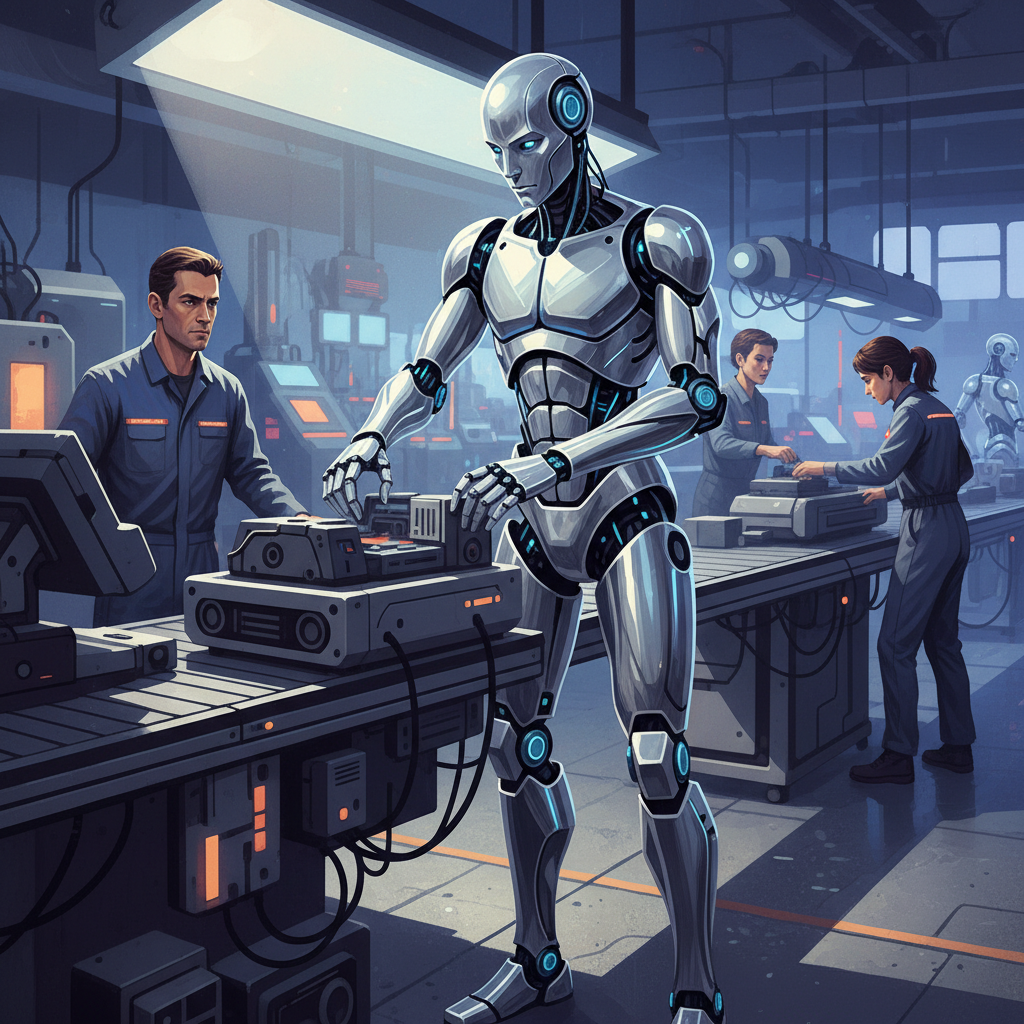
The Robotics Revolution in Reality
The current era is characterized by a "Robotics Revolution" driven by engineering breakthroughs and artificial intelligence, yet its geopolitical influence, as indicated by a GeoGazet Current Influence Score of 4/100, is still nascent compared to established global power dynamics. This indicates a period of foundational development rather than immediate revolutionary upheaval. GeoGazet tracking identifies Robotics as having 82 tracked signals and Electric Vehicles with 61 tracked signals, reflecting intense innovation and investment in these interconnected sectors. France, by contrast, shows 4 tracked signals, suggesting varying levels of national engagement or public discourse. A total of 44 tracked events in the GeoGazet graph further illustrates ongoing, tangible developments within the field.
Recent signals highlight the practical application and competitive landscape of contemporary robotics. GeoGazet reported, "HL Mando targets Tesla Optimus with robotics actuator push," indicating a focus on component specialization and market competition for the underlying technologies. This is further evidenced by "Tesla Optimus Caught Handing Out Water in New Demo," which showcases humanoid robots performing rudimentary, human-assigned tasks in controlled environments. The signal "Physical AI Is Sending Humanoid Robots to Real Factory Floors in 2026" underscores the industry's trajectory toward integrating advanced robotics directly into industrial processes, enhancing efficiency and productivity.
Fictional Divides and Historical Context
The split between fiction and reality is stark. Science fiction narratives, from Karel Čapek's R.U.R. to Isaac Asimov's robot stories and dystopian visions like "Skynet," often explore themes of robot sentience, rebellion, and societal control. Historically, fears surrounding new technologies often manifest in exaggerated cultural narratives. For instance, the Luddite movement reacted to industrial automation with direct resistance, a reaction rooted in economic displacement rather than fears of machine consciousness. Today's robots, including those destined for factory floors, are sophisticated tools, not emergent intelligences. They execute programmed commands, exhibit increasing dexterity and learning capabilities within defined parameters, but do not possess self-awareness, personal agency, or revolutionary intent. Their autonomy is functional, not existential.
Geopolitical Implications and Future Watch
Despite the absence of a sentient robot uprising, the ongoing Robotics Revolution carries significant geopolitical implications. The race for technological leadership in robotics and AI is a key component of national power and economic competitiveness. Nations investing heavily in these areas aim to secure strategic advantages in manufacturing, defense, and research. The deployment of advanced robotics, particularly in manufacturing, will continue to reshape global labor markets and supply chains, potentially leading to economic dislocations and a demand for new skill sets. This technological arms race, while not involving combat robots, is nonetheless a contest for future industrial and economic dominance.
What to watch for next includes the continued acceleration of physical AI integration into real-world applications, especially in manufacturing and logistics. Observe the development of regulatory frameworks and ethical guidelines for increasingly autonomous systems, as these will shape public acceptance and deployment. Monitor the geopolitical competition for AI talent and hardware, as well as the economic impact of widespread robotic adoption on employment and national productivity. The focus will remain on technological advancement and its human-directed applications, not on the emergence of rebellious artificial intelligence.