When Is Jensen Huang BornFebruary 17, 1963
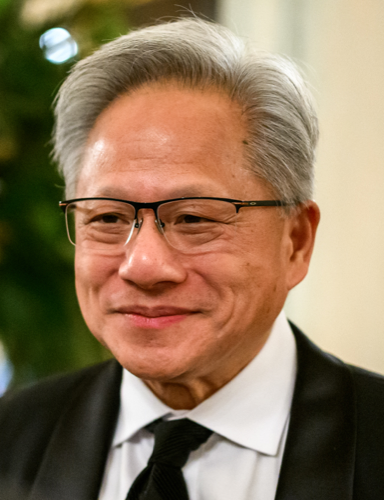
Jensen Huang was born on February 17, 1963, which makes Huang 63 years old, in Taipei, Taiwan.
Sumber: Wikipedia dan Wikidata.
Terakhir diperiksa 21 November 2026.
Baca laporan lengkapTampilkan lebih sedikit
Early Life and Career Foundation
Huang immigrated to the United States at age ten and grew up in Thailand and Kentucky before attending Stanford University, where he earned a bachelor's degree in electrical engineering. After working as a systems engineer at LSI Logic Corporation and later at Advanced Micro Devices, he founded Nvidia in 1993 at age 30 with co founders Chris Malachowsky and Curtis Priem. The company initially focused on graphics processing units for gaming, a market position that eventually transformed Nvidia into a critical infrastructure provider for artificial intelligence and data center computing.
Rise to Strategic Prominence
Over three decades as CEO, Huang grew Nvidia from a startup to one of the world's most valuable semiconductor companies, with his leadership directly tied to the company's dominance in GPU technology essential to machine learning and generative AI systems. His strategic decisions to pivot toward data center and AI applications positioned Nvidia as a central player in the global AI infrastructure race. As of 2026, Huang maintains an influence score of 52 out of 100 in geopolitical circles, reflecting his significance in technology and national security debates.
Recent Scrutiny and Congressional Attention
Huang's prominence has drawn official scrutiny regarding alleged connections to Chinese intelligence. Congressional officials have called Nvidia's CEO to testify following reports that he maintained a relationship with a suspected Chinese spy, with recent tracking data noting that "Congress will investigate Nvidia CEO Jensen Huang faces probe over alleged Chinese spy ties." U.S. intelligence assessments have examined whether Huang's personal relationships posed counterintelligence risks, given Nvidia's critical role in supplying advanced semiconductors and the company's historical export restrictions to China. These developments mark a significant inflection point in how American technology leadership intersects with national security protocols and foreign intelligence operations.
Current Position and Significance
Huang continues leading Nvidia through 2026 amid intensifying geopolitical competition between the United States and China over semiconductor supply chains and AI capabilities. His personal background spanning Taiwan, multiple countries, and the United States, combined with Nvidia's central position in AI infrastructure, has made him a focal point in broader debates over technology security, foreign influence, and the governance of critical emerging technologies. The congressional investigation reflects how individual executives of major technology firms now operate within heightened national security frameworks, particularly when their companies control resources essential to military and intelligence applications.