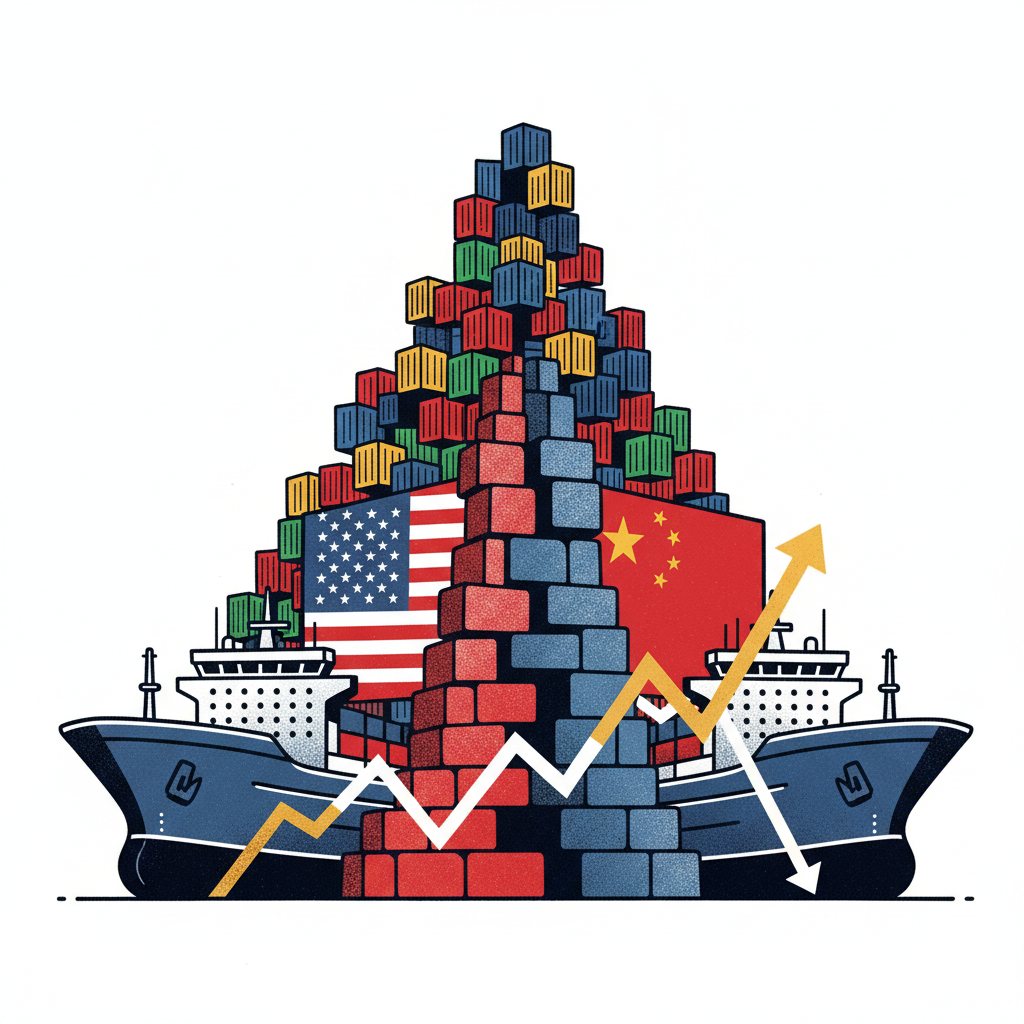
The US-China trade war, initiated in 2018 with the imposition of tariffs by the United States on Chinese goods, marked a significant shift in the post-Cold War global economic order. Ostensibly aimed at addressing trade imbalances, intellectual property theft, and forced technology transfers, the conflict quickly escalated. This trade dispute occurs within a complex geopolitical landscape where the United States and China are engaged in strategic competition across various domains, including technology, military influence, and ideological leadership.
Economic Repercussions and Global Stability
The trade war introduced volatility and uncertainty into global markets. The high volume of signals tracked regarding "Tariffs & Trade (80 tracked signals)" indicates the consistent and significant attention paid to these policies. Both the "China (37 tracked signals)" and "United States (13 tracked signals)" connections by signal volume highlight the centrality of these two nations in global economic discourse. The initial tariffs led to increased costs for consumers and businesses, disruptions in agricultural markets, and shifts in manufacturing locations. Furthermore, the trade war has set a precedent for future economic confrontations. Recent signals from GeoGazet tracking, such as "A new trade war may be brewing. This time, Europe is taking a page from Trump's playbook," demonstrate how other major economic blocs are now considering similar protectionist measures, indicating a potential fragmentation of the global trading system. The signal ""They Forgot to Protect Our Industries With TARIFFS!” — Does a Trump Trade War 2.0 Loom?" further underscores the ongoing debate and potential for renewed tariff-based conflicts. The widespread economic impact of such disputes is evident, with even unrelated geopolitical events, like "For cash-strapped farmers, deal to end Iran fighting comes too late," highlighting the vulnerability of specific sectors like agriculture to trade disruptions and broader geopolitical shifts.
Supply Chain Restructuring and Strategic Competition
Beyond immediate economic impacts, the trade war's importance lies in its acceleration of global supply chain restructuring. Companies have begun diversifying production away from China to mitigate risks associated with tariffs and geopolitical tensions. This reorientation seeks to enhance resilience and reduce dependency on a single manufacturing hub, particularly in critical sectors like semiconductors and rare earth minerals. This strategic shift underscores a broader effort by the United States and its allies to limit China's influence in key technological areas and to protect national security interests. While the "Current influence score" of the trade war stands at "19/100," suggesting its direct impact may have somewhat plateaued since its peak, its foundational changes continue to ripple through the 100 "Total tracked events in GeoGazet graph." Historically, periods of intense economic competition have often preceded or accompanied shifts in global power dynamics, drawing parallels to industrial revolutions and the protectionist policies adopted by rising powers in the 19th and early 20th centuries. The current scenario reflects a struggle for technological supremacy and the definition of future global economic standards.
What to Watch For Next
Observers should monitor several key indicators: the persistence of existing tariffs and the potential for new ones, especially following national elections; the pace and nature of supply chain diversification initiatives; and the evolution of technological export controls. The actions of other major economies, particularly Europe, in adopting similar protectionist stances will be critical. Furthermore, the interplay between trade policy and broader geopolitical events, such as regional conflicts or strategic alliances, will continue to shape the future of US-China economic relations and the global trading system.