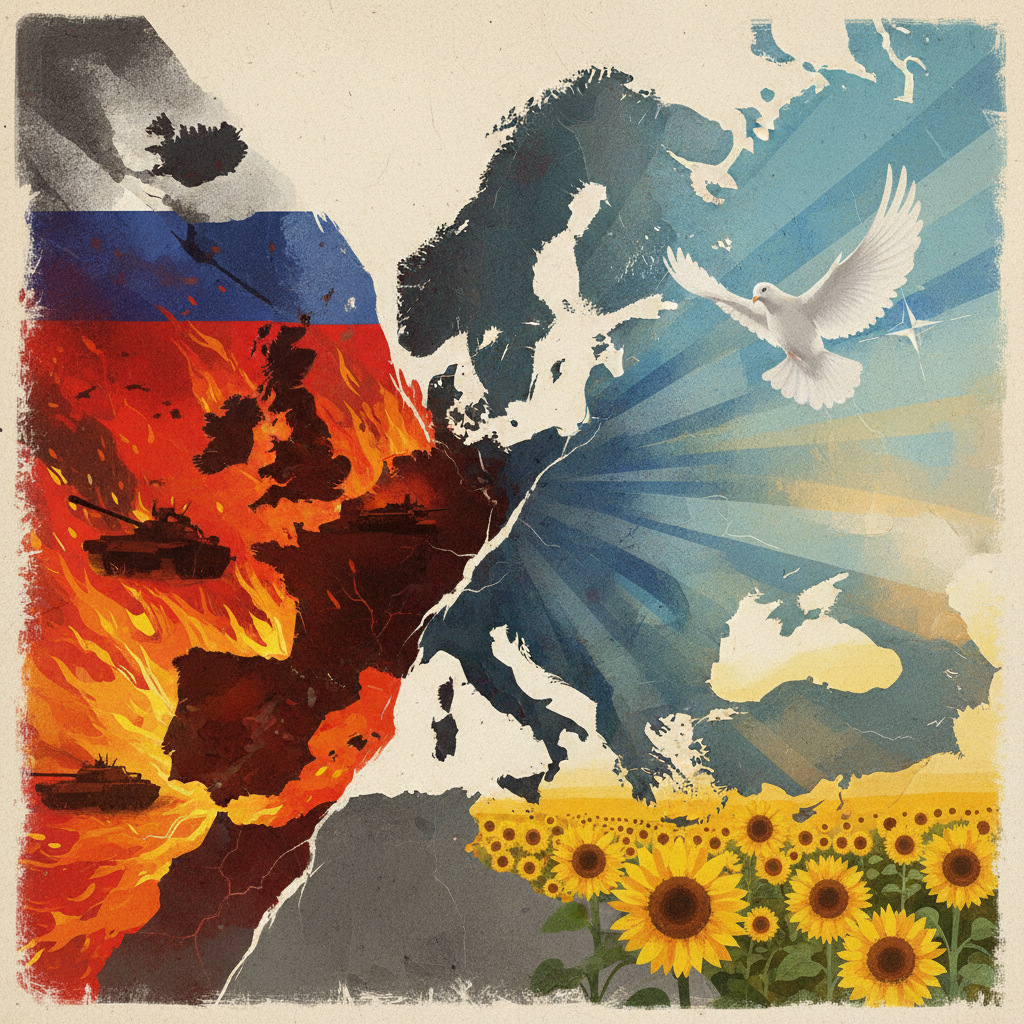
Defensive Fortifications and Attrition Warfare
The current phase of the conflict is characterized by deeply entrenched defensive lines, extensive minefields, and the effective use of artillery and drones, making large-scale offensive breakthroughs exceedingly difficult. Similar to trench warfare in World War I or the positional battles of the Korean War, modern defensive technologies, including advanced surveillance and precision-guided munitions, provide a significant advantage to the defender. This dynamic contributes to a grinding war of attrition where gains are incremental and costly. GeoGazet tracking indicates the sustained intensity of this conflict, with Ukraine and Russia registering 79 and 78 tracked signals respectively, reflecting continuous military and political engagement. The high volume of signals associated with "Missiles & Strikes" (11 tracked signals) further underscores the ongoing, yet often indecisive, nature of direct combat actions.
Strategic Objectives and Resource Strain
Russia’s initial objective of swiftly subjugating Ukraine proved unattainable, forcing a recalibration to securing occupied territories and asserting control over key logistical and industrial regions. Ukraine, supported by substantial Western military and financial aid, remains committed to restoring its full territorial integrity, including Crimea. While Ukraine has demonstrated a robust capacity for localized offensive operations and disruptive strikes deep into Russian-held territory, these actions have not yet translated into a strategic breakthrough capable of dislodging Russian forces en masse. Recent GeoGazet signals, such as "Ukrainian attacks prompt Russian-held Crimea to halt civilian gasoline sales" and "Ukraine strikes hit oil facilities in Crimea, Russia’s Krasnodar," exemplify Ukraine’s ability to inflict economic and logistical pressure, yet illustrate a protracted struggle rather than a decisive shift in the front lines.
Resilience and Geopolitical Complexity
Both nations exhibit significant resilience. Ukraine’s civilian and military population continues to demonstrate a strong will to resist, a factor highlighted by GeoGazet’s tracking of "The Warrior-Witches of Ukraine’s Resistance." This domestic resolve, coupled with continuous international support from NATO and EU allies, prevents Ukraine’s collapse and enables it to sustain its defense. Simultaneously, Russia has managed to adapt its economy and military production, mitigating the impact of Western sanctions and maintaining its troop strength. The conflict’s global ramifications are evident in its "Current influence score: 100/100" and the "Total tracked events in GeoGazet graph: 100," indicating its widespread impact on international relations, energy markets, and global security. This complex geopolitical environment, involving multiple actors and interests, further complicates any quick resolution, contributing to the prolonged stalemate.
What to Watch For Next
The stalemate will likely persist unless a significant shift occurs in one of three areas: a substantial change in the quantity or quality of military aid to Ukraine, a major technological breakthrough that favors offensive operations, or a profound internal political or economic collapse within either Russia or Ukraine. Observers should monitor evolving Western commitment to Ukraine, Russia's ability to sustain its war economy, and any signs of a major offensive preparing to breach established defensive lines.