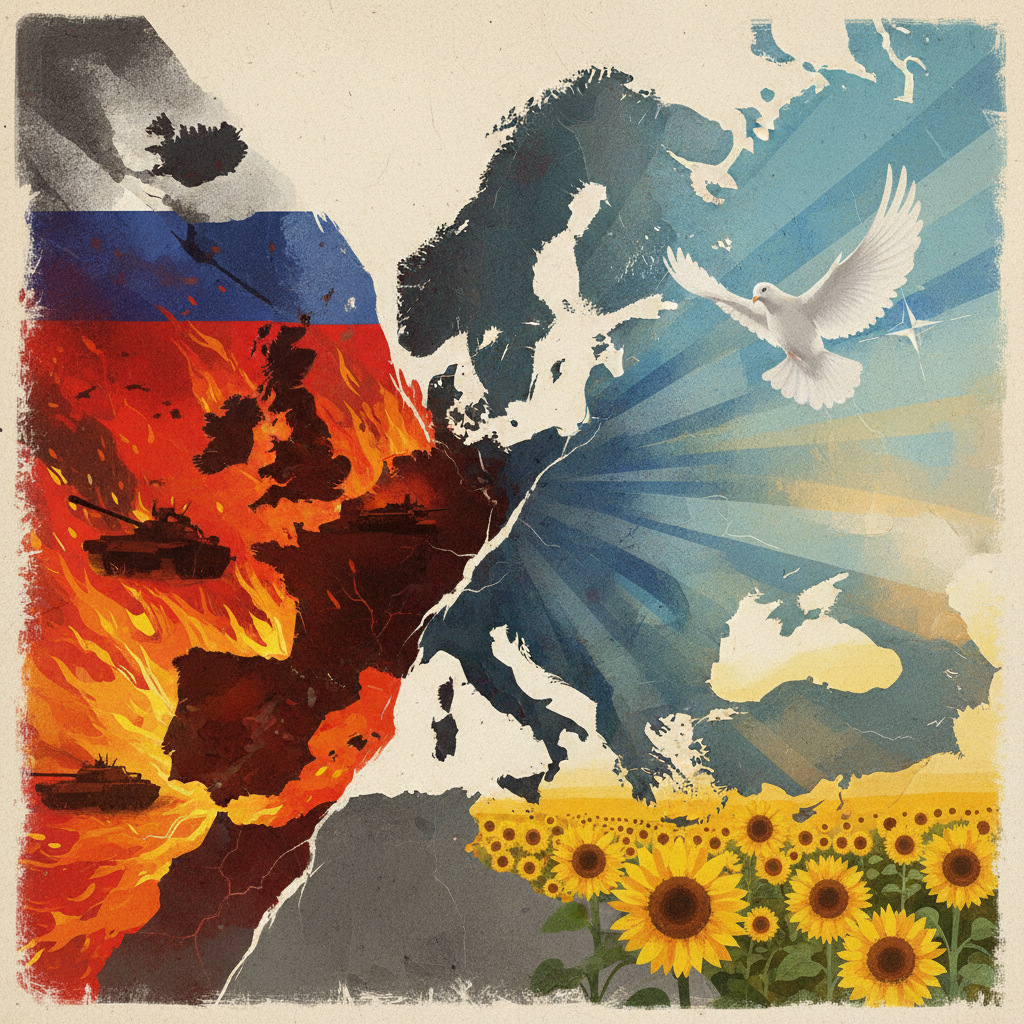
Historical Precursors and Russian Objectives
The roots of the current conflict trace back to Ukraine's post-Soviet independence and its subsequent aspirations for closer ties with Europe and NATO. Russia has consistently viewed these aspirations as an existential threat to its own security, often citing concerns over NATO expansion. The 2014 Maidan Revolution in Ukraine, which led to the ousting of a pro-Russian president, accelerated Moscow's interventionist policies, resulting in the annexation of Crimea and the instigation of proxy wars in Luhansk and Donetsk. Russia's 2022 invasion aimed to "demilitarize" and "denazify" Ukraine, objectives widely dismissed by the international community as pretexts for regime change and territorial acquisition.
Current Dynamics and Intensified Conflict
The war's current influence score stands at 100/100, reflecting its profound global impact across political, economic, and humanitarian spheres. GeoGazet data indicates top connections by signal volume are Russia (81 tracked signals), Ukraine (80 tracked signals), and Missiles & Strikes (12 tracked signals), underscoring the direct military confrontation and its destructive nature. The conflict is characterized by intense missile and drone warfare. Recent GeoGazet tracking signals highlight ongoing hostilities, such as Ukraine reporting it "struck Russian missile electronics plant," demonstrating Kyiv's capabilities to target Russian military infrastructure. Conversely, the destructive impact on civilians is tragically evident from signals noting "A Russian drone strike in Ukraine kills 3 from one family, including a 13-year-old boy," illustrating the indiscriminate nature of some attacks. The total tracked events in the GeoGazet graph, numbering 100, signify the sustained and high-intensity nature of the conflict.
Geopolitical Ramifications and International Response
The war has reshaped the geopolitical landscape, fostering a renewed sense of purpose within NATO and galvanizing Western support for Ukraine. Historical comparisons can be drawn to Cold War proxy conflicts, yet the direct, large-scale interstate warfare in Europe is unprecedented in recent decades. The conflict has triggered significant sanctions against Russia, disrupted global supply chains for energy and food, and fueled a refugee crisis. It has also tested the resolve of international institutions and the principle of national sovereignty. The broad international condemnation of Russia's actions reflects a global recognition of the violation of international law and territorial integrity.
What To Watch For Next
Future developments hinge on several critical factors: the continued provision of military and financial aid to Ukraine by its Western partners, the effectiveness of Russian military operations and its ability to sustain a prolonged war economy, and potential shifts in domestic political landscapes in both warring nations and supporting states. Diplomatic efforts, though currently stalled, remain a distant but crucial pathway, while the possibility of new offensives or prolonged attrition warfare looms large.