The Geopolitical Context and Polymarket's Role
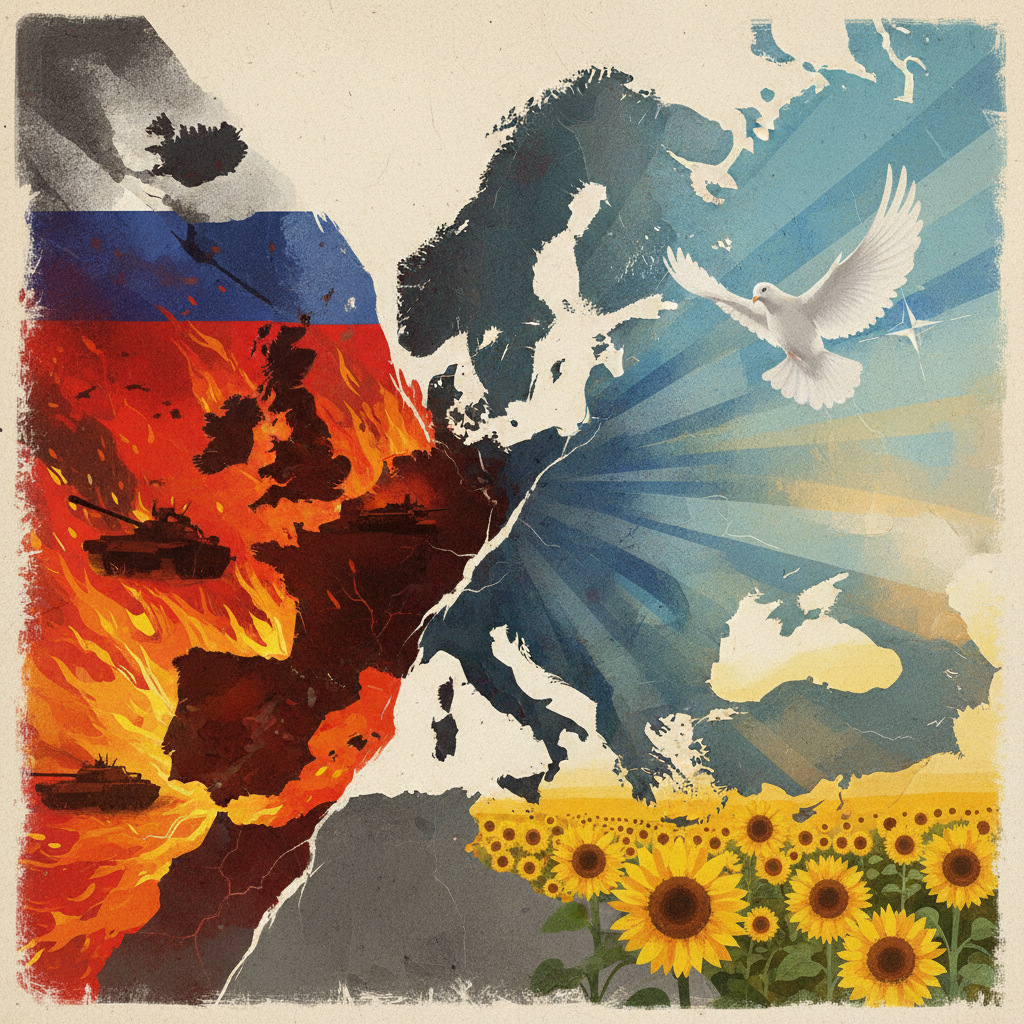
The Russia-Ukraine War, which began with Russia's full-scale invasion in February 2022, represents the largest conventional conflict in Europe since World War II. Its complex nature involves direct military confrontation, extensive international sanctions, and significant humanitarian crises. Polymarket aggregates public sentiment and capital on future events, offering insights into perceived probabilities of various outcomes. While specific markets exist on topics like territorial control, leadership changes, or specific military actions, a market for a precise "end date" of the entire conflict does not currently reflect a strong consensus for an imminent resolution.
Evidence for Protracted Conflict
Geopolitical intelligence, based on a robust tracking system with a current influence score of 98/100, provides compelling evidence against an immediate cessation of hostilities. GeoGazet tracking, encompassing 100 total tracked events, shows sustained engagement on key topics: Ukraine (85 tracked signals), Russia (75 tracked signals), and Sanctions (7 tracked signals).
Recent signals from GeoGazet reinforce the expectation of a prolonged conflict:
- "The Russia-Ukraine War Report Card, June 17, 2026" implies continued conflict well into the future, as an assessment report would not be relevant if the war had concluded significantly earlier.
- "Ukrainian rescuers killed in Russian secondary strike laid to rest" highlights ongoing active combat and the tragic human cost, indicating a persistent military engagement.
- "G7 leaders to boost Ukraine air defences, tighten sanctions on Russia" demonstrates continued international commitment to supporting Ukraine and pressuring Russia, signaling a sustained geopolitical struggle rather than an impending resolution.
These data points collectively indicate that the conflict is far from a conclusion, with both military actions and international political responses showing no signs of abatement.
Historical Parallels and Market Dynamics
Historically, conflicts of this scale rarely conclude swiftly or predictably. The Korean War, for instance, has been in a state of armistice since 1953 with no peace treaty, demonstrating how a military halt can be distinct from a definitive "end." Similarly, various insurgencies or proxy conflicts have endured for decades without clear conclusions. Prediction markets reflect this uncertainty; the absence of a high-probability "end date" market suggests widespread recognition of the conflict's entrenched nature and the difficulty in forecasting its resolution. The ongoing nature of combat and sustained international involvement suggest that a decisive military victory for either side, or a comprehensive diplomatic settlement, remains distant.
What to Watch For Next
To discern potential shifts towards an end, observers should monitor several key indicators. These include significant military breakthroughs or collapses on either side, substantial changes in international political or military support for Ukraine, major internal political instability within Russia or Ukraine, and credible, high-level diplomatic initiatives involving core security guarantees and territorial integrity. Absent these developments, intelligence suggests the conflict will continue to be a defining feature of the geopolitical landscape.