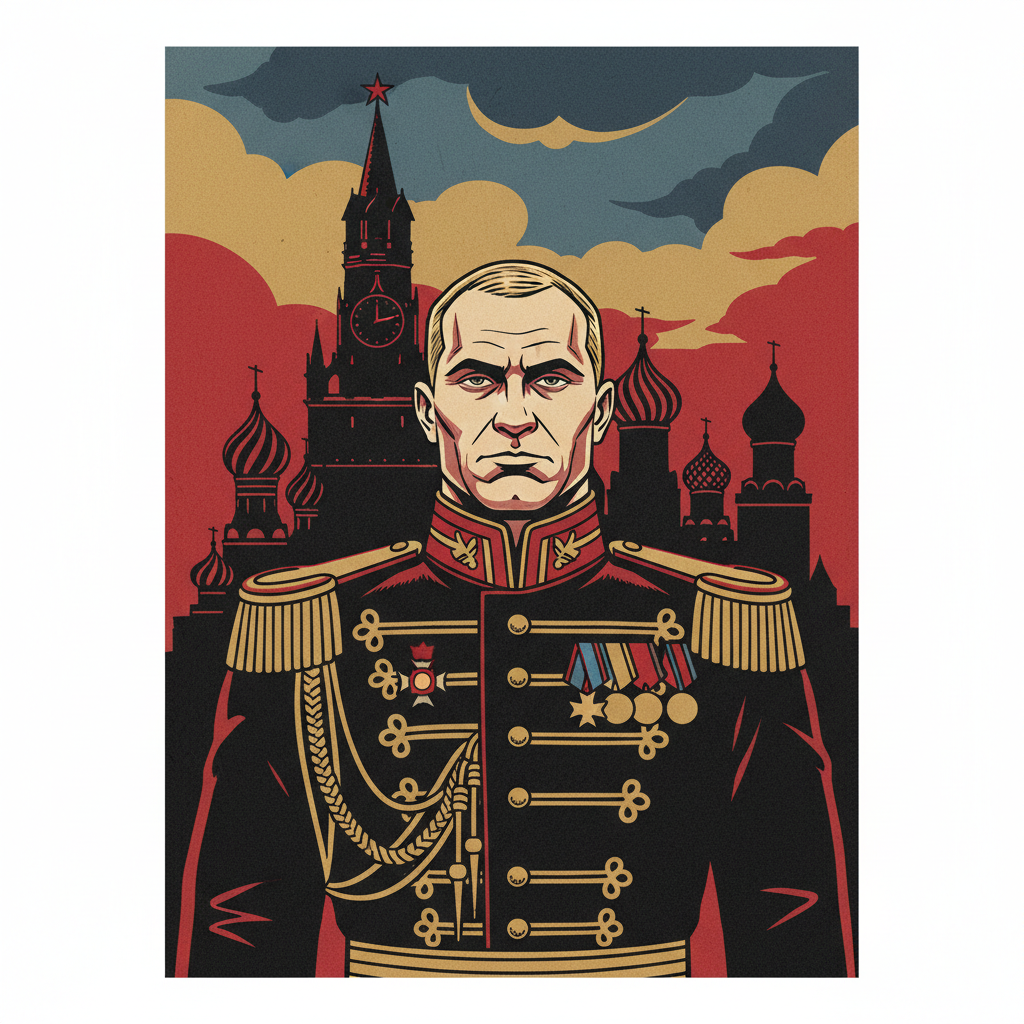
Directing the Conflict and Strategic Engagements
Putin’s primary focus remains the comprehensive prosecution of the war in Ukraine, a nation with 21 tracked signals indicating high engagement. This conflict continues to shape Russian foreign and domestic policy. Concurrently, Russia, his top connection with 68 tracked signals, shows his deep and constant involvement in national governance and resource allocation for the war effort. Regional dynamics, particularly involving Poland, register 14 tracked signals, highlighting a perceived geopolitical threat or strategic interest in Russia’s immediate Western periphery. The intensity of the conflict is underscored by recent events such as Ukrainian drones setting a Moscow refinery ablaze in a major attack on the Russian capital, a direct challenge to Russia’s internal security and infrastructure.
Managing Domestic Narratives and Dissent
Domestically, Putin is engaged in a continuous effort to consolidate power and control public perception. Efforts to project an image of widespread support are evident, though sometimes flawed, as shown by GeoGazet tracking that "Putin’s adoring crowd accidentally outed as ‘extras’ by bodyguard." This incident suggests a reliance on manufactured public displays to reinforce his legitimacy. Simultaneously, the state continues to act decisively against perceived threats to its authority. The recent "Ukraine war briefing: Suspect arrested in killing of Putin critic may have Russian intelligence links" signals the ongoing suppression of dissent and the use of state-linked intelligence operations against opposition figures, a pattern consistent with historical Russian strongman tactics. The total tracked events in the GeoGazet graph stand at 100, reflecting the dynamic and often contentious environment surrounding his leadership.
Historical Context and Trajectory
Putin’s current actions align with his established pattern of leadership since he first came to power. Like many authoritarian leaders throughout history, his strategy involves the robust projection of national strength internationally, coupled with stringent control over domestic narratives and the systematic neutralization of opposition. This approach echoes historical periods of Russian and Soviet rule, where the stability of the state was paramount and dissent was often met with severe measures. His consistent high influence score over a prolonged period illustrates an enduring capacity to concentrate power and direct national policy without significant internal challenge, reminiscent of his earlier years in office.
Outlook
Going forward, observers should watch for Putin’s continued prosecution of the war in Ukraine, including any shifts in military strategy or peace negotiation postures. Further efforts to solidify Russia’s economy against Western sanctions and manage internal dissent will also be critical. His interactions with other global powers and Russia’s regional security posture, particularly concerning NATO expansion, will remain key indicators of his strategic direction.