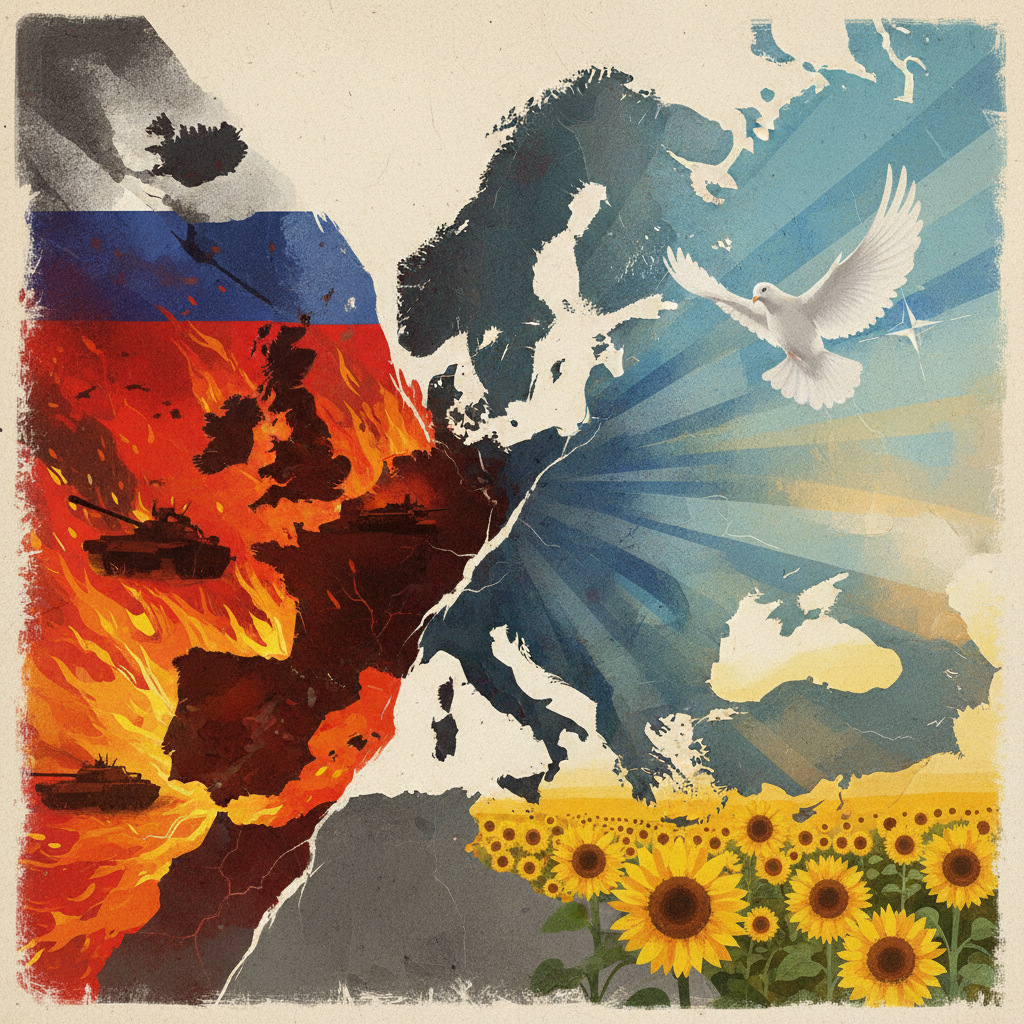
Ukraine War Predictions 2025
Current Geopolitical Context
The conflict in Ukraine persists as a major driver of global instability, evidenced by its current influence score of 80/100 within geopolitical tracking systems. GeoGazet data indicates top connections by signal volume are Ukraine (88 tracked signals) and Russia (85 tracked signals), underscoring the conflict's central role in international relations. The protracted nature of the war continues to exert pressure on global energy markets, supply chains, and alliance structures, maintaining its status as a primary concern for intelligence analysts. A total of 100 tracked events in the GeoGazet graph further illustrate the high operational tempo and widespread impact of the hostilities.
Battlefield Dynamics in 2025
The ground war in Ukraine is projected to see a notable deceleration in Russian offensive momentum. According to GeoGazet tracking, "Russian territorial advances slowed by more than half in 2026, Syrskyi says." This trend, observed towards the end of 2024 and expected to solidify in 2025, suggests that Russia will struggle to achieve significant breakthroughs or large-scale territorial gains. This slowing is likely attributable to cumulative attrition, logistical challenges, and strengthened Ukrainian defensive lines.
Concurrently, Ukrainian forces are predicted to escalate their long-range capabilities, bringing the war increasingly into Russian domestic territory. Signals tracked by GeoGazet, such as "Ukrainian attacks cause chaos at fuel stations across Russia" and "The End of Pretense: War Comes Home to Russians," point to a sustained campaign targeting critical Russian infrastructure and military assets far behind the front lines. This strategy aims to disrupt Russian war efforts, strain public morale, and compel a reallocation of Russian resources to internal defense. The persistence of "Missiles & Strikes (20 tracked signals)" indicates the continued prominence of long-range engagement as a key operational feature.
Historical Parallels and Sustained Attrition
Historically, conflicts that settle into prolonged periods of attrition, such as the later stages of World War I or the Iran-Iraq War, often feature static front lines punctuated by localized offensives and extensive use of indirect fire. The predictions for 2025 suggest Ukraine could enter a similar phase, where neither side achieves decisive battlefield victory but both incur substantial costs. The continued geopolitical salience of the conflict indicates that external support for Ukraine will likely remain robust, albeit potentially evolving in nature and scope.
What to Watch For Next
Key indicators for 2025 include the sustainability of Western military and financial aid to Ukraine, the resilience of Russia's domestic economy and public support for the war, and the pace of technological innovation in drone warfare and electronic countermeasures from both belligerents. Developments in diplomatic initiatives, however unlikely to yield comprehensive peace in the short term, will also merit close observation. The conflict's trajectory will largely depend on the relative capacity of each side to absorb losses and adapt to evolving battlefield conditions.