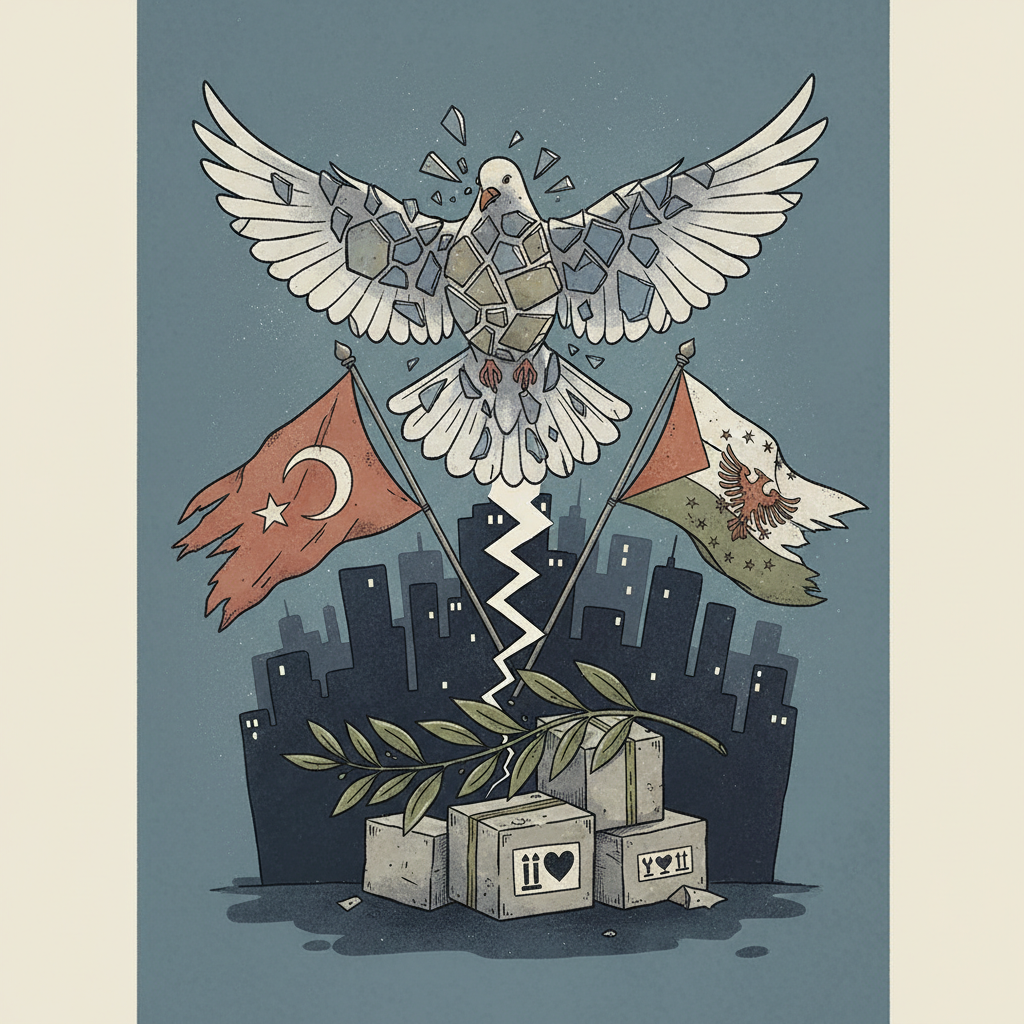
Current Geopolitical Landscape
The current geopolitical situation surrounding the Israel-Gaza conflict remains highly volatile, marked by deep-seated historical grievances and complex regional dynamics. GeoGazet tracking indicates that the "Current influence score" stands at 38/100, reflecting limited external capacity or will to impose a lasting resolution. The most significant connections by signal volume are "Peace & Ceasefire" (46 tracked signals), "Israel" (45 tracked signals), and "Gaza" (45 tracked signals). This high signal volume on peace efforts alongside the primary parties underscores the pervasive desire for cessation of hostilities while simultaneously highlighting the persistent nature of the conflict that necessitates such continuous calls.
Enduring Obstacles to Peace
Several critical factors impede a durable peace by 2026. Ideological positions continue to present formidable barriers, exemplified by GeoGazet’s recent signal: "Stop ‘Greater Israel’ to make peace." Such rhetoric points to fundamental disagreements over territorial claims and national aspirations that are deeply entrenched. The humanitarian crisis in Gaza, a direct consequence of prolonged conflict and blockade, is also a constant destabilizing factor, fueling discontent and providing fertile ground for radicalization. Historically, numerous ceasefires and peace initiatives have proven temporary, failing to address core issues such as Gaza’s governance, economic viability, and security arrangements, leading to repeated escalations.
Regional Spillover and External Actors
The Israel-Gaza conflict is not isolated but is intricately linked to broader regional stability. GeoGazet signals demonstrate this interconnectedness, including "June 20: Heading to Iran talks, Vance says hoping for progress on Lebanon ceasefire and nuclear issue" and "Why is there fighting in Lebanon?". These signals illustrate how the Gaza situation is often a flashpoint within a wider regional struggle involving state and non-state actors, with proxy conflicts capable of escalating rapidly. Efforts toward a Lebanon ceasefire or progress on the Iranian nuclear issue directly impact the strategic calculus of various parties in the Israel-Gaza context, indicating that external developments can either exacerbate or temper local tensions. The total tracked events in the GeoGazet graph, numbering 100, reflect the multifaceted nature of regional instability.
Historical Context and Future Trajectories
Historically, periods of intense fighting in Gaza have been followed by relative calm, but these lulls have rarely translated into substantive political breakthroughs. The conflict has exhibited a cyclical pattern, where unresolved issues inevitably lead to renewed violence. By 2026, it is probable that this cycle will persist, absent a fundamental shift in regional geopolitics or a concerted, internationally backed political process addressing the root causes. The low influence score further suggests that external mediation will face significant challenges in achieving a breakthrough.
What to Watch For Next
Observers should monitor several key indicators. The sustainability of any existing or future ceasefires will be paramount, particularly their ability to permit humanitarian aid and reconstruction in Gaza. Developments in regional talks, especially those concerning Iran and Lebanon, could alter the strategic environment. Furthermore, internal political dynamics within both Israel and the Palestinian territories, including leadership changes and public sentiment, will significantly influence conflict trajectories.