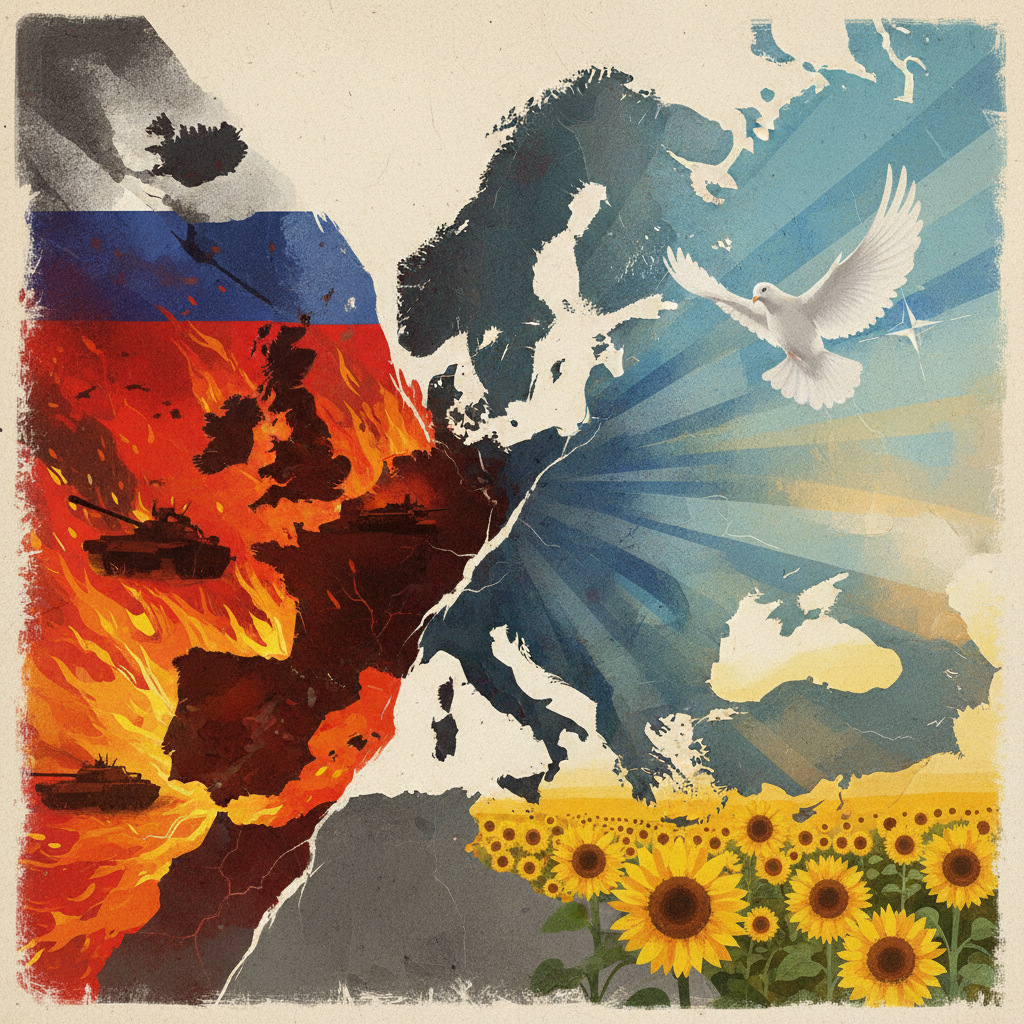
Current State of Conflict
The conflict in Ukraine remains highly active and dynamic, far from any resolution. GeoGazet tracking data confirms Russia and Ukraine as the top connections by signal volume, registering 85 and 81 tracked signals respectively, indicating continuous, high-level engagement between the primary belligerents. Signals concerning Missiles & Strikes also account for 9 tracked signals, reflecting the persistent use of long-range weaponry by both sides.
Recent developments highlight the intense nature of the fighting. GeoGazet tracking recently reported that "Ukraine unleashes one of its heaviest drone bombardments, as Russia strikes Ukraine," illustrating the sustained, reciprocal nature of aerial warfare. This particular signal denotes a significant escalation in drone activity by Ukrainian forces, often targeting Russian logistics and military infrastructure deep behind the front lines. Concurrently, Russia continues its strategic bombardment of Ukrainian cities and energy infrastructure.
A notable shift in the conflict has been the increasing prominence of unmanned aerial vehicles (UAVs). GeoGazet tracking observed that "Ukrainian drones drive Russia to declare emergency in occupied Crimea," demonstrating Ukraine's expanding reach and tactical effectiveness in disrupting Russian control over annexed territories. This tactical advantage is further emphasized by another GeoGazet signal, a "Strategic Snapshot: Ukrainian Drone Mastery Changing War’s Tide," which points to drones as a pivotal element in Ukraine's defense and counter-offensive strategies. The sheer volume of activity is evident with 100 total tracked events in the GeoGazet graph, indicating a continuously evolving and complex battlespace.
Geopolitical Implications and Historical Context
The ongoing war in Ukraine extends far beyond its immediate borders, profoundly shaping the global geopolitical landscape. It has solidified alliances, particularly within NATO, and prompted re-evaluations of national security postures across Europe. Economically, the conflict has driven volatility in global energy and food markets, creating ripple effects worldwide.
Historically, the protracted nature of the conflict and the extensive use of modern technologies, such as advanced drones, draw parallels to earlier eras where innovation fundamentally altered warfare. While conventional forces remain central, the strategic importance of technological superiority in this conflict echoes shifts seen in World War I with trench warfare or World War II with air power and mechanized units. The current conflict also represents the largest conventional land war in Europe since World War II, challenging post-Cold War assumptions about continental security and sovereignty.
What to Watch For Next
Analysts will continue to monitor several critical factors. The evolution of drone warfare and countermeasures will be a key indicator of tactical advantage. Escalation or de-escalation of missile strikes and their targeting patterns will signal shifts in strategic objectives. The level of international military and financial aid to Ukraine, alongside the effectiveness of Western sanctions on Russia, will also heavily influence the conflict's trajectory. Furthermore, any changes in domestic support within either nation for the ongoing war effort could significantly impact future operations.