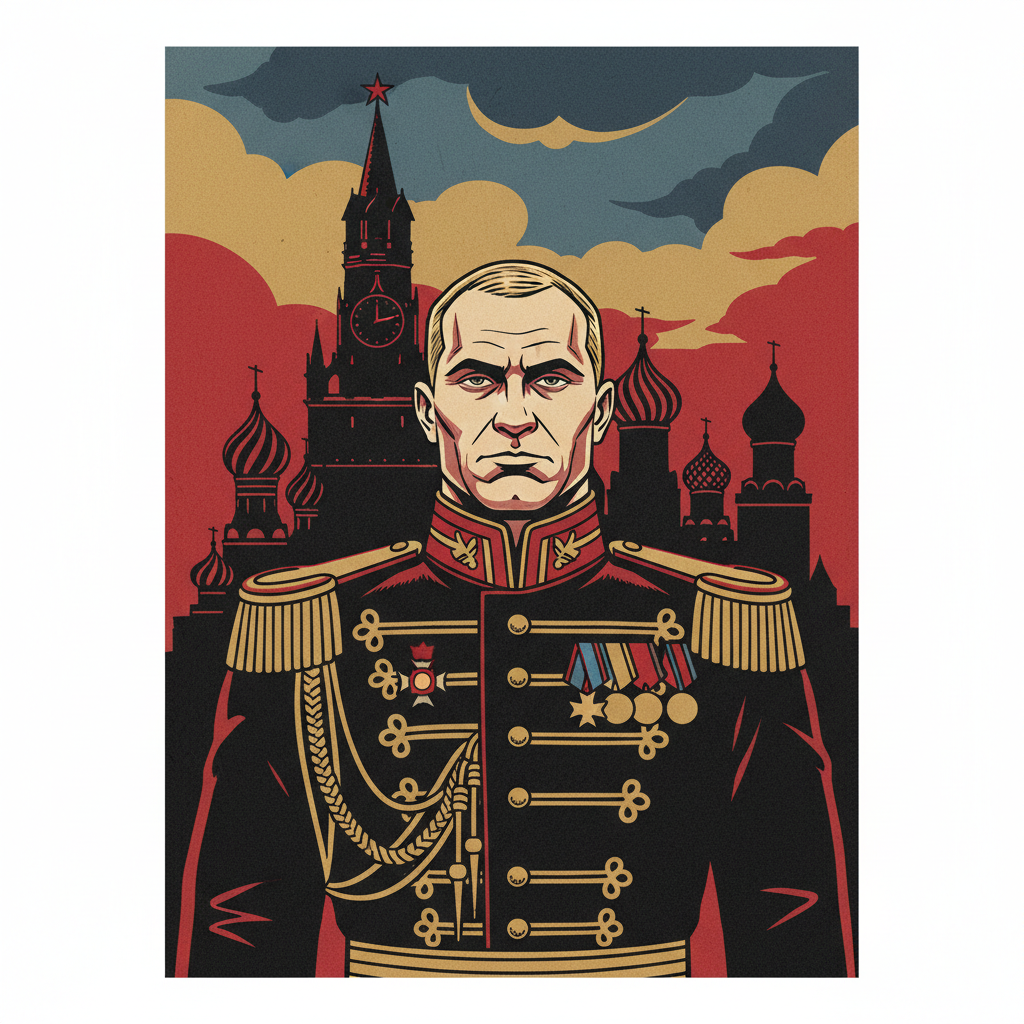
Putin's Enduring Authority
Vladimir Putin has overseen Russia as president or prime minister for over two decades, making him one of the longest serving Russian leaders since Joseph Stalin. His current influence score of 100/100, according to live data, signifies a strong internal power base and minimal overt domestic challenges. This level of consolidated authority allows for strategic long term planning and execution of foreign and domestic policy without immediate threat to his position. The sheer volume of tracked signals related to "Russia" (67 signals) further underscores his central role in all significant national affairs.
Geopolitical Dynamics and Alliances
Putin's presidency is deeply intertwined with current global geopolitical tensions, particularly the conflict in Ukraine. "Ukraine" accounts for 44 tracked signals, indicating the ongoing war remains a primary focus and a significant driver of Russian policy under his leadership. Recent signals highlight evolving strategic alliances; for instance, "Ukraine President Zelensky: Putin on verge of getting 30K North Korean Troops" points to a deepening military cooperation with nations like "North Korea," which registers 5 tracked signals. Such alliances demonstrate Russia's efforts to secure resources and manpower for its ongoing military operations, even amid international sanctions and isolation.
Economic Resilience and Operational Shifts
Despite considerable international pressure, Russia under Putin has demonstrated a degree of economic resilience and adaptability. A signal that "Brussels found Russia’s LNG weak spot — then carved out an exception for a Greek billionaire" illustrates the complex interplay of sanctions, market dynamics, and the capacity for certain actors to navigate or even circumvent restrictions. This suggests Russia maintains avenues for economic activity and trade, albeit sometimes through unconventional means.
Operational shifts in wartime are also evident. The signal "Russia Cancels Navy Day Ship Parade—and Gives Putin a Submarine Poster Instead" can be interpreted as a reallocation of military resources and public displays from ceremonial events to active combat operations or resource conservation. While some might see a cancellation as a sign of weakness, in a wartime context, it more likely reflects strategic decisions about resource deployment and managing public expectations. The total of 100 tracked events in the GeoGazet graph emphasizes the dynamic and high intensity environment in which Putin's leadership operates.
What to Watch For Next
Observers should closely monitor several key areas to gauge the future trajectory of Putin's presidency. Developments in the war in Ukraine, including the potential for new military aid or troop deployments from allies such as North Korea, will be critical. The impact of Western sanctions and Russia's continued ability to find economic workarounds will also indicate the stability of the regime. Finally, any shifts in internal elite consensus or public sentiment, though currently muted, could represent the most significant, albeit less visible, threats to his long term rule.