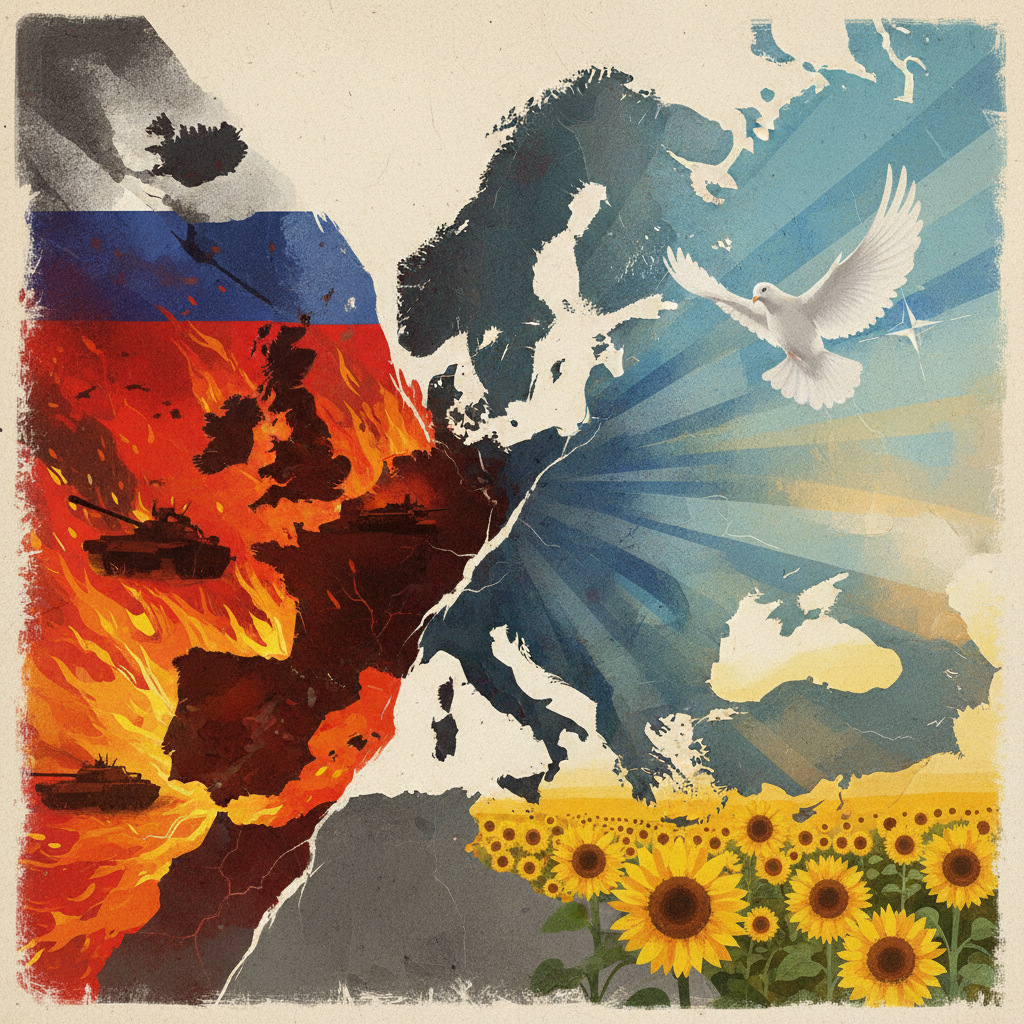
The large-scale invasion of Ukraine by Russia, commencing in February 2022, represents the most significant interstate conflict in Europe since World War II. This conflict has fundamentally altered the global security landscape, prompting a robust and unified response from the United States and its allies. The war’s ongoing nature is highlighted by analyses such as "The Russia-Ukraine War Report Card, June 17, 2026," indicating continuous strategic implications for Washington. With a current influence score of 98/100 and top connections by signal volume tracking Ukraine (85 tracked signals), Russia (75 tracked signals), and Sanctions (7 tracked signals), the conflict’s pervasive reach into American interests is evident.
Economic Repercussions
The war has had tangible economic effects on the United States, primarily through energy markets, supply chains, and inflation. The disruption of global energy supplies, particularly oil and natural gas from Russia, initially led to increased fuel prices for American consumers. While the US is a net energy exporter, global market volatility still impacts domestic costs. Furthermore, the extensive sanctions imposed on Russia by the US and its allies, as evidenced by 7 tracked signals related to sanctions, have contributed to global supply chain disruptions. These measures aim to isolate the Russian economy but also create ripple effects, for example by exacerbating existing inflationary pressures on goods ranging from food to industrial materials. The diversion of resources to support Ukraine also represents a significant financial commitment for American taxpayers.
Geopolitical Realignment
The conflict has accelerated a major geopolitical realignment, benefiting US strategic objectives in some areas while creating new challenges in others. The war has revitalized transatlantic alliances, strengthening NATO and fostering greater cooperation among democratic nations. This is exemplified by recent signals that "G7 leaders to boost Ukraine air defences, tighten sanctions on Russia," demonstrating a unified front led by the US. Historically, this mirrors Cold War era alliances designed to contain Soviet expansion, now repurposed against Russian aggression. The conflict has also drawn a clearer line between democratic and authoritarian states, pressing nations worldwide to choose sides or navigate a more complex international environment. With 100 total tracked events in the GeoGazet graph related to the war, the breadth of this global impact is undeniable.
Security and Domestic Implications
From a security perspective, the Ukraine war directly impacts US defense planning and military readiness. The United States has provided extensive military aid to Ukraine, helping it defend against aggressions such as the "Ukrainian rescuers killed in Russian secondary strike laid to rest" incident, which underscores the brutality of the conflict. This aid, while crucial for Ukraine’s defense, also draws on US stockpiles and requires continuous industrial production. The war has prompted a reassessment of US military doctrine and the importance of conventional deterrence in Europe. Domestically, the conflict has elevated national security concerns, influencing public discourse, budgetary allocations, and the focus of political leadership. It also serves as a critical test of American leadership in an increasingly multipolar world.
To accurately assess future effects, observers should monitor the trajectory of military aid, the effectiveness of sanctions, the evolving dynamics within NATO, and the broader geopolitical responses from China and other major powers.