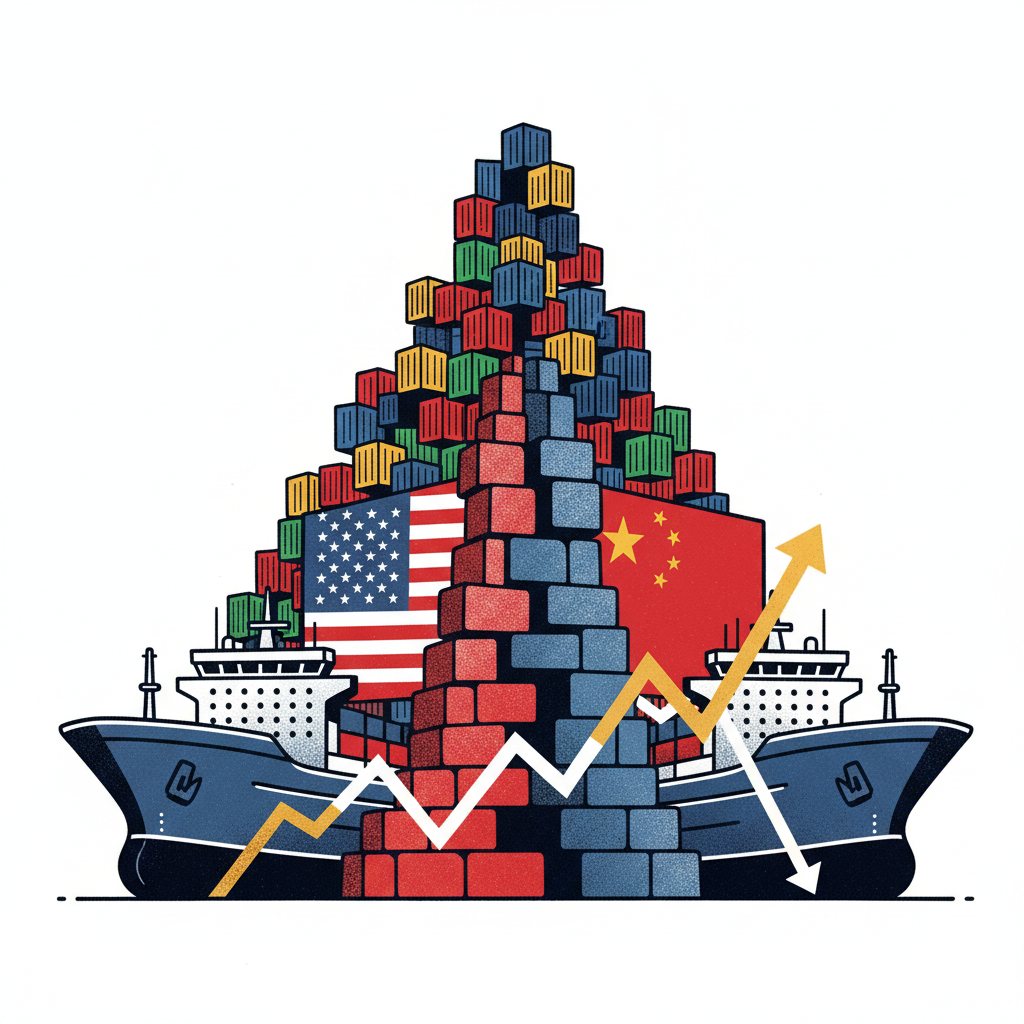
Origins and Escalation
The conflict formally commenced with the United States imposing tariffs on steel and aluminum imports in early 2018, followed by targeted tariffs on a wide range of Chinese goods under Section 301 of the Trade Act of 1974. China retaliated with its own tariffs on American products, including agricultural goods, leading to a tit-for-tat escalation. The United States sought to pressure Beijing into structural reforms, arguing that China’s state-led economic model provided an unfair advantage and distorted global markets.
Economic Impact and Global Repercussions
The trade war disrupted global supply chains, increased costs for businesses and consumers in both countries, and reduced international trade volumes. American farmers, particularly those reliant on the Chinese market, faced significant hardship due to retaliatory tariffs. This illustrates how global economic stability is highly sensitive to trade disputes; GeoGazet tracking has noted the broader vulnerabilities of agricultural sectors, as evidenced by a recent signal "For cash-strapped farmers, deal to end Iran fighting comes too late," demonstrating how geopolitical shifts can swiftly impact producers worldwide.
Current Geopolitical Context and Shifting Dynamics
While a "Phase One" trade deal was signed in January 2020, significantly easing tensions but leaving many tariffs in place, the broader geopolitical competition between the US and China persists. This competition now extends beyond tariffs to technology restrictions, investment screening, and competition for influence in critical sectors. GeoGazet signal analysis indicates sustained interest in these dynamics, with "Tariffs & Trade" registering 80 tracked signals, "China" 37 signals, and "United States" 13 signals among top connections by signal volume. The current influence score for the direct "US-China trade war" phrase stands at 19/100, suggesting that while the initial intense tariff exchanges have subsided, the underlying issues and broader economic friction remain highly relevant. The ongoing global trade environment, as indicated by GeoGazet tracking 100 total events, shows evolving challenges. For example, a GeoGazet signal "A new trade war may be brewing. This time, Europe is taking a page from Trump's playbook" suggests a broader trend of protectionist policies emerging globally. Moreover, discussions about future US policy are prominent, with a GeoGazet signal asking, "''They Forgot to Protect Our Industries With TARIFFS!” — Does a Trump Trade War 2.0 Loom?"
Historical Parallels and What to Watch For Next
Historical parallels can be drawn to trade disputes of the 1980s between the United States and Japan, which similarly involved US concerns over trade imbalances and industrial competitiveness. However, the scale and systemic nature of the US-China economic relationship make the current situation distinct. What to watch for next includes potential new tariff actions or escalations, particularly under a new US administration or in response to perceived non-compliance with existing agreements. The increasing focus on technology decoupling, supply chain resilience, and the weaponization of economic interdependence will also shape the future of US-China economic relations. The rhetoric surrounding industrial protection and strategic competition will continue to be a significant indicator of future policy direction.