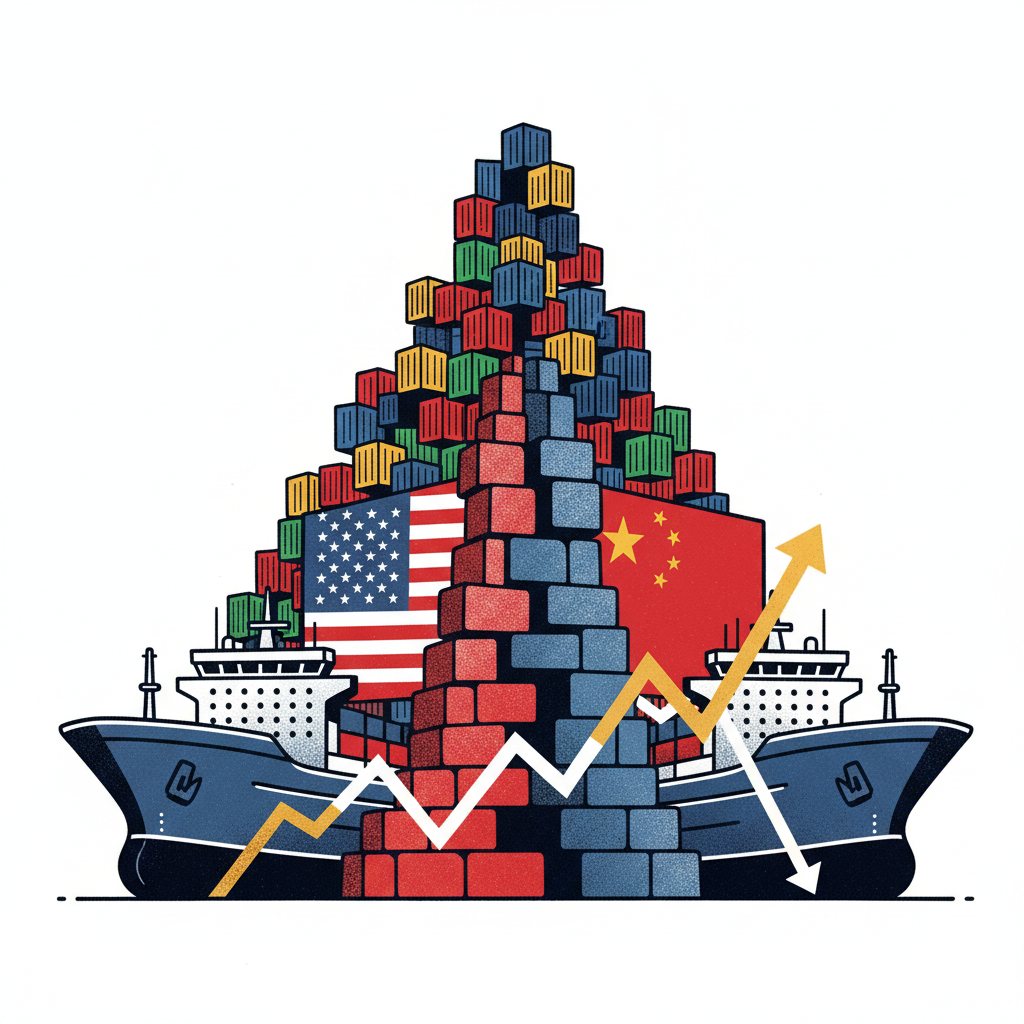
Context and Geopolitical Landscape
The US-China trade war, initiated in 2018, primarily involves the imposition of tariffs by both nations on a wide range of goods. Initially framed by the United States as a measure to address unfair trade practices, intellectual property theft, and forced technology transfers, it quickly evolved into a broader economic and geopolitical competition. This trade friction exists within a larger framework of strategic rivalry between the two global powers, encompassing technological dominance, regional influence, and ideological differences. The geopolitical situation remains tense, with persistent challenges in areas such as Taiwan, the South China Sea, and human rights, all of which influence and are influenced by the trade relationship.
Current Dynamics and Evidence
Analysis of the current landscape indicates the trade war maintains a persistent, albeit fluctuating, level of intensity. According to recent intelligence, the current influence score for this issue stands at 20/100, suggesting it is a consistently monitored but not always the most dominant global geopolitical concern. GeoGazet tracking data reveals significant analytical focus, with "Tariffs & Trade" registering 75 tracked signals, "China" 42 tracked signals, and "United States" 11 tracked signals, highlighting the primary areas of newspaper interest and reporting volume.
Recent signals from GeoGazet tracking underscore the potential for tariff re-escalation and ongoing policy debates. Commentator Bessent has indicated that "US tariffs could return to previous levels if Section 301 probes succeed," further clarifying that "Tariffs Will Snap Back to 'Exactly Where They Were' Before Supreme Court's IEEPA Ruling." These statements suggest that the foundational legal and policy mechanisms for tariff imposition remain active and could be leveraged for future action. Additionally, the inclusion of "Soumaya Keynes on the right way to fight a trade war" within recent signals reflects ongoing strategic discussions among economists and policymakers regarding optimal approaches to managing such disputes. The total tracked events in the GeoGazet graph related to this topic number 100, demonstrating a substantial volume of related developments and analytical engagement.
Historical Comparisons and Future Outlook
Historically, the US-China trade war has seen periods of intense escalation followed by pauses or limited de-escalation, often driven by political cycles and specific negotiation outcomes. While the initial phase under the Trump administration saw widespread tariff imposition, subsequent periods have maintained many of these duties, with new actions often focused on specific sectors like advanced technology. This continuity suggests that the underlying structural issues are deeply embedded and transcend individual administrations. Previous trade disputes, such as those between the US and Japan in the 1980s, offer precedents for prolonged economic friction, though the scale and global interconnectedness of the US-China rivalry are unprecedented.
What to watch for next includes the progress and findings of ongoing Section 301 investigations by the United States, which could trigger new rounds of tariffs or targeted trade measures. The evolving political landscape in both nations, particularly upcoming election cycles, will also heavily influence policy direction. Furthermore, any shifts in global supply chains, technological competition, and broader geopolitical developments will continue to shape the narrative and direction of the US-China trade relationship.