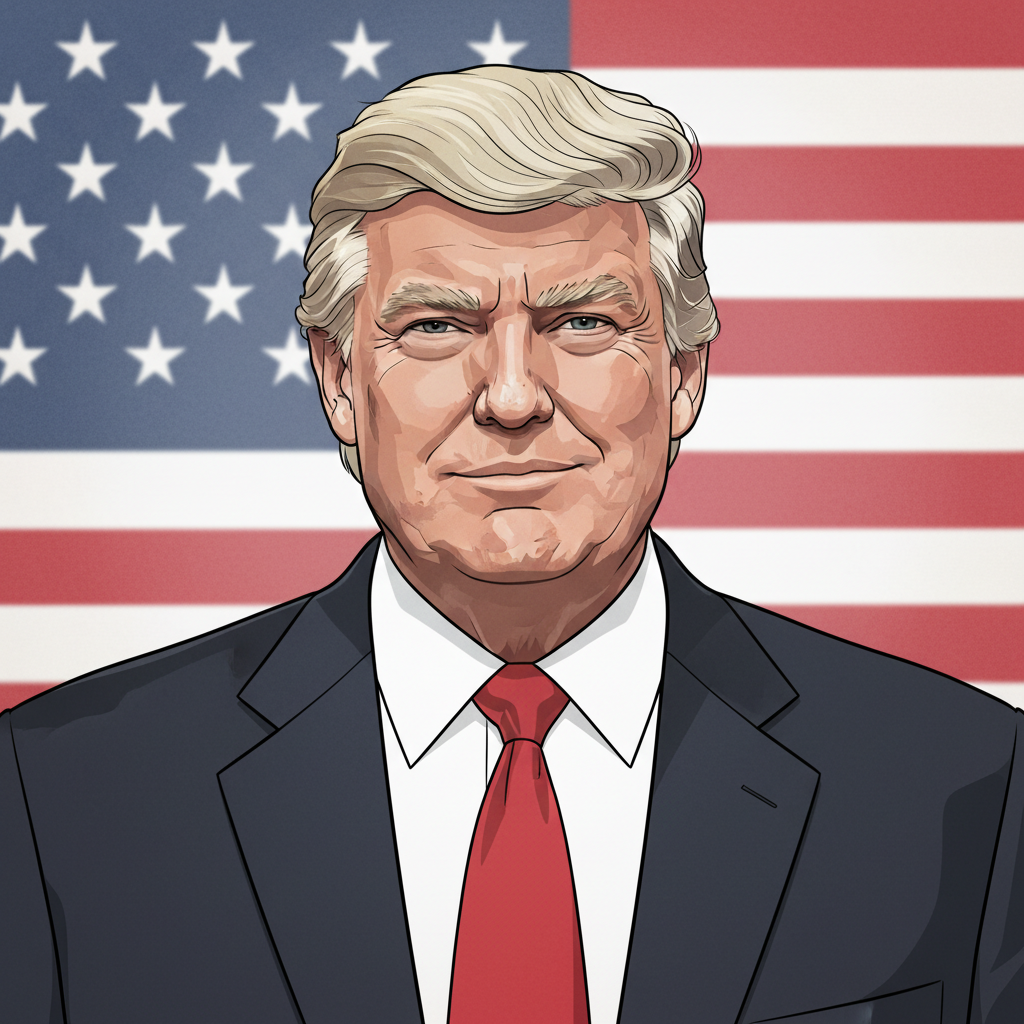
Trump's Geopolitical Context and Trade Philosophy
Donald Trump's previous administration was characterized by an "America First" approach to trade, utilizing tariffs as a tool for negotiation and domestic industry protection. His high *current influence score* of 100/100, according to GeoGazet tracking, suggests that his policy inclinations continue to exert significant global impact. GeoGazet also highlights his prominence in major international developments, with *top connections by signal volume* showing considerable activity regarding Iran (36 tracked signals), the United States (34 tracked signals), and Israel (9 tracked signals). Recent signals further underscore his direct engagement in complex global affairs, such as "Live updates: US-Iran war; Trump and Tehran reach agreement that includes opening Strait of Hormuz" and "Iran War Live Updates: Trump Calls for Restraint After Israel Strikes Beirut Suburbs." These demonstrate a willingness to challenge established norms and pursue direct agreements, a characteristic that would likely extend to trade policy. Even seemingly unrelated events, like the signal "Kennedy Center to establish new endowment in Trump's name after court forces name change," reflect his enduring public profile and capacity to shape various sectors.
Indirect Economic Impacts on Australia
Australia, a highly export-dependent economy, would largely feel the effects of Trump's tariffs indirectly. A global surge in protectionism, spearheaded by the United States, would likely depress international trade volumes and commodity prices. Historically, during the US-China trade war under Trump's previous term, Australian exporters faced reduced demand from China as its economy contended with US tariffs, leading to a ripple effect on global supply chains. If such policies were to be reinstated or expanded, Australian exports of iron ore, coal, agricultural products, and liquefied natural gas could face diminished demand or price pressure from key trading partners, particularly if major economies like China or Europe experience downturns due to US tariff actions. Furthermore, increased uncertainty in global markets could deter foreign investment, impacting Australia's economic growth.
Potential for Direct Tariffs and Historical Parallels
While Australia was generally exempt from the most significant tariffs during Trump's first term, the possibility of being caught in broader tariff actions cannot be entirely discounted. A more expansive or indiscriminate application of tariffs could, in theory, impact specific Australian goods, although this is less probable given the strong bilateral relationship. A relevant historical parallel is the global trade environment during the Great Depression, where escalating protectionism exacerbated economic downturns worldwide. While modern trade agreements and institutions offer some safeguards, Trump's approach has often prioritized unilateral action. With a *total of 100 tracked events in the GeoGazet graph*, the interconnectedness of global affairs means that trade disputes rarely occur in isolation.
What to Watch For Next
Observers should monitor the specific industries targeted by any proposed tariffs and the reactions of major trading blocs, particularly China and the European Union. The degree of global economic slowdown resulting from trade friction will be a critical indicator for Australia's export performance. Additionally, watch for any direct statements or policy proposals from the Trump campaign regarding bilateral trade agreements with allies, which could offer either mitigation or new challenges for Australia.