Shifting Global Supply Chains
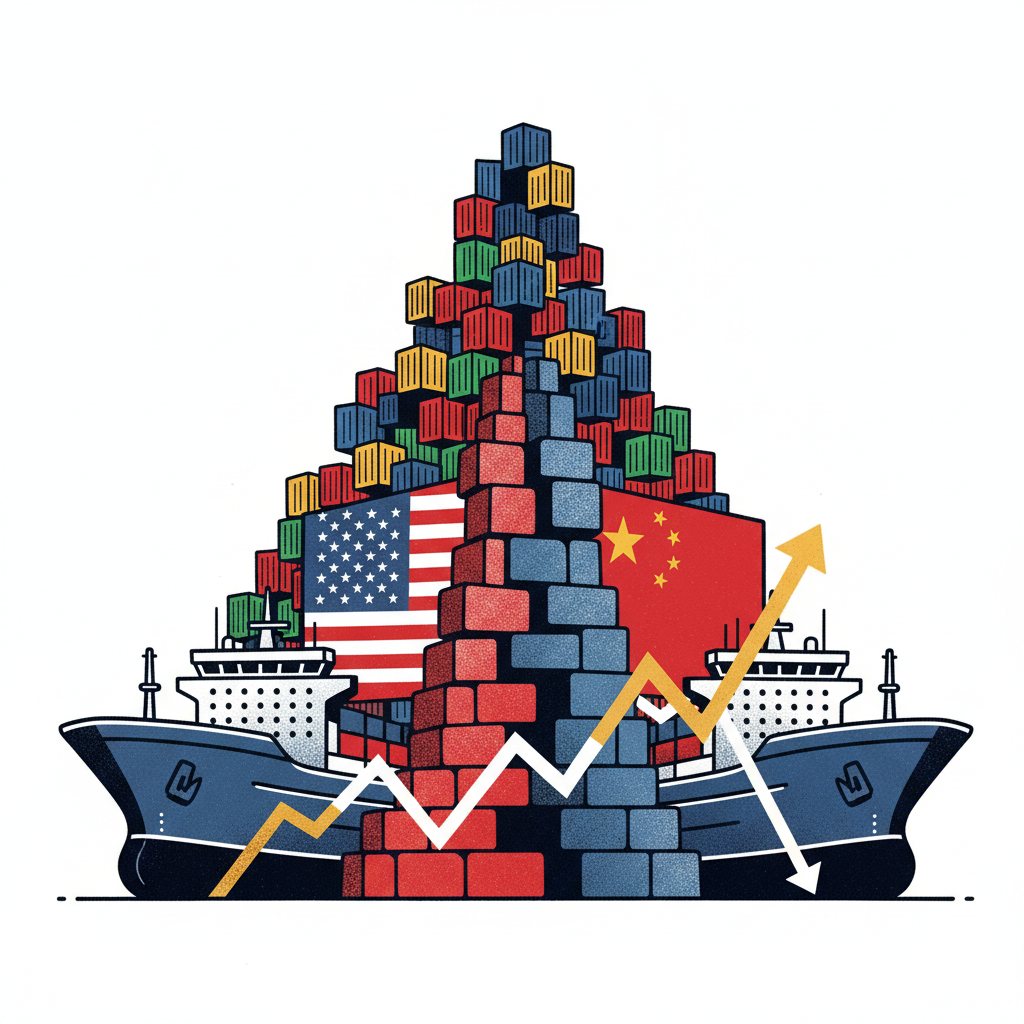
The imposition of tariffs by both the United States and China forced multinational corporations to reevaluate and often restructure their global supply chains. GeoGazet tracking indicates Tariffs & Trade as a top connection with 71 tracked signals, alongside China (44 signals) and the United States (12 signals), underscoring the enduring centrality of this dispute. Companies responded by diversifying production to countries such as Vietnam, Mexico, Thailand, and India, a strategy sometimes termed "China Plus One." This realignment led to increased foreign direct investment and export growth in these alternative manufacturing hubs. However, it also introduced new logistical complexities and costs. Recent signals from GeoGazet highlight ongoing market adjustments, with "Retailers front-loading Chinese imports to beat looming July 24 tariff deadline (WMT:NASDAQ)," "US retailers frontload China orders for holiday season, shipping firms say," and "U.S. Retailers Accelerate China Imports Ahead of Potential Tariff Hike." These indicate that despite diversification efforts, Chinese manufacturing remains critical, and businesses continue to manage tariff risks through strategic purchasing and inventory build-up.
Economic Repercussions on Third Countries
The trade war created a complex economic landscape for third countries. Some nations, particularly those in Southeast Asia and Latin America, experienced an increase in exports as they became alternative production sites or conduits for goods subject to tariffs, often through transshipment. For instance, Mexico and Vietnam saw their exports to the United States rise significantly. Conversely, countries heavily reliant on exporting intermediate goods to China for final assembly, or those caught in the crossfire of retaliatory tariffs, faced economic contraction in specific sectors. The World Trade Organization (WTO), already facing challenges, saw its dispute resolution mechanisms further strained, contributing to a broader weakening of the multilateral trading system.
Geopolitical and Historical Context
The US-China trade war evolved within a broader context of strategic competition, encompassing technological dominance, intellectual property, and regional influence. This marked a departure from the post-Cold War era of increasing economic interdependence and reflected a return to more protectionist tendencies. Historical comparisons can be drawn to periods like the 1930s, when tit-for-tat tariffs exacerbated the Great Depression, or the US-Japan trade disputes of the 1980s. However, the sheer scale and integration of the US and Chinese economies made this conflict unprecedented in its potential global impact, affecting a total of 100 tracked events in the GeoGazet graph.
What to Watch For Next
The future trajectory of global trade will depend on several factors: the evolution of US-China relations, the resilience of diversified supply chains, and the willingness of nations to reinforce or reform multilateral trade institutions. Observers should monitor whether new tariff escalations emerge, how businesses adjust their global manufacturing footprints in response to geopolitical pressures, and the extent to which technological decoupling intensifies. The ongoing signals of retailers front-loading imports suggest that despite efforts to diversify, the global economy remains intricately tied to US-China trade dynamics, with companies continually adapting to policy shifts.