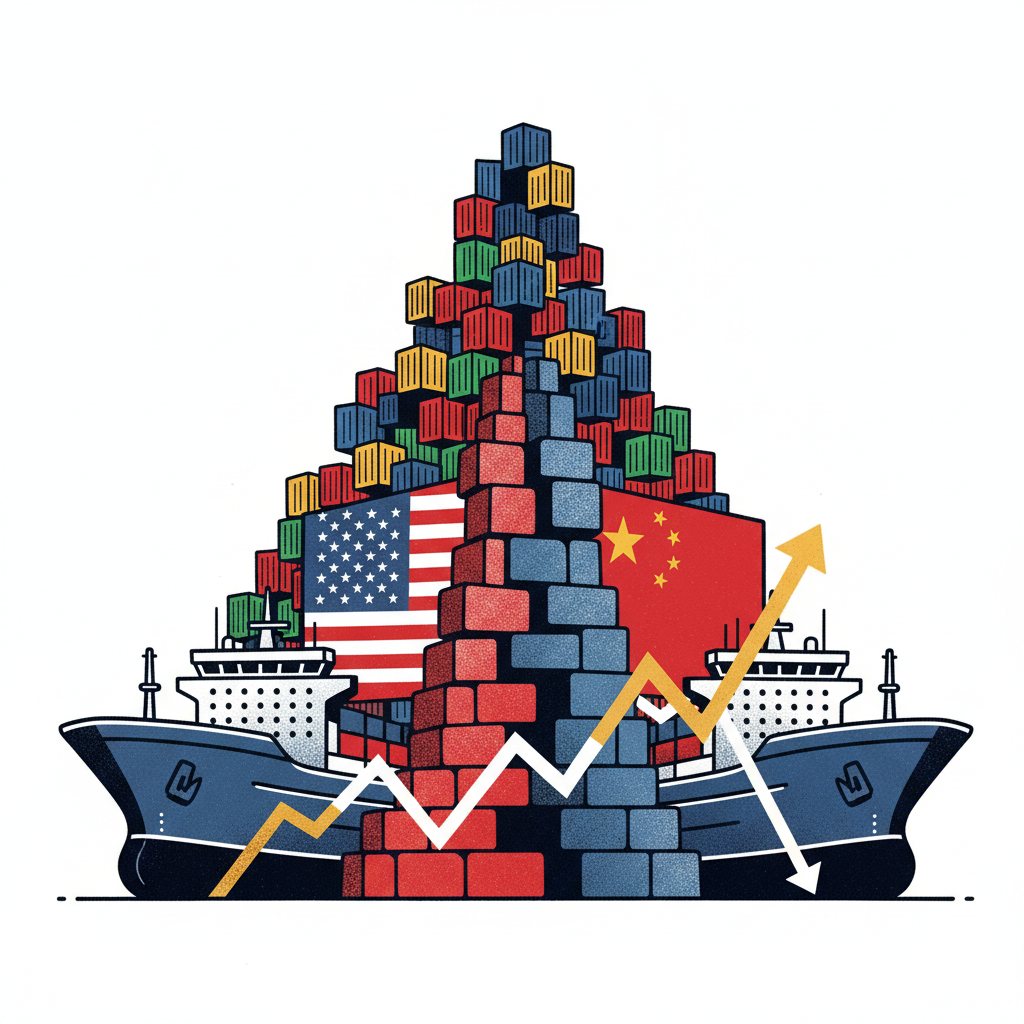
The US-China trade war originated from American concerns over trade deficits, intellectual property theft, and state-backed subsidies. GeoGazet tracking indicates the enduring focus on these issues, with "Tariffs & Trade" registering 81 tracked signals, significantly higher than "China" (34 signals) and "United States" (14 signals), highlighting the pervasive nature of this economic conflict. Recent signals underscore the continued American pursuit of protectionist measures; for example, "The Trump administration wants more tariffs to combat 'structural excess capacity.' Here's what that means." and "With Iran war cooling, Trump is refocusing on tariffs." The legal entrenchment of these policies is further evidenced by "U.S. Supreme Court Declines Review of China Section 301 Tariff Challenge." Despite the global scale of the conflict, India's current influence score is 15/100, indicating its limited direct agency in shaping the core dynamics of the dispute, even as it is profoundly affected.
Opportunities for India
The most prominent opportunity for India lies in supply chain diversification. As multinational corporations seek to de-risk their operations from China, India can position itself as an attractive alternative manufacturing and export hub. This could lead to increased foreign direct investment and job creation in sectors such as electronics, pharmaceuticals, and textiles. India's large domestic market and skilled labor force make it a compelling destination for companies relocating production. Historically, India has sought to maintain strategic autonomy, a stance reminiscent of its non-aligned position during the Cold War. In the economic realm, this allows India to engage with both the US and China, seeking beneficial trade terms and investment without becoming overly dependent on either. This strategy could enhance India's role as a key node in diversified global trade networks.
Challenges for India
Conversely, the trade war introduces substantial challenges. The global economic slowdown, an indirect consequence of disrupted trade flows and reduced demand, can negatively impact India's own export growth and overall economic stability. India also faces intense competition from other Southeast Asian nations, such as Vietnam and Bangladesh, which are also vying for relocated manufacturing and investment. Geopolitically, India is under increasing pressure to align more closely with either the United States or China. This strategic dilemma complicates India's foreign policy objectives and its pursuit of multi-alignment, particularly as the US seeks to counter China's growing influence in the Indo-Pacific. The trade war also alters the competitive landscape for Indian industries, creating both winners and losers within its domestic economy. The total tracked events in the GeoGazet graph, numbering 100, demonstrate the dynamic and multifaceted environment India must navigate.
What to Watch for Next
Future developments warrant close monitoring. The evolution of United States trade policy, especially following any changes in administration, will be crucial. India's success in implementing domestic manufacturing incentives and attracting substantial foreign direct investment will determine its ability to capitalize on supply chain shifts. Furthermore, India's continued capacity to maintain strategic autonomy amidst intensifying great power competition will shape its long-term geopolitical and economic trajectory.