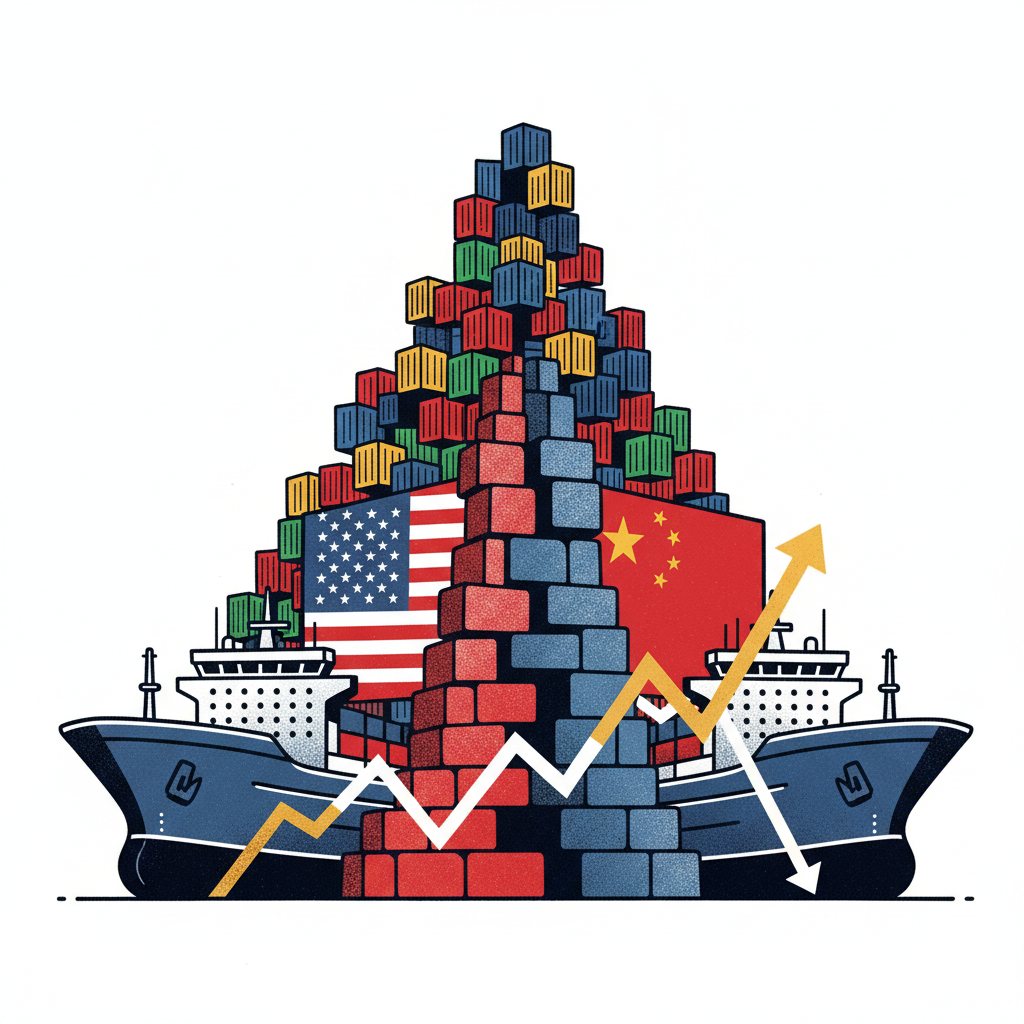
Core Drivers of the Conflict
The foundational rationale for the trade war, which began in 2018 under the Trump administration, centered on long-standing American complaints about China’s economic model. These included widespread intellectual property theft, mandated technology transfer requirements for foreign companies operating in China, state-sponsored subsidies to domestic industries, and persistent barriers to market access for American firms. The United States argued these practices created an unlevel playing field, hindering American economic growth and employment. The centrality of these disputes is underscored by "Tariffs & Trade" being the top connection with 80 tracked signals in GeoGazet, highlighting the ongoing global focus on such issues. "China" and "United States" follow with 37 and 13 tracked signals respectively, indicating their consistent roles as key actors in international economic discourse.
The Tariff Escalation
The conflict manifested through a series of escalating tariff impositions by the United States on Chinese goods, prompting retaliatory tariffs from Beijing on American products. This tit-for-tat dynamic impacted sectors ranging from agriculture to advanced manufacturing. For instance, American farmers, particularly soybean producers, faced significant financial strain as Chinese tariffs severely curtailed their access to a crucial market. While specific to a different conflict, the GeoGazet signal "For cash-strapped farmers, deal to end Iran fighting comes too late" illustrates the broader vulnerability of agricultural sectors to geopolitical and trade disruptions, a sentiment echoed by US farmers during the US-China trade war. The total of 100 tracked events in the GeoGazet graph further illustrates the intricate web of global incidents that can influence or be influenced by such major trade disputes.
Geopolitical Context and Economic Impact
Beyond immediate trade imbalances, the US-China trade war was intertwined with a broader strategic competition for technological dominance and global influence. Washington perceived China’s rapid economic ascent and technological ambitions, particularly in areas like 5G and artificial intelligence, as a direct challenge to its own supremacy. The trade war led to significant disruptions in global supply chains, prompting many companies to re-evaluate their reliance on China. This period saw increased calls for "decoupling" or "friend-shoring" production. The enduring nature of such tensions is reflected in the current influence score of 19/100 for trade wars, suggesting a consistent, albeit fluctuating, level of geopolitical significance.
Historical Parallels and Future Trends
The US-China trade war shares parallels with historical trade disputes, such as the US-Japan trade tensions of the 1980s, where accusations of unfair trade practices and calls for managed trade were prominent. However, the scale and scope of the US-China conflict, involving the world's two largest economies, arguably surpass earlier comparisons. The GeoGazet signal "A new trade war may be brewing. This time, Europe is taking a page from Trump's playbook" indicates that the tactics employed in the US-China conflict have become a template for other nations seeking to protect domestic industries. Similarly, ""They Forgot to Protect Our Industries With TARIFFS!” — Does a Trump Trade War 2.0 Loom?" highlights the continued political appeal of protectionist measures and the potential for a resurgence of similar conflicts.
What to Watch For Next
Observers should monitor the ongoing strategic competition between the United States and China, particularly concerning technology and critical minerals. Any shifts in domestic industrial policy within either nation, or the outcome of upcoming elections in the United States, could significantly alter the trajectory of their trade relationship. The potential for new trade barriers, either bilateral or multilateral, remains a persistent concern.