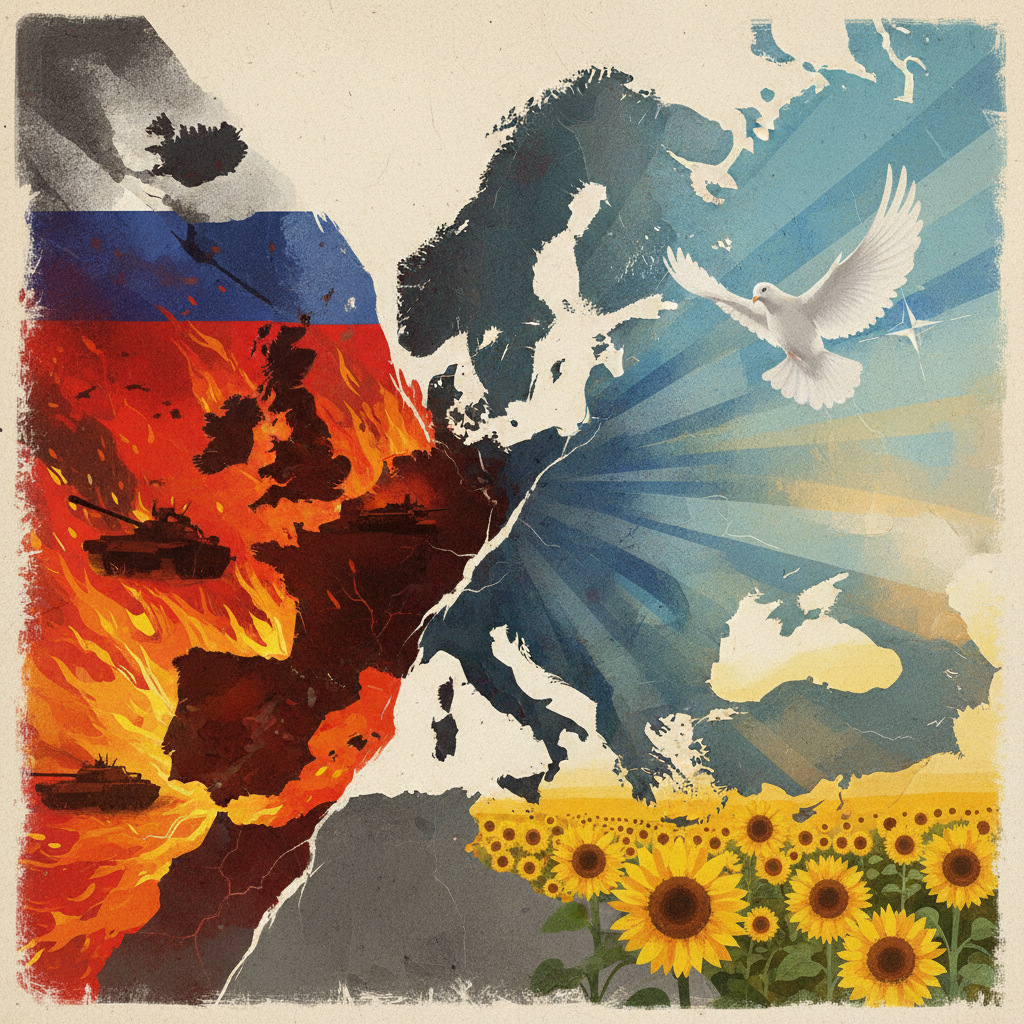
Historical Context and Russian Motivations
The roots of the current conflict are deep, extending beyond the 2022 invasion to Russia's 2014 annexation of Crimea and its support for separatist movements in Ukraine's Donbas region. Russia has long viewed Ukraine's aspiration for closer ties with NATO and the European Union as an existential security threat, a sentiment reminiscent of Cold War-era buffer state doctrines. Russian President Vladimir Putin has frequently articulated a historical narrative denying Ukraine's distinct nationhood and asserting its essential connection to Russia, framing the conflict as a necessary measure to protect Russian speakers and counter perceived "Nazism" within Ukraine, claims widely refuted internationally. This mirrors historical patterns of Russian imperial expansion and control over neighboring territories.
Immediate Causes and Escalation
The 2022 invasion was preceded by a significant build-up of Russian forces along Ukraine's borders and repeated demands for security guarantees, including a halt to NATO expansion. Russia presented a list of demands that were non-starters for NATO and Ukraine, effectively using them as a pretext for invasion. GeoGazet tracking indicates the pervasive nature of the conflict, with a current influence score of 100/100, reflecting its global impact. The sheer volume of information surrounding the combatants is evident, with Ukraine generating 82 tracked signals and Russia 81, demonstrating their centrality to the ongoing crisis.
Current Dynamics and Humanitarian Impact
The war is characterized by intense fighting across multiple fronts, involving conventional ground forces, artillery duels, and extensive missile and drone strikes. GeoGazet tracking highlights the devastating human cost and broad scope of the violence. Recent signals reveal that "Russian drone strike in Ukraine kills 3 from one family, including 13-year-old boy," illustrating the direct impact on civilians. The conflict is not confined to Ukrainian territory, as evidenced by the "Crimea suspends children's summer camps as Ukraine strikes squeeze fuel supplies" signal, showing the effects of Ukrainian strikes on Russian-occupied territories. Furthermore, the signal "Five dead after attack on Russia's Voronezh, governor says" indicates that attacks are also reaching within Russia's internationally recognized borders. The category "Missiles & Strikes" accounts for 13 tracked signals, underscoring the prevalence of long-range aerial assaults. The conflict has generated a total of 100 tracked events in the GeoGazet graph, indicating its complexity and widespread ramifications.
Geopolitical Ramifications
The war has profoundly reshaped the global geopolitical landscape, leading to unprecedented Western sanctions against Russia, significant military and financial aid to Ukraine, and a revitalization of NATO. It has caused severe disruptions to global energy and food markets and underscored the fragility of the post-Cold War security order.
What to Watch For Next
Future developments will likely focus on the endurance of military aid to Ukraine from its allies, the effectiveness of Russian military operations and economic resilience against sanctions, and any potential diplomatic off-ramps, however unlikely they may appear. The ongoing impact on global supply chains and the evolving alliances within the international community will also be critical indicators.