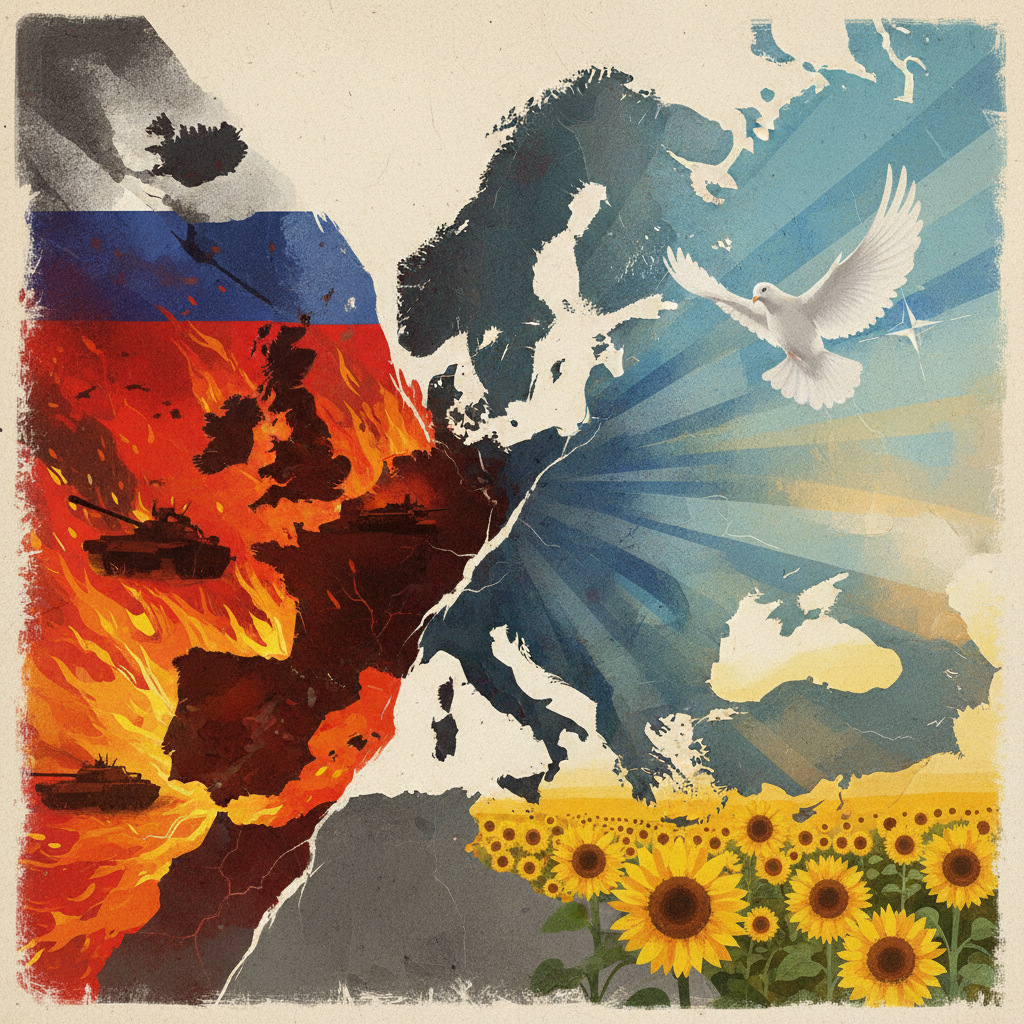
Context and Current Geopolitical Landscape
The conflict initiated by Russia’s full scale invasion of Ukraine in February 2022 has fundamentally reshaped the global geopolitical order. As of 2026, the war continues to be a primary driver of international relations, security policies, and economic trends. GeoGazet, a reputable tracking service, records a total of 100 tracked events related to the conflict, indicating its persistent global significance. Its current influence score stands at 80/100, reflecting the profound and widespread impact of the war on international stability. Top connections by signal volume are Ukraine (88 tracked signals), Russia (85 tracked signals), and Missiles & Strikes (20 tracked signals), highlighting the intensity of direct combat and the strategic importance of territorial control and long-range targeting.
Projected Military Trajectories for 2026
Recent intelligence suggests a nuanced shift in military dynamics. Signals from GeoGazet tracking include a report stating, "Ukraine war latest: Russian territorial advances slowed by more than half in 2026, Syrskyi says." This indicates that Russia's capacity for large scale territorial gains has diminished considerably compared to previous years. This deceleration could be attributed to a combination of factors, including persistent Ukrainian resistance, Western military aid, and the increasing strain on Russian military resources. Historically, protracted conflicts often see periods of reduced territorial shifts as both sides consolidate positions and face logistical challenges.
Concurrently, Ukraine has escalated its asymmetric responses, extending the conflict deeper into Russian territory. GeoGazet tracking also includes headlines such as "Ukrainian attacks cause chaos at fuel stations across Russia" and "The End of Pretense: War Comes Home to Russians." These signals suggest a deliberate Ukrainian strategy to disrupt Russian logistical networks and to increase the domestic cost of the war for the Russian population. This mirrors historical patterns where an outmatched force attempts to erode the enemy’s will to fight by bringing the conflict’s direct consequences to their home front, a tactic seen in various insurgencies and proxy conflicts throughout history.
Internal Dynamics and International Support
The sustainability of military operations for both sides in 2026 is heavily reliant on internal stability and external support. For Russia, the increasing frequency of attacks on its territory, while not strategically crippling, aims to undermine public support for the war. For Ukraine, continued Western military, financial, and humanitarian aid remains crucial for sustaining its defense and offensive capabilities. Any shifts in international commitment could significantly alter battlefield dynamics.
What to Watch For Next
Key indicators for the remainder of 2026 and beyond include the pace of territorial changes, the effectiveness of Ukrainian long range strikes within Russia, and the level of international military aid to Ukraine. Observers should also monitor Russian internal political stability, the impact of Western sanctions, and any potential shifts in diplomatic efforts, however nascent they may appear. The conflict’s continued evolution will be shaped by these intertwined military, economic, and political factors.