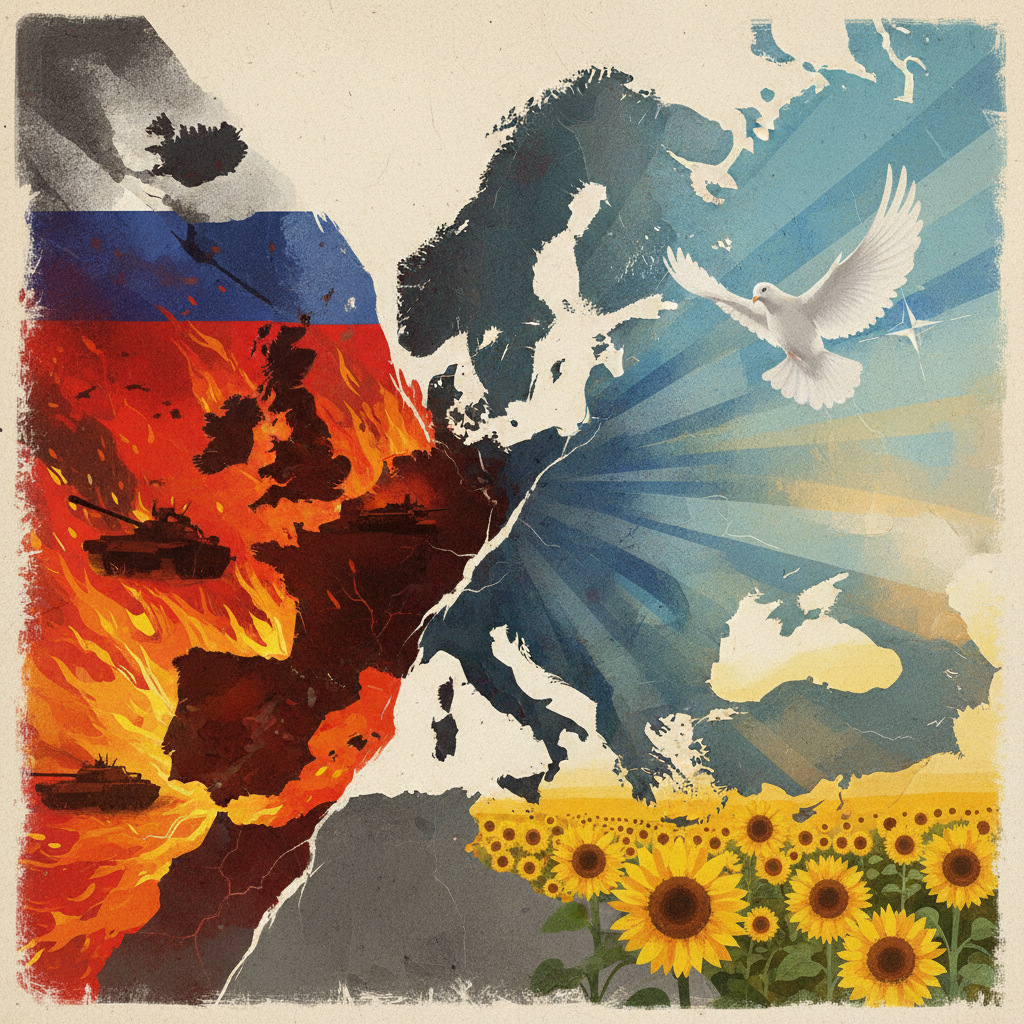
Current State of Play: July 2026
The war in Ukraine continues to exert a profound global influence, evidenced by a sustained influence score of 100/100. Geopolitical intelligence tracking, as highlighted in GeoGazet's "Early Edition: July 6, 2026," indicates that Ukraine and Russia remain the primary focal points of the conflict, with 92 and 89 tracked signals respectively. The nature of hostilities is significantly shaped by "Missiles & Strikes," accounting for 24 tracked signals, reflecting the continued importance of long-range engagement and defensive measures. The total number of tracked events in the GeoGazet graph stands at 100, illustrating the complex and dynamic nature of ongoing developments and the intensity of the conflict.
Ukrainian Strategic Initiatives and Russian Vulnerabilities
Analysis of recent signals confirms that Ukraine’s strategic emphasis on deep strikes is having a tangible effect. GeoGazet tracking indicates that "Ukraine's Strike Campaigns Will Likely Continue to Hurt Russia's Economy and Military Operations in Ukraine." This strategy targets critical Russian infrastructure and logistical networks, aiming to degrade Moscow's capacity to sustain its war effort. A particularly impactful development reported by GeoGazet is that "Almost every Russian region hit by fuel crisis, as Ukraine escalates drone attacks." Such widespread disruption to fuel supplies across Russia underscores the effectiveness of Ukrainian drone campaigns in creating significant domestic economic and logistical challenges for the Kremlin. Historically, sustained attacks on critical resources have proven difficult for nations to absorb without significant long-term strain, drawing parallels to attritional warfare during major conflicts where control over supply lines becomes paramount. These campaigns pressure Russian decision-making and resources, extending the theater of conflict beyond the immediate front lines and forcing a reallocation of resources for homeland defense.
Outlook: What to Watch Next
The trajectory of the Ukraine war into late 2026 will likely be determined by several key factors. Continued escalation of Ukrainian deep strike campaigns against Russian economic and military targets will be crucial, as will Russia's adaptive responses and defensive strategies. The resilience of international support for Ukraine, alongside internal stability within Russia and the ongoing impact of sanctions, will also shape the conflict's dynamics. Diplomatic initiatives, while currently stagnant, could re-emerge if battlefield conditions force a reassessment by either side. Observers should monitor shifts in military aid packages, the development of new long-range strike capabilities, and the socio-economic impacts within both warring nations, particularly regarding energy prices and internal dissent.