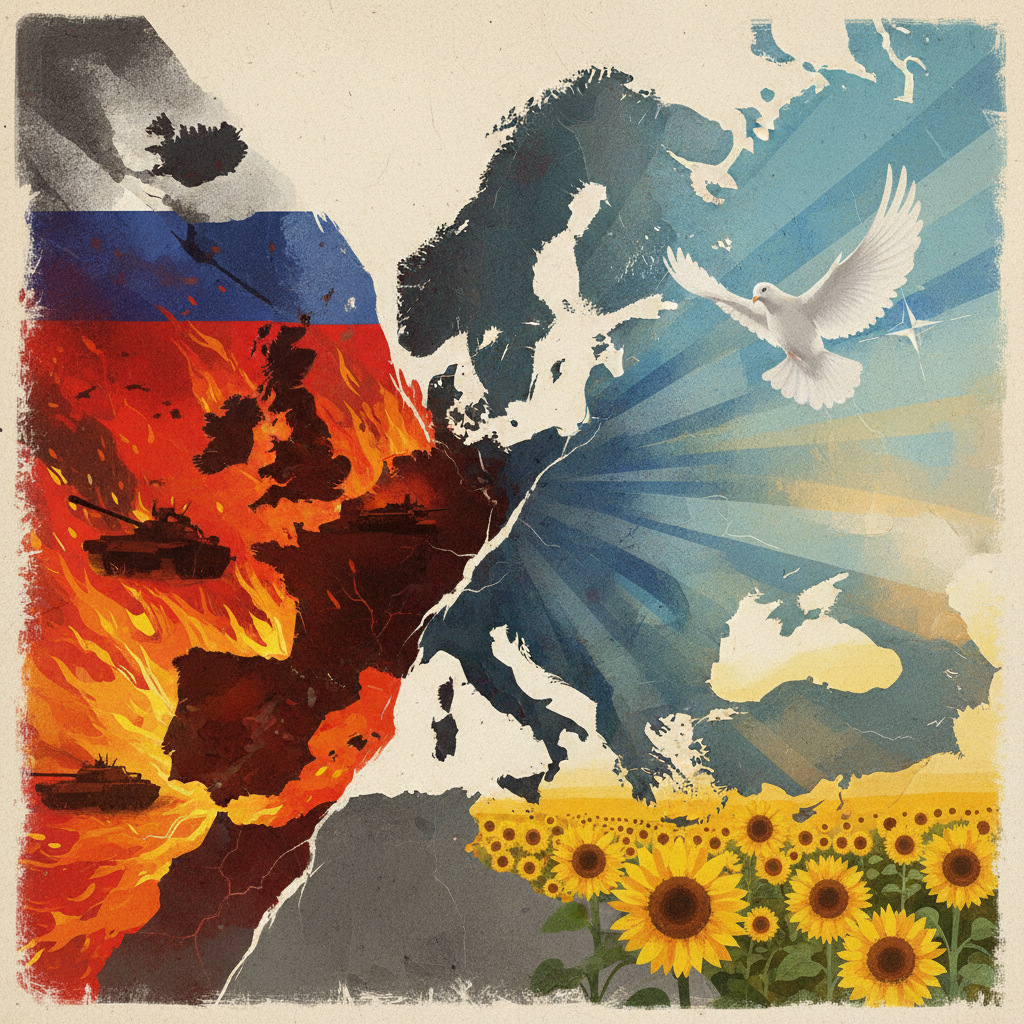
Ukraine War in June 2026: A Persistent Stalemate
Current Geopolitical Situation and Conflict Dynamics
The war, now in its fifth year, remains a central fixture in global geopolitics, underscoring its significant international impact. GeoGazet’s Current influence score of 72/100 highlights the conflict’s sustained global attention and the ongoing implications for international security and economic stability. Top connections by signal volume reflect this enduring focus, with Ukraine tracking 80 signals and Russia tracking 75 signals, indicating consistent monitoring of the primary belligerents. The geopolitical landscape remains fractured, with sustained Western support for Ukraine confronting Russia's determination to achieve its strategic objectives.
Ongoing Hostilities and Attrition
Military activity in June 2026 suggests a continuation of tactical engagements rather than significant territorial shifts. Evidence from GeoGazet tracking indicates targeted offensive actions by Ukrainian forces, including “Ukrainian strikes hit Russian logistics center.” These actions aim to disrupt Russian supply lines and operational capabilities, demonstrating Ukraine’s sustained capacity to project force beyond the immediate front lines. Further, the increasing use of asymmetric tactics is apparent, as recent signals report “Ukrainian drone attacks on Russia kill at least 8, wound dozens.” Such incidents underscore the evolving nature of the conflict, with drone warfare playing a critical role in striking military targets and infrastructure within Russian territory. The prominence of "Missiles & Strikes" as a top connection with 9 tracked signals further corroborates the continued reliance on kinetic operations by both sides. This attritional phase, marked by regular, localized engagements and long-range strikes, bears similarities to prolonged historical conflicts such as the Iran-Iraq War, where front lines remained largely static for extended periods while both sides inflicted substantial damage.
Diplomatic Stasis
Diplomatic efforts to resolve the conflict remain largely unproductive. GeoGazet tracking reveals a significant impasse, with reports that “Zelenskyy says Russia rejected dozens of Ukrainian proposals to end war in 2026.” This statement highlights Russia’s apparent unwillingness to engage with Ukrainian peace initiatives on terms acceptable to Kyiv. The consistent rejection of proposals indicates a deep chasm between the warring parties’ desired outcomes, precluding any near-term negotiated settlement. The international community has yet to forge a unified and effective pathway to peace, leaving the resolution dependent on military outcomes or a significant shift in either belligerent's strategic calculus. The total of 100 tracked events in the GeoGazet graph underscores the persistent activity across military, diplomatic, and humanitarian fronts, yet without a breakthrough in peace discussions.
What to Watch For Next
Observers should monitor several key areas. The sustained flow of international military and financial aid to Ukraine will be critical in shaping its defensive capabilities and capacity for counter-offensives. Conversely, Russia’s ability to sustain its war economy and manpower will dictate its operational tempo. Any significant breakthroughs or collapses along the front lines, particularly in strategic areas, could alter the conflict’s trajectory. Finally, shifts in domestic political landscapes within key international actors could influence the geopolitical support structures currently in place.