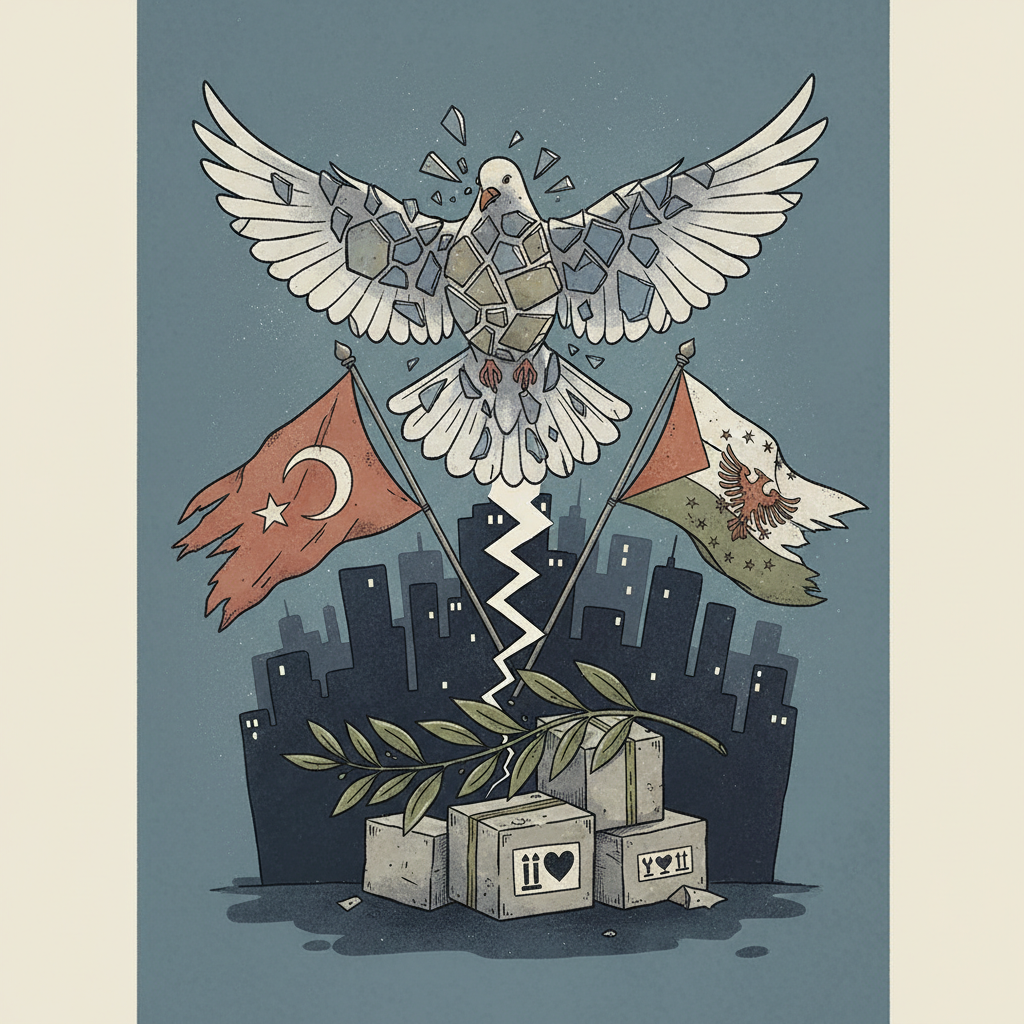
Current Geopolitical Context
The conflict continuum extending into 2026 remains a central point of global geopolitical concern. Data indicates a fragile regional environment, with a current influence score of 36 out of 100, reflecting persistent instability and a significant degree of unresolved issues. GeoGazet tracking reveals that the dominant themes in regional discourse are "Peace & Ceasefire" (47 tracked signals), "Gaza" (46 tracked signals), and "Israel" (45 tracked signals), underscoring the enduring focus on conflict resolution efforts and the central parties involved. The total number of tracked events in the GeoGazet graph stands at 100, indicating a high level of diplomatic activity, military engagements, and humanitarian concerns across the region.
Regional Dynamics and External Influences
The 2026 landscape is heavily influenced by regional state and non-state actors. GeoGazet signals highlight critical geopolitical sentiments, such as the statement "Stop ‘Greater Israel’ to make peace," which reflects deep-seated historical grievances and territorial disputes that continue to fuel the conflict. This sentiment suggests that perceptions of Israeli expansion remain a significant barrier to sustained peace.
Moreover, the conflict in Gaza is intricately linked to broader regional security issues. Recent diplomatic efforts, as indicated by the signal "June 20: Heading to Iran talks, Vance says hoping for progress on Lebanon ceasefire and nuclear issue," demonstrate the interconnectedness of regional flashpoints. This illustrates that any resolution in Gaza is often contingent upon progress in other areas, particularly concerning Iranian influence and stability in Lebanon. The query "Why is there fighting in Lebanon?" further solidifies the understanding that the Gaza conflict acts as a powerful catalyst for broader regional instability and proxy engagements.
Historical Parallels
The protracted nature of the Gaza conflict, extending into 2026, bears historical parallels to other long-standing regional disputes and cycles of violence that have resisted definitive resolution for decades. The repeated escalations and humanitarian crises echo past conflicts, such as the Lebanese Civil War or the various intifadas, which demonstrated the difficulty of achieving lasting peace without addressing core political and existential grievances. The consistent focus on ceasefires, rather than comprehensive peace agreements, highlights a recurring pattern of managing conflict rather than resolving it.
What to Watch For Next
Future developments will largely hinge on the efficacy of international mediation efforts, the internal political stability of both Israeli and Palestinian leaderships, and the shifting dynamics of regional power balances. Monitoring the frequency and content of "Peace & Ceasefire" signals will be crucial, alongside any significant shifts in the influence score. Further observation of diplomatic engagements related to broader regional security, such as those involving Iran and Lebanon, will provide indicators of potential de-escalation or further contagion of conflict. The continued humanitarian situation in Gaza remains a critical variable that can trigger international intervention or further destabilization.