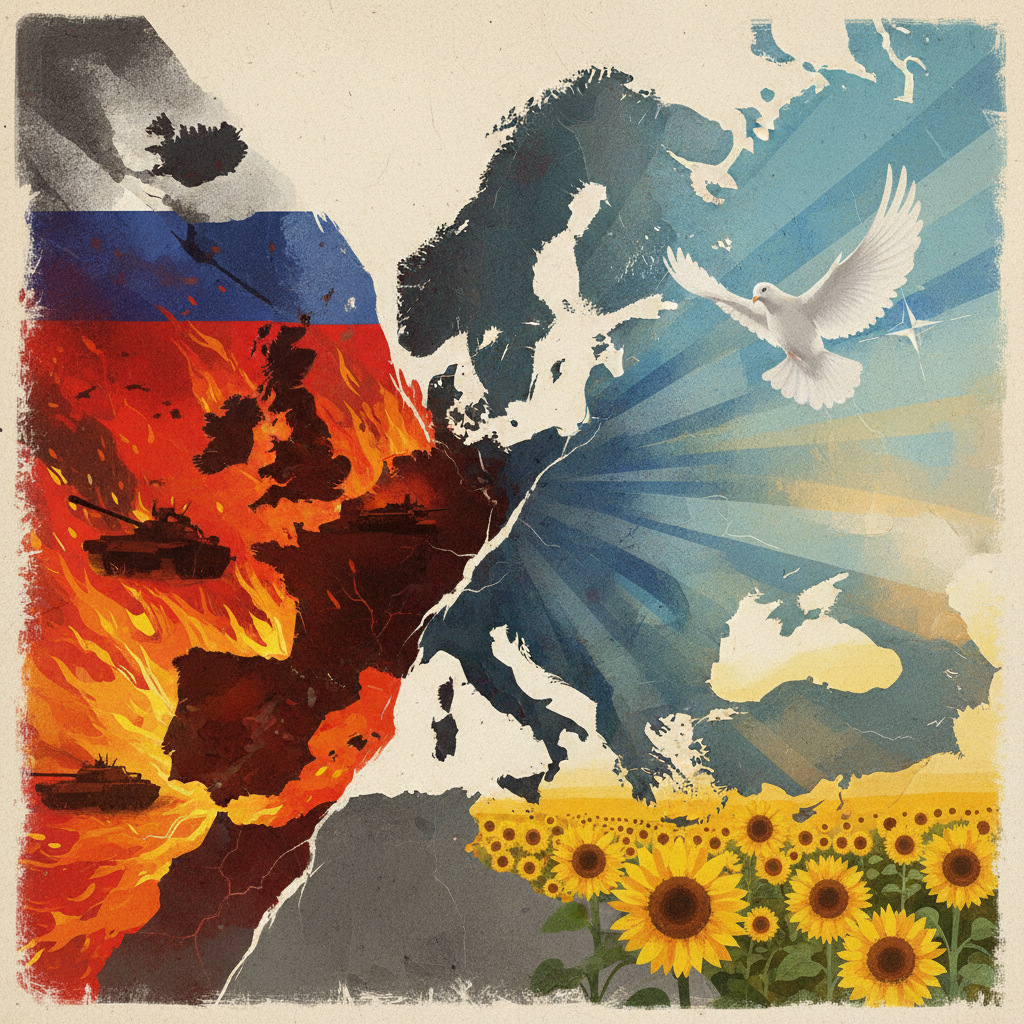
The ongoing conflict in Ukraine maintains an exceptionally high influence score of 100/100, signifying its paramount importance in the current international landscape. GeoGazet tracking shows a total of 100 tracked events related to the conflict, reflecting continuous developments and global repercussions. Far from disappearing from the news, the war, now in its third year, has transitioned from an initial shock event to a protracted, complex struggle that continues to shape global politics, economics, and security.
Persistent Coverage and Key Indicators
Detailed tracking reveals sustained high signal volumes directly related to the conflict. Ukraine itself generates 80 tracked signals, while Russia, the primary antagonist, accounts for 78 tracked signals. Specific incidents involving "Missiles & Strikes" register 10 tracked signals, underscoring the persistent kinetic activity. Recent signals from GeoGazet tracking demonstrate active reporting on critical events, such as "Zelenskiy warns of impending massive Russian attack on Ukraine," highlighting ongoing threats and strategic movements. Furthermore, direct impacts on civilian populations are continuously reported, exemplified by the signal "Russia strikes an apartment block in Ukraine's city of Kharkiv, killing 1 person." These real-time data points contradict the notion of the war being absent from news coverage.
Nuance in Reporting and Shifting Focus
Perceptions of decreased news coverage may stem from a natural shift in media focus from the initial dramatic invasion to the grinding attrition of a prolonged conflict. While the intensity of daily front-page headlines might vary compared to the war's outset, in-depth analysis, updates on military aid, sanctions, and humanitarian impacts remain constant features of international reporting. Even incidents with ambiguous origins, such as "Moscow Refinery Blast May Have Been Caused by Friendly Fire, Video Suggests," are meticulously tracked and reported, offering insights into the broader conflict dynamics and potential for information warfare. This comprehensive approach reflects a more mature phase of reporting on a long-term geopolitical challenge. Historically, protracted conflicts like the wars in Afghanistan or Iraq similarly saw initial peak coverage evolve into sustained, though less sensational, analytical reporting over time.
Geopolitical Impact and Sustained Relevance
The Ukraine war continues to be a central determinant of global security arrangements, energy markets, food security, and alliance structures. Its influence permeates discussions on NATO expansion, European defense strategies, global supply chains, and the future of international law. The conflict is not merely a regional issue but a pivotal contest that defines the relationship between major powers and the principles of state sovereignty. Therefore, even when not dominating hourly news feeds, its underlying strategic importance ensures continuous coverage in specialized geopolitical reports, policy discussions, and economic analyses.
What to watch for next includes any significant shifts in front line control, the potential for a major new offensive from either side, changes in the level of international military or financial support for Ukraine, and the domestic political stability within Russia and Ukraine. The evolving dynamics of information warfare and the long term economic implications will also remain critical areas of focus.