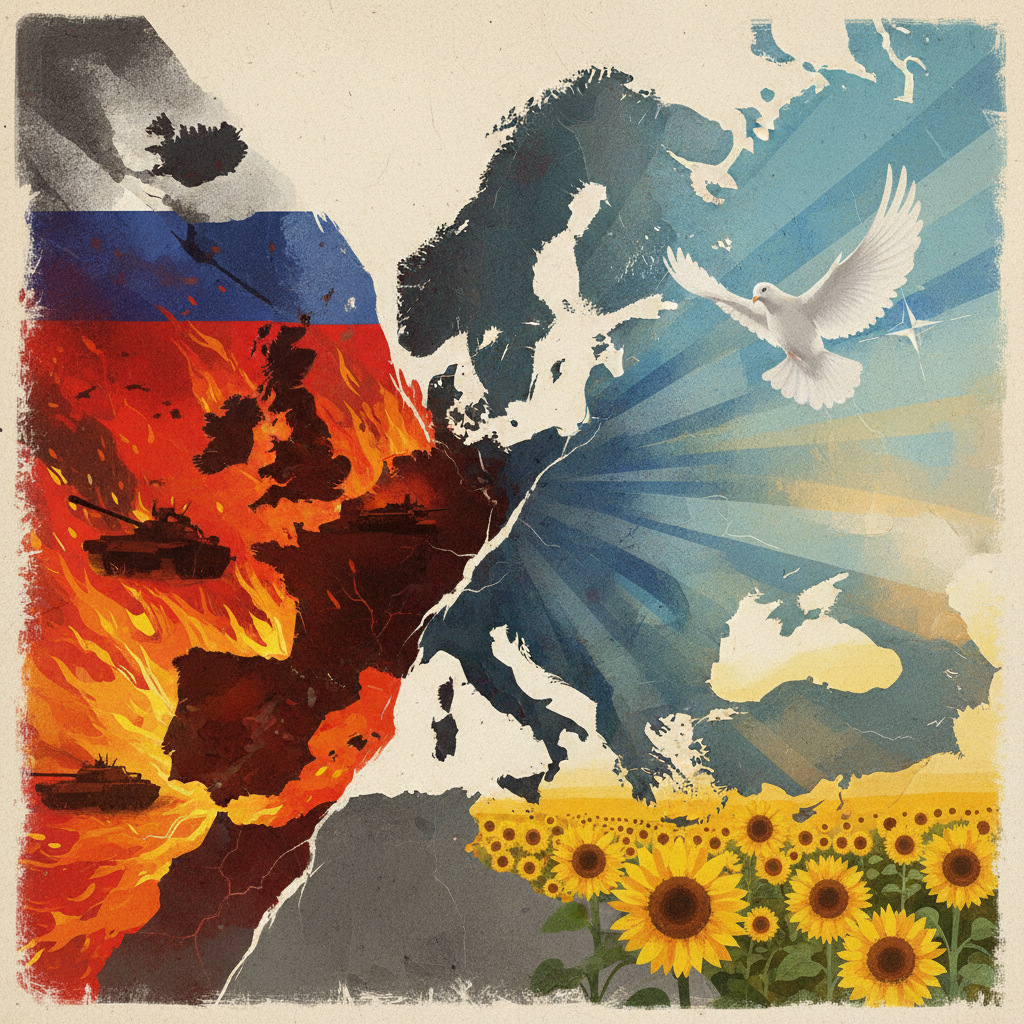
Origins of the Russia-Ukraine War
Historical Context and Escalation
The foundations of the current conflict trace back to the dissolution of the Soviet Union in 1991, which left Ukraine as an independent nation with deep historical and cultural ties to Russia. Russia has consistently viewed NATO expansion eastward as a direct threat to its security interests, a perspective that intensified with the alliance's absorption of former Warsaw Pact nations. This tension first manifested overtly in 2014, when Russia annexed Crimea following a pro-Western revolution in Ukraine and subsequently supported separatists in the Donbas region, initiating a protracted low-intensity conflict. These actions were a clear historical parallel to Cold War-era proxy conflicts, where competing ideologies and alliances clashed on the periphery.
Russia's Stated Motivations
Russia's full-scale invasion in February 2022 was articulated by Moscow as a response to perceived security threats and a need to protect Russian-speaking populations. Official narratives frequently cited the "denazification" of Ukraine and the prevention of its integration into NATO as primary objectives. From Russia's perspective, a neutral Ukraine, preferably within Russia's sphere of influence, is paramount to its strategic depth and national security. This perspective is bolstered by a significant "Current influence score" of 75/100 for the region, reflecting the profound ongoing impact of Russian actions. The concentrated focus on these nations is evident in GeoGazet tracking, with Ukraine recording 82 tracked signals and Russia 74 tracked signals, indicating persistent engagement and strategic importance for both actors.
Ukraine's Sovereignty and Western Alignment
Conversely, Ukraine's trajectory since independence has increasingly favored closer ties with the European Union and NATO, reflecting a desire for democratic governance and economic prosperity outside Russia's orbit. The Maidan Revolution of 2014 underscored this pivot, as Ukrainian citizens demonstrated a clear preference for Euro-Atlantic integration. Ukraine views its pursuit of alliances and its territorial integrity as fundamental rights of a sovereign nation, rejecting any external imposition on its foreign policy choices. This pursuit of self-determination directly conflicts with Russia's ambition for regional hegemony.
Current Geopolitical Situation
The conflict remains highly active, with significant ongoing hostilities. Recent signals from GeoGazet tracking highlight the persistent challenges Ukraine faces, including "Ukraine suffers port attacks as protests persist over defence shake-up," indicating both external pressures and internal political dynamics affecting its defense capabilities. Another signal, "Ukraine fights under an interim defense chief after Zelenskyy's contested government shake-up," underscores the fluidity and domestic political complexities amidst the war. The consistent reporting on "Missiles & Strikes" (5 tracked signals) also confirms the kinetic nature of the conflict. With a "Total tracked events in GeoGazet graph" reaching 100, the scope and intensity of the geopolitical shifts driven by this war are substantial.
What to Watch For Next
Future developments will hinge on Ukraine's ability to maintain internal stability and external support, the long-term impact of Western sanctions on Russia, and any shifts in the global geopolitical alignment that could influence the conflict's trajectory or potential resolution. The ongoing adaptation of military strategies, the resilience of civilian infrastructure, and the international community's sustained engagement will be critical indicators.