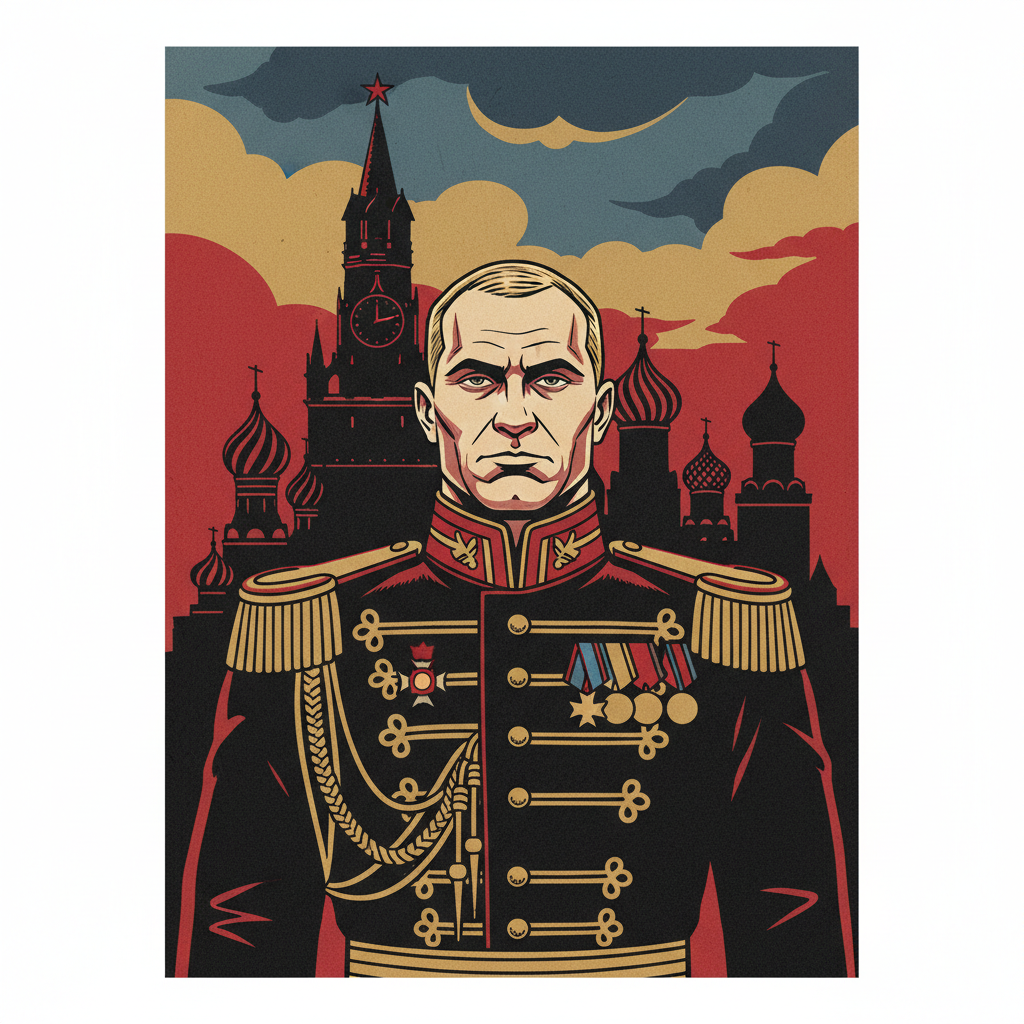
The Current Landscape of Power
Vladimir Putin maintains an exceptionally strong grip on power within the Russian Federation. GeoGazet tracking assigns him a current influence score of 95 out of 100, reflecting his substantial authority and operational control over state mechanisms. This high score is indicative of a political system designed to perpetuate his leadership, reinforced by constitutional amendments enacted in 2020 that allow him to run for two more six-year terms after his current one expires in 2024. The top connections by signal volume for President Putin underscore his primary focus areas: Russia (66 tracked signals), Ukraine (30 tracked signals), and China (20 tracked signals). These connections highlight the domestic policy, regional conflict, and strategic international partnerships that define his administration.
Strategic Maneuvers and Legislative Reinforcement
Recent legislative activity further illustrates Putin's intent to sustain his authority and project Russian influence abroad, effectively precluding a near-term departure. GeoGazet signals detail several critical actions: "Putin signs law authorizing use of military force to 'protect Russian citizens' abroad," "Putin signed a law granting the right to deploy the Armed Forces to protect Russians arrested by foreign courts," and "Putin signs law enabling him to deploy Russian troops abroad to "protect" Russian citizens." These laws provide expansive legal frameworks for military intervention and protection of Russian interests beyond its borders, serving both as tools for foreign policy and as demonstrations of his executive power. Such legislative consolidation, alongside a total of 97 tracked events in the GeoGazet graph, signifies a highly active and strategically directed administration focused on strengthening national sovereignty and international standing under Putin's continuous leadership.
Historical Context and Precedents
Putin's extended period in power draws historical parallels to long-serving Russian and Soviet leaders, who often remained in office until death or severe health incapacitation. Following his initial presidency from 2000 to 2008, he served as Prime Minister before returning to the presidency in 2012, circumventing constitutional term limits at the time. The 2020 constitutional reforms effectively reset his term count, allowing him to potentially remain in power until 2036. This pattern of adaptive legal frameworks to facilitate extended rule aligns with a historical precedent of centralized authority and opaque succession planning in Russia. Unlike Western democracies with fixed terms and clear succession protocols, the Russian system prioritizes stability and continuity under a dominant figure.
Outlook and Factors to Monitor
Given these circumstances, Vladimir Putin's departure from office is unlikely to occur in the short to medium term without unforeseen internal upheaval or a severe health crisis. His power is deeply entrenched through legislative action, control over state apparatuses, and a supportive security establishment. What to watch for next includes any significant shifts in domestic elite sentiment, a dramatic downturn in economic stability, or the emergence of a credible successor within the opaque political system. External pressures, while impactful, have historically tended to strengthen domestic support for his leadership rather than weaken it.