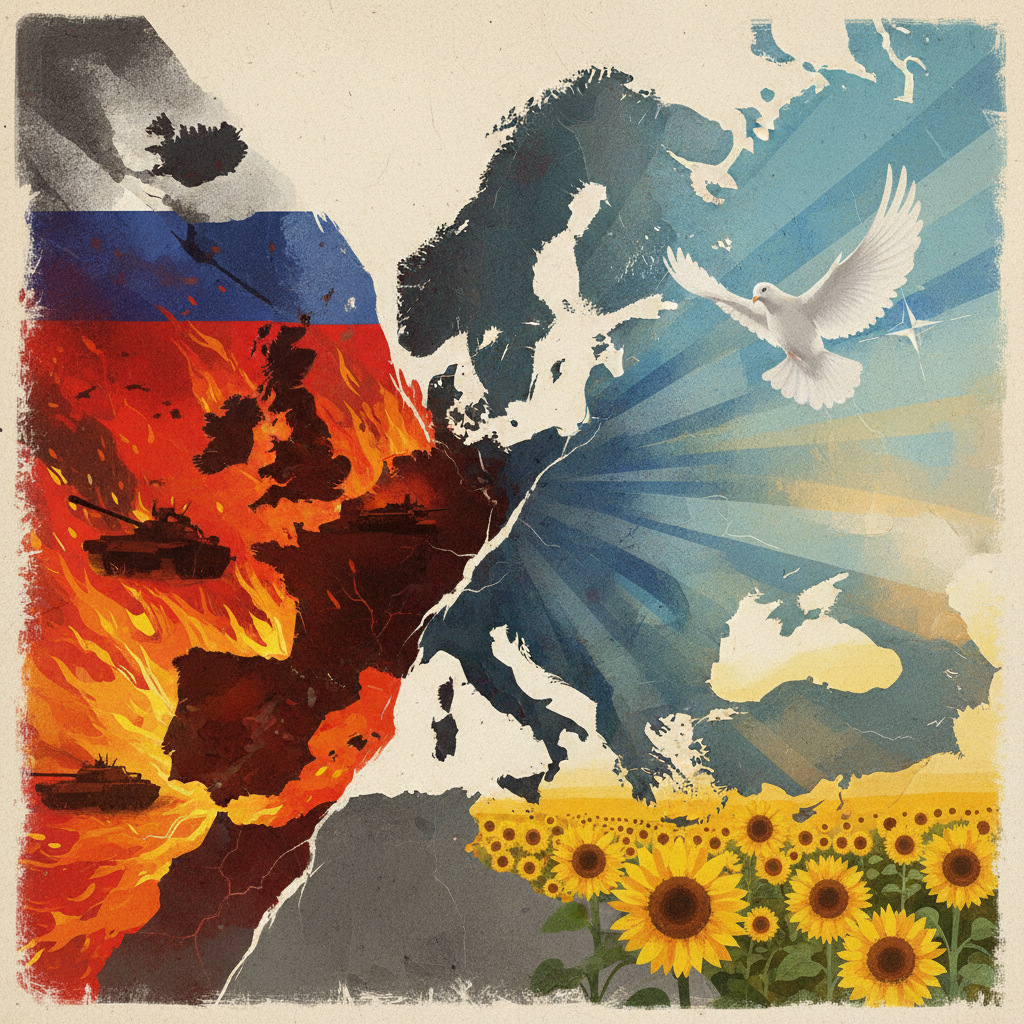
Geopolitical Context and Scale
The current war is a large-scale conventional military conflict involving ground, air, and naval forces, impacting civilian populations and critical infrastructure across Ukraine. Its global significance is underscored by a current influence score of 100/100, reflecting its widespread international ramifications across security, economy, and humanitarian spheres. Top connections by signal volume monitored by intelligence platforms reveal Russia (87 tracked signals) and Ukraine (80 tracked signals) as the primary actors, with Missiles & Strikes (10 tracked signals) indicating a predominant aspect of recent combat.
This conflict has profoundly reshaped the geopolitical landscape of Europe. It has solidified Western alliances, particularly NATO, which has provided substantial military and financial aid to Ukraine. Russia, in turn, has faced extensive international sanctions and diplomatic isolation from many Western nations, while seeking closer ties with other global powers. The war is seen by many analysts as a challenge to the post-Cold War international order and principles of national sovereignty and territorial integrity.
Recent Operational Dynamics
The conflict is characterized by active front lines in eastern and southern Ukraine, accompanied by regular long-range missile and drone attacks. Recent signals from GeoGazet tracking illustrate this dynamic: "At Least 5 Dead as Russia and Ukraine Exchange Wave of Strikes" highlights the continuing pattern of mutual long-range attacks and their human cost. Ukrainian forces have demonstrated capability to strike targets within Russian territory, with signals reporting "Ukraine strikes Russian weapons plant, Moscow fuel hub" and "Ukraine strikes industrial facility in Russia’s Volgograd as Russian drone attack kills 1." These incidents confirm the cross-border nature of the fighting and Ukraine's efforts to target Russian logistics and industrial capacity. The total tracked events in the GeoGazet graph, numbering 100, indicate persistent and varied military activity.
Historical Parallels
The protracted nature and scale of the Ukraine War draw historical comparisons to earlier large-scale European land conflicts, as well as Cold War era proxy confrontations. The extensive use of modern weaponry, combined with trench warfare and attrition tactics, has been likened by some historians to elements of both World War I and World War II. The involvement of external powers providing significant military aid to one side, without direct military intervention, also echoes aspects of Cold War dynamics where superpowers supported allied states in regional conflicts. The conflict also signifies the largest conventional war in Europe since 1945, challenging long-held assumptions about security on the continent.
What to Watch For Next
Key areas for observation include the effectiveness of ongoing military aid to Ukraine, particularly air defense systems and artillery; Russia's ability to sustain its war economy and troop mobilization; and the potential for technological shifts in warfare, such as advanced drone capabilities. Diplomatic efforts and any changes in international support for either side will also be critical factors in determining the conflict's future trajectory.