Current Status and Economic Adaptation
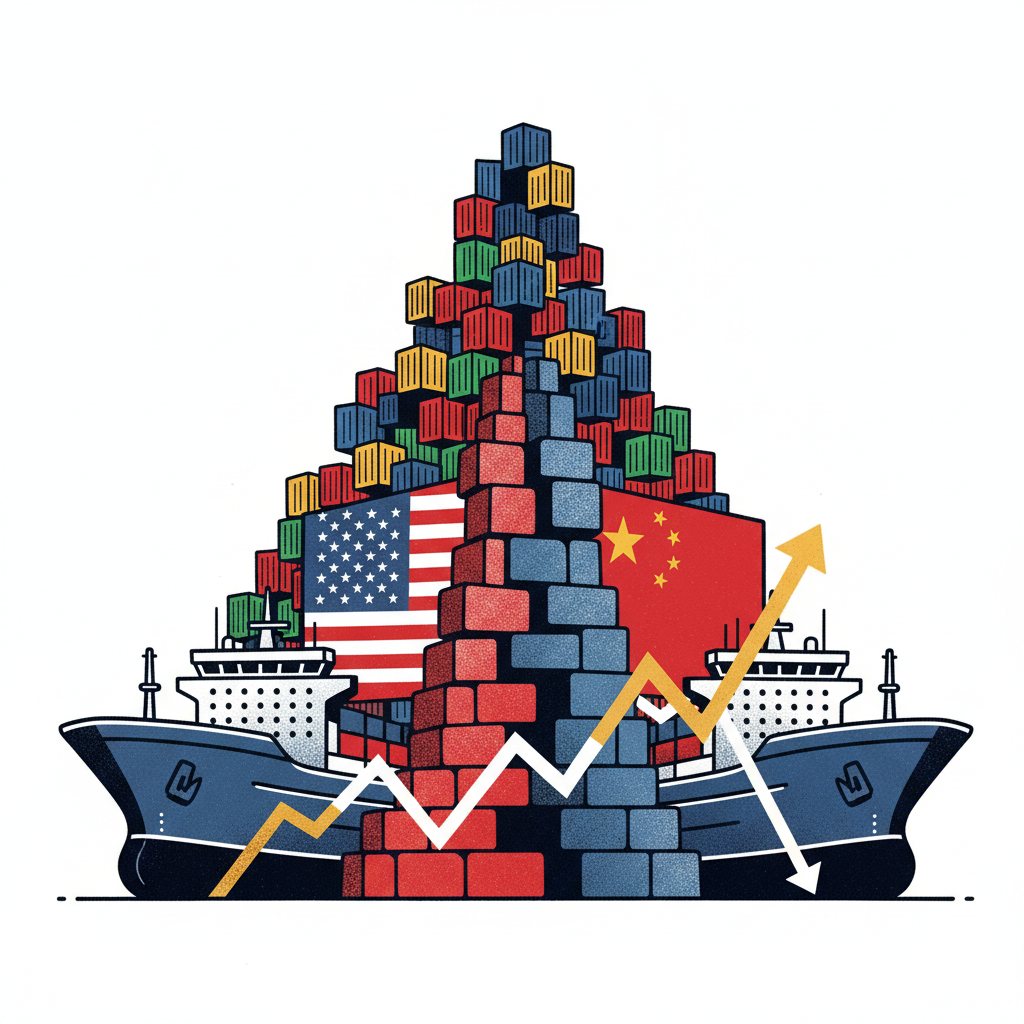
The trade conflict initiated during the Trump administration, characterized by the imposition of significant tariffs on hundreds of billions of dollars worth of goods, aimed to address trade imbalances, intellectual property theft, and forced technology transfers. While the Biden administration has largely maintained these tariffs, the direct "trade war" as an actively escalating crisis has cooled. The current influence score for the US-China trade war is tracked at 13/100, suggesting it remains a factor but is not the most volatile or rapidly developing geopolitical issue globally. Signal volume data from GeoGazet indicates "Tariffs & Trade" as the top connection with 78 tracked signals, underscoring the enduring significance of these measures. Signals related to "China" (37 tracked signals) and "United States" (12 tracked signals) reflect ongoing attention to the economic policies and responses of both nations.
Shifting Global Supply Chains
A significant development is the ongoing reconfiguration of global supply chains in response to persistent trade tensions and geopolitical risks. As noted in a recent GeoGazet signal, "A Year After "Liberation Day," China Rerouted Its Exports and Taiwan Expanded Its Tech Footprint," businesses are actively adjusting sourcing and manufacturing locations. This reflects a strategic move away from reliance on single-country supply chains, particularly those centered in China. Another GeoGazet signal, "How to Tariff-Proof Your Supply Chain Before the Next Policy Shift," illustrates the proactive measures companies are undertaking to build resilience against potential future policy changes or escalations. This adaptation contrasts with the initial phases of the trade war (2018-2019), which saw more reactive responses to sudden tariff announcements.
Uneven Global Impact
The strategic adjustments by both the US and China, along with the corporate sector, have generated uneven economic consequences for third countries. As highlighted by the GeoGazet signal, "US-China Tariff War: Why Third-Country Gains Are Uneven," some nations have benefited from diverted trade and investment, while others have faced economic disruption. For instance, countries in Southeast Asia and Mexico have seen increased foreign direct investment and export opportunities as companies seek alternative manufacturing hubs outside China. However, these gains are often specific to certain sectors or products and are not universally distributed. The total tracked events in the GeoGazet graph, numbering 100, underscore the complexity and multifaceted nature of these global economic shifts.
What to Watch For Next
Future developments in the US-China trade dynamic will likely hinge on several factors. Observers should monitor any shifts in US tariff policy, particularly following the upcoming US presidential election, as well as China's ongoing efforts to boost domestic consumption and diversify its export markets. The evolving geopolitical competition in critical technologies, such as semiconductors and artificial intelligence, will also continue to shape trade relations. Additionally, the pace of supply chain reshoring or "friend-shoring" will indicate the long-term impacts of the trade war on global manufacturing and logistics.