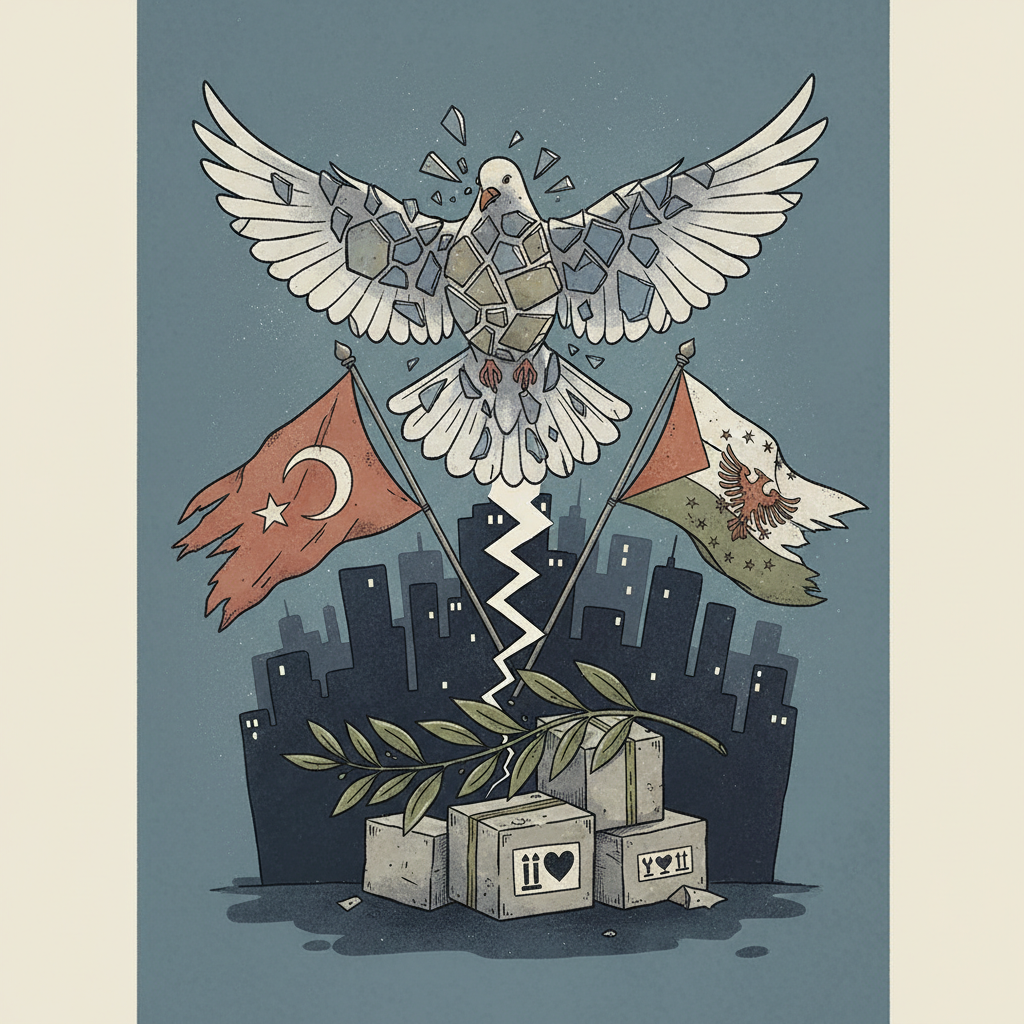
Context of the Gaza Conflict
The Gaza Strip is a densely populated territory that has experienced numerous conflicts over decades, shaping a complex geopolitical landscape. The current situation involves ongoing military operations and a humanitarian crisis, generating a high volume of critical events. GeoGazet tracking indicates a high signal volume, with Gaza accounting for 59 tracked signals and Israel for 53, reflecting the intense focus on the region. This volatile environment directly translates into extreme risks for journalists attempting to cover developments.
Extreme Danger and High Casualties
Journalists operating in Gaza face constant threats to their lives. The "Current influence score" for the region stands at a critically low 3/100, underscoring the extreme lack of safety for civilians and, by extension, media professionals. Recent signals from GeoGazet tracking provide stark evidence of this peril: "Israel bombs Gaza after displacement orders, kills two Palestinians" illustrates the direct military hazards, while "‘There is no safe place’: Israeli attack kills family of six in Gaza" highlights the pervasive danger affecting all residents, including journalists and their families. Historically, conflicts in the Gaza Strip have consistently resulted in disproportionately high journalist casualties compared to other conflict zones globally. Media organizations frequently report significant numbers of their personnel killed or injured, reflecting the inherent risks of reporting from an active war zone where civilian infrastructure is often impacted.
Access Restrictions and Information Control
Access for journalists into and within the Gaza Strip is severely curtailed, impacting their ability to gather and disseminate information. Restrictions on movement, checkpoints, and designated "no-go" zones limit reporting scope. The signal “‘Creeping death’: Israel weaponises ‘Yellow Line’ to annex Gaza" while referring to broader geopolitical maneuvers, indicates a strategy that further restricts freedom of movement and access for all individuals, including journalists. Both Israeli and Palestinian authorities have historically imposed restrictions on media access, citing security concerns or information control. This often results in a limited number of international journalists gaining entry, while local Palestinian journalists bear the brunt of reporting under siege conditions, often without adequate protection or resources. Such restrictions not only endanger journalists but also contribute to a less complete global understanding of events.
Psychological and Professional Toll
Beyond physical danger, journalists in Gaza endure severe psychological trauma. Witnessing widespread death, destruction, and human suffering, coupled with the constant threat to their own lives and the lives of loved ones, leads to high rates of post-traumatic stress disorder and other mental health challenges. Professionally, operating under these conditions strains resources, limits the ability to verify information independently, and forces journalists to navigate complex ethical dilemmas while striving for impartiality. The sheer volume of tracked events, totaling 100 in the GeoGazet graph, signifies the relentless pace of critical developments that journalists are expected to cover despite immense operational challenges.
What to Watch For Next
Observers should monitor international efforts to ensure journalist safety and access, particularly concerning the provision of protective equipment and safe passage. Attention must also be paid to how technological advancements, such as drone journalism and citizen reporting, are impacting information flow in a restricted environment. The psychological support needs of journalists operating in such extreme conditions will also remain a critical consideration.