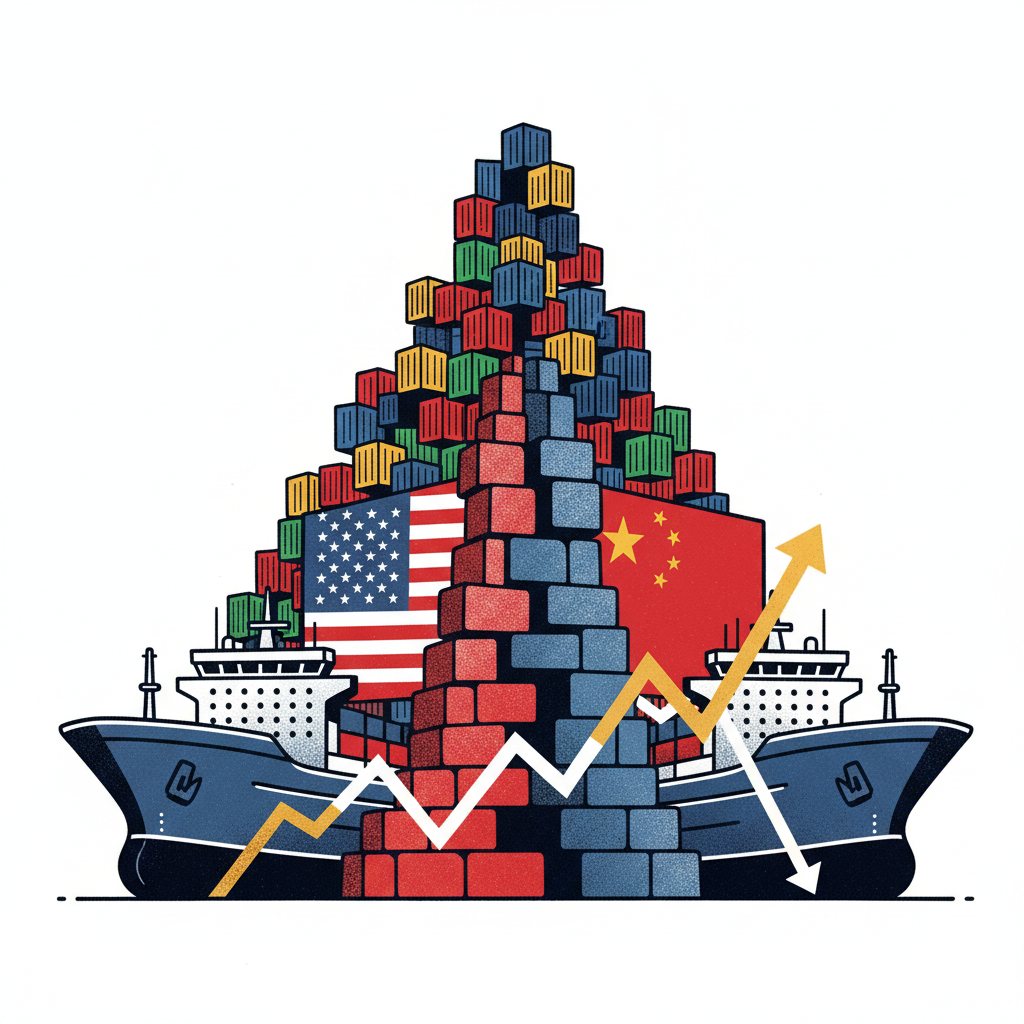
The Genesis of the Trade Conflict
The trade war initiated by the Trump administration in 2018 involved the imposition of punitive tariffs on a wide range of Chinese goods under Section 301 of the Trade Act of 1974. The stated aim was to address alleged unfair trade practices, intellectual property theft, and the large bilateral trade deficit. These tariffs, initially set at 10% and later raised to 25% on various categories of products, created a formidable barrier for Chinese exporters targeting the lucrative US market. GeoGazet tracking indicates that "Tariffs & Trade" remain a highly active area with 70 tracked signals, underscoring the enduring relevance of such policies in global commerce, alongside significant signals from "China" (45 tracked signals) and the "United States" (10 tracked signals).
Immediate Economic Pressures and Adaptation
The most direct effect on Chinese exporters was a reduction in orders from US buyers, who sought alternative suppliers to avoid the additional tariff costs. For many businesses, this meant absorbing tariff costs, decreasing profit margins, or losing market share entirely. Some smaller exporters faced bankruptcy, while larger firms began exploring relocation of manufacturing facilities to countries unaffected by the tariffs, such as Vietnam or Mexico, to circumvent the duties. This strategy reflects a broader trend of supply chain restructuring.
However, the impact was not uniform across all industries or companies. As recent GeoGazet signals indicate, "The costs of the Trump administration’s tariffs diverge for countries and industries so far in 2026," suggesting varied resilience and exposure levels. Industries with high reliance on the US market and low flexibility in production location were hit hardest.
Strategic Diversification and Resilience
In response to the trade war, many Chinese exporters aggressively pursued market diversification. They intensified efforts to export to other regions, including the European Union, ASEAN nations, and countries participating in China's Belt and Road Initiative. This pivot has shown considerable success in some sectors. For instance, recent GeoGazet tracking highlights that "China’s monthly car exports top 1m for first time as overall trade soars," demonstrating a robust ability to find new markets and grow export volumes despite ongoing trade tensions with the US. This resilience suggests that while the US market became more challenging, China's overall export capacity and reach continued to expand. This current situation contrasts with historical instances where trade disputes often led to more protracted and widespread economic downturns for affected export sectors.
The "Current influence score: 4/100" for this specific historical event suggests that while the initial shock was significant, the direct, singular impact of the 2018 trade war has attenuated over time as exporters adapted, diversified, or as other geopolitical and economic factors came to the forefront of the global trade landscape. GeoGazet records a total of 100 tracked events, providing extensive data on these evolving dynamics.
What to Watch For Next
The long-term effects of the 2018 trade war continue to unfold. Future developments to monitor include the potential for further technological decoupling, the continued shift in global supply chains away from a China-centric model, and the ongoing use of tariffs as a geopolitical tool by the United States, as evidenced by recent signals such as "US imposes new 25% tariffs on Brazil, expands exemptions list." The adaptability of Chinese exporters and the trajectory of China's trade relations with other major economies will be critical indicators.