Entrenched Objectives
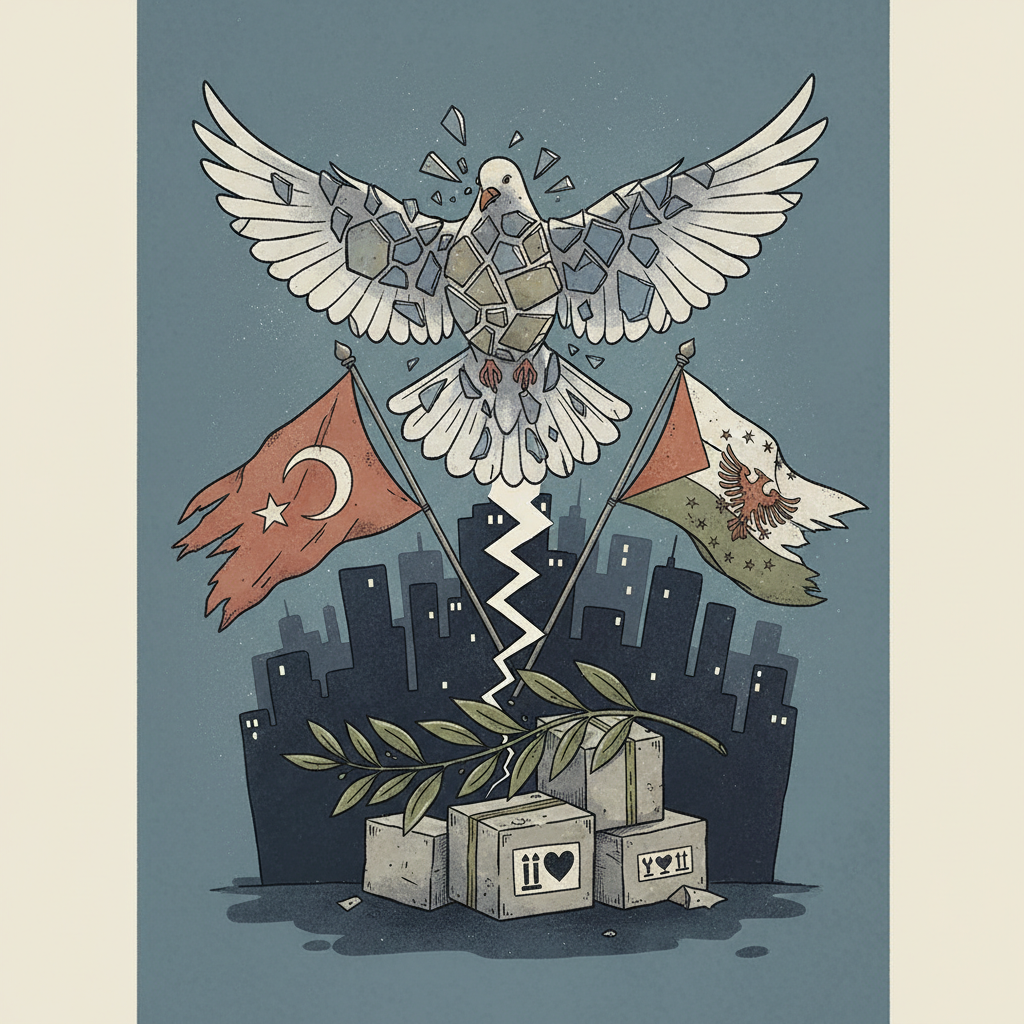
The conflict, significantly reignited after the October 7, 2023, attacks, persists because neither Israel nor Hamas has fully achieved its stated strategic goals. Israel's objectives include dismantling Hamas's military and governance capabilities, ensuring the release of all hostages, and preventing future threats from Gaza. Hamas, conversely, seeks to maintain its resistance infrastructure and political influence, while holding out for terms that secure its future role. The difficulty in reconciling these maximalist positions forms the core of the ongoing conflict. This protracted nature echoes historical conflicts where deeply rooted security imperatives led to stalemates outlasting initial military campaigns.
Fragmented Diplomacy and Regional Spillover
Diplomatic initiatives, despite significant international pressure, have yet to produce a breakthrough. GeoGazet tracking indicates "Peace & Ceasefire" as a top connection with 53 tracked signals, closely followed by "Gaza" (52 signals) and "Israel" (44 signals), illustrating intense international focus on ending the conflict and highlighting the centrality of the primary belligerents. The current influence score stands at 49/100, reflecting a fragmented power dynamic where no single actor or resolution pathway holds decisive sway. US efforts to resolve the conflict are evident, with GeoGazet tracking a signal that "US weighs boosting ties with PA as it seeks to advance Gaza plan and Abraham Accords." This indicates ongoing attempts to shape a post-conflict future, implicitly acknowledging the war's persistence. However, the conflict's scope has also expanded regionally, further complicating resolution. A GeoGazet signal notes that "Iran says the initial deal to end the war with the US requires Israel to withdraw from Lebanon," expanding demands beyond Gaza and linking the conflict to broader regional security issues. International pressure persists, as seen in a GeoGazet signal reporting that "At G7 summit, Egypt’s Sissi urges Israel to abandon plans to capture more of Gaza." This reflects international concern over potential Israeli territorial expansion, a significant obstacle to de-escalation. The extensive and multifaceted nature of the ongoing geopolitical discourse surrounding the conflict is further highlighted by a total of 100 tracked events in the GeoGazet graph.
Post-Conflict Governance Disagreements
A critical barrier involves the inability to agree on post-conflict governance for Gaza. Israel rejects Hamas remaining in power but has not presented a widely accepted alternative that avoids a long-term Israeli occupation. The Palestinian Authority, seen by some as a potential administrator, lacks significant influence in Gaza and requires substantial reform and international backing. Hamas resists any outcome that diminishes its authority, perceiving any such arrangement as a capitulation. This impasse creates a vacuum that perpetuates the conflict, as a clear and stable governance solution is essential for any sustainable peace. Historically, the absence of a viable political successor after military campaigns often extends instability, a pattern visible in numerous global post-conflict scenarios.
What to Watch For Next
Future developments hinge on several key indicators: the success of hostage negotiations, the degree of international pressure on Israel's military operations and post-war plans, Israel's internal political stability, and concrete proposals for a unified, internationally recognized governance structure for Gaza. Continued regional escalation, particularly involving Hezbollah or Iranian proxies, could also dramatically alter the conflict's trajectory.