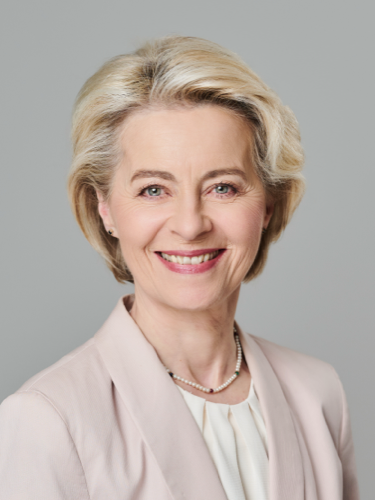
ستشغل أورسولا فون دير لاين منصب رئيسة المفوضية الأوروبية حتى انتهاء ولايتها الثانية في عام 2029.
بدأت رئاستها في عام 2019 وهي حالياً في ولايتها الثانية.
تشغل ولاية ثانية في المفوضية الأوروبية تمتد حتى عام 2029.
Ursula von der Leyen is the President of the European Commission, currently serving her second term which began after her first in 2019. Her current mandate is set to conclude in 2029. This established five year term structure provides stability and continuity in European Union leadership, allowing for consistent policy development and implementation over a defined period.
Von der Leyen maintains a significant influence score of 100 out of 100, reflecting her central and active role in European and global affairs. Her leadership is evident in a broad range of strategic initiatives, with GeoGazet tracking 100 total events related to her activities, demonstrating a presidency fully engaged across multiple fronts. Her proactive diplomatic efforts are highlighted by the report that "Von der Leyen Visits Greenland as EU Unveils €200 Million Investment Package," clearly demonstrating the European Union's strategic engagement in Arctic development and its commitment to international partnerships. Furthermore, her office continues to foster significant international outreach, as evidenced by the report that "EU and Canada plan far reaching alliance to strengthen partnership," signaling strong transatlantic cooperation. While her agenda is ambitious and globally focused, it also addresses pressing internal challenges, as seen with "Macron's letter to von der Leyen warns over social media harms," underscoring the intricate complexities of digital governance and societal impact within the Union. These ongoing events collectively underscore a presidency actively shaping the EU's internal policies, external relations, and its position on the global stage.
With her current term securely ending in 2029, the European political landscape will soon intensify its preparations for the selection of the next European Commission leadership. While a third term for a Commission President is not explicitly prohibited by treaty, it is an unusual occurrence given historical precedents and the complex political dynamics among member states. The selection process for the next President typically involves the European Council proposing a candidate, taking into careful consideration the results of the preceding European Parliament elections. This proposal then requires approval by a majority vote in the European Parliament. Therefore, while her tenure is confirmed until 2029, the period leading up to that year will see increasing public discussion, strategic positioning by various political groups, and active negotiations among national leaders regarding her potential successor. This democratic mechanism ensures a fresh mandate and alignment with the evolving priorities of the European electorate.