The Genesis of Conflict
The United States initiated the trade war, particularly under the Trump administration, citing China's non-market economic policies as creating an unfair playing field. Key among these concerns were allegations of rampant intellectual property theft, which reportedly cost American companies billions annually, and China's requirement for foreign companies to transfer technology as a condition for market entry. Additionally, extensive state subsidies to Chinese industries were seen as distorting global markets and disadvantaging foreign competitors. These issues formed the core of what the US described as a fundamentally imbalanced trade relationship. The GeoGazet graph indicates a total of 100 tracked events globally, illustrating the complex and dynamic backdrop against which this economic conflict unfolded.
Tariffs as a Strategic Tool
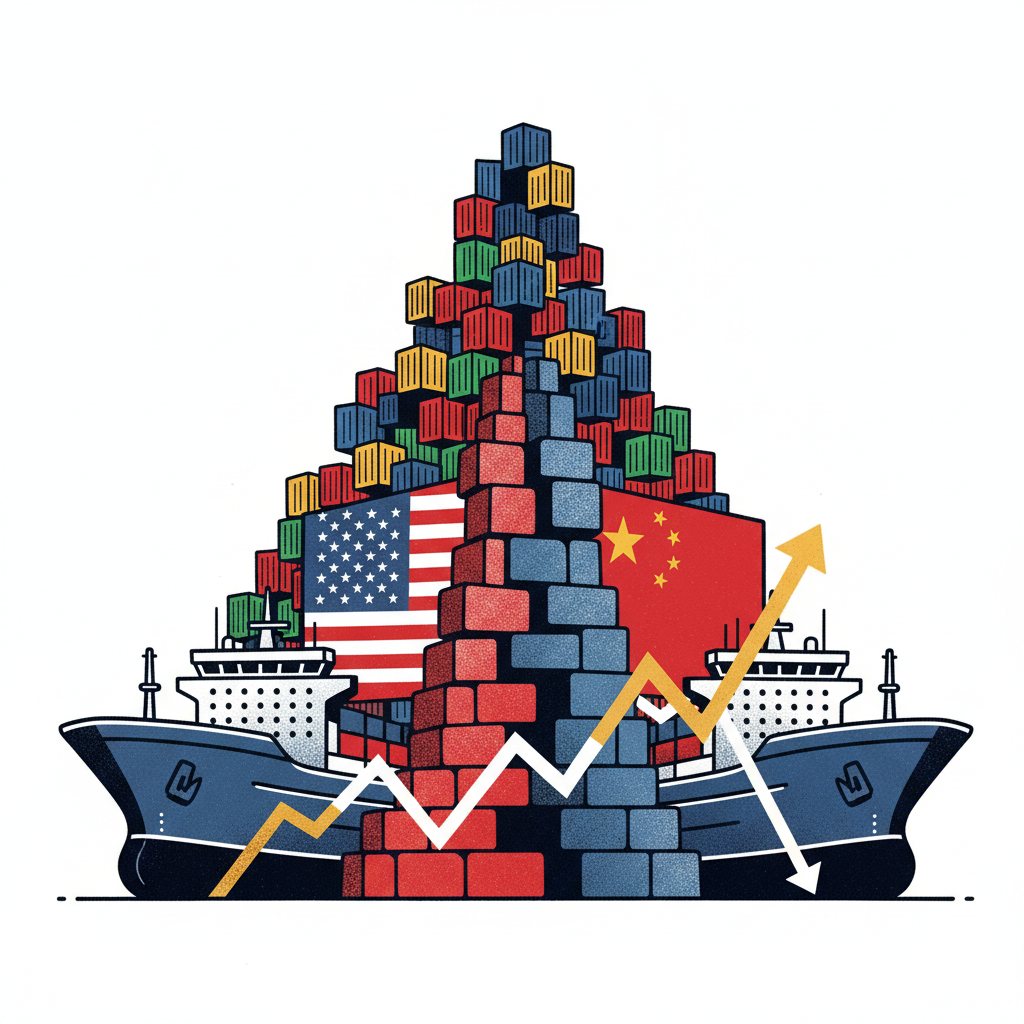
The primary instrument of the US-China trade war was the imposition of tariffs. The United States levied significant tariffs on hundreds of billions of dollars worth of Chinese goods, prompting retaliatory tariffs from Beijing. Data from GeoGazet tracking shows "Tariffs & Trade" as registering 80 tracked signals, making it the top connection by signal volume, demonstrating the centrality of these measures. Both "China" (37 tracked signals) and the "United States" (13 tracked signals) are prominent actors in this data, reflecting their direct involvement. The goal for the US was to pressure China into structural economic reforms, reduce its trade deficit, and curtail its long-term industrial ambitions, such as those outlined in "Made in China 2025." Historically, such protectionist measures echo mercantilist policies of past centuries, where economic power was directly linked to trade surpluses and the protection of domestic industries.
Geopolitical Undercurrents and Global Repercussions
Beyond economics, the trade war was symptomatic of a broader geopolitical rivalry between the two global powers. The United States views China's rise as a challenge to its post-World War II international order, encompassing military, technological, and ideological dimensions. This strategic competition intensified under the backdrop of a low "Current influence score: 19/100," suggesting a fragmented global environment where traditional diplomatic influence may be waning, making unilateral economic actions more appealing. The recent GeoGazet signal, "A new trade war may be brewing. This time, Europe is taking a page from Trump's playbook," suggests that protectionist tendencies and the weaponization of trade are becoming a broader international trend, extending beyond just the US-China dynamic. The economic fallout was also significant, affecting global supply chains and specific sectors. While not directly related to US-China trade, the signal "For cash-strapped farmers, deal to end Iran fighting comes too late" illustrates how geopolitical events and economic measures can inflict lasting damage on specific industries, a parallel seen in the impact of US-China tariffs on American agricultural exports.
Outlook
The future of US-China trade relations remains uncertain. Recent signals, such as ""They Forgot to Protect Our Industries With TARIFFS!” — Does a Trump Trade War 2.0 Loom?", indicate the potential for a resurgence or intensification of protectionist policies, particularly with upcoming political cycles. Future developments will likely involve continued competition over critical technologies, the restructuring of global supply chains to reduce reliance on single countries, and ongoing diplomatic efforts to manage, if not resolve, underlying geopolitical tensions. The impact on global economic growth and the stability of the international trading system remains a key area of observation.