Background and Evolution
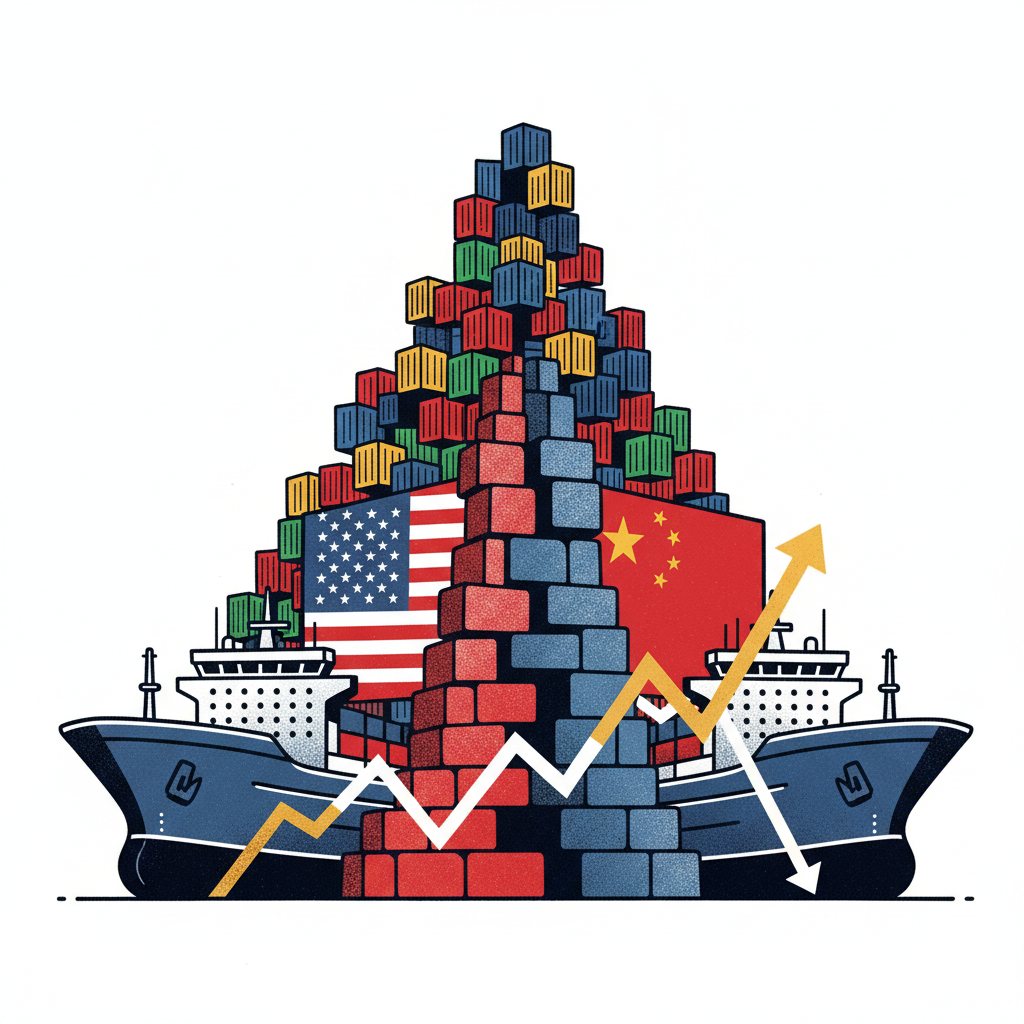
The US-China trade war formally began in 2018 under the Trump administration, initiated by the imposition of tariffs on Chinese imports under Section 301 of the Trade Act of 1974. These actions aimed to address long-standing grievances regarding intellectual property theft, forced technology transfer, and market access imbalances. The conflict escalated through several rounds of reciprocal tariffs, impacting billions of dollars worth of goods and causing significant supply chain disruptions. While a "Phase One" trade deal in early 2020 temporarily de-escalated tensions and committed China to increased US purchases, many tariffs remained in place.
Current Geopolitical and Trade Landscape
Today, the US-China trade dynamic is shaped by both legacy tariffs and a broader geopolitical emphasis on "de-risking" and supply chain resilience. The current influence score for the US-China trade war stands at 8/100, indicating its diminished but still present role in the broader geopolitical discourse compared to earlier periods of heightened activity. Analysis of signal volume reveals that "Tariffs & Trade" remains a highly tracked topic with 70 signals, followed by "China" (45 signals) and "United States" (12 signals), underscoring the ongoing relevance of these economic linkages as tracked by GeoGazet. The total tracked events in the GeoGazet graph are 100, reflecting continuous monitoring of this relationship.
Despite calls for diversification, practical economic realities often challenge political rhetoric. For instance, GeoGazet tracking indicates that "Europe wants to rebalance trade with Beijing, but can't quit Chinese air conditioners," highlighting a common dilemma where strategic independence conflicts with consumer demand and manufacturing efficiency. Similarly, within the United States, "Retailers front-loading Chinese imports to beat looming July 24 tariff deadline (WMT:NASDAQ)" and "US retailers frontload China orders for holiday season, shipping firms say" are prevalent trends. These signals suggest that major companies, including Walmart, are tactically accelerating imports from China to mitigate the impact of anticipated tariffs or other trade restrictions, demonstrating a persistent reliance on Chinese manufacturing for consumer goods.
What to Watch For Next
The future of the US-China trade relationship will be influenced by several factors. Observers should monitor any new tariff announcements or reviews, particularly concerning critical technologies and strategic sectors. The effectiveness of "de-risking" strategies will depend on the development of alternative supply chains and the willingness of businesses to absorb higher costs. The upcoming US election cycle could also introduce new policy shifts, either intensifying protectionist measures or seeking new avenues for trade engagement. Finally, global economic health and consumer demand will play a critical role in shaping the urgency and direction of trade policy.