Renewed Tariff Discussions and Geopolitical Context
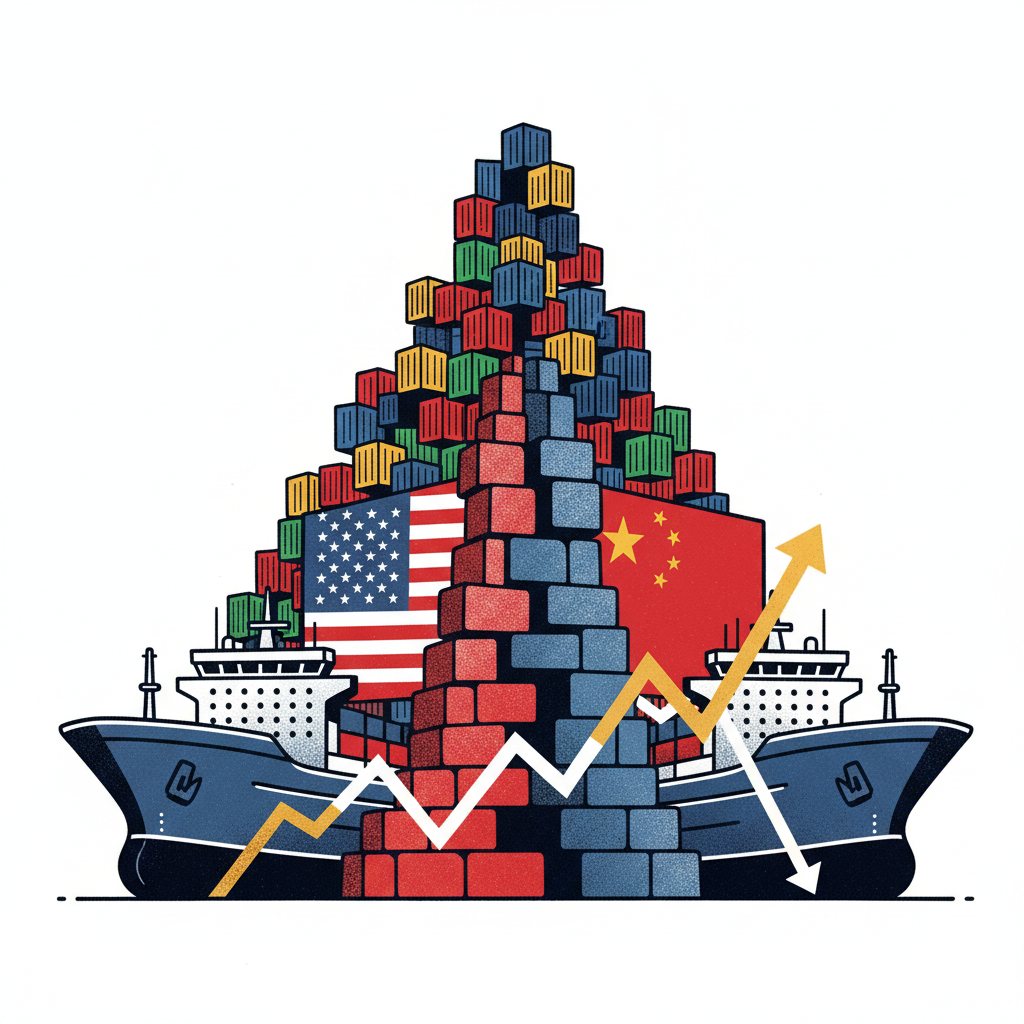
The current geopolitical environment reflects a re-emphasis on economic nationalism, particularly from the United States. Following a period of relative calm, signals tracked by GeoGazet indicate a significant shift in US trade policy rhetoric. Specifically, the signal "Trump’s New U.S. Tariff Wall Shakes Up Winners, Losers Lineup" suggests an impending or implemented policy change impacting global commerce. This development mirrors the initial phases of the trade war, which began in 2018 under the Trump administration, characterized by reciprocal tariffs on hundreds of billions of dollars worth of goods. The broader context includes ongoing strategic competition over technology, intellectual property, and regional influence, where trade policies are often leveraged as instruments of national power. This environment has prompted businesses to adapt, as evidenced by the GeoGazet tracking signal "How to Tariff-Proof Your Supply Chain Before the Next Policy Shift," indicating active measures to mitigate future trade disruptions.
Data-Driven Insights on Trade Dynamics
Analysis of real-time intelligence reveals the persistent, albeit not immediately critical, nature of US-China trade tensions. GeoGazet's current influence score for the US-China trade war stands at 17/100, suggesting that while significant, it is not the dominant global event today. However, the underlying signals are robust. Top connections by signal volume underscore the central role of "Tariffs & Trade" with 78 tracked signals, followed by "China" with 35 tracked signals, and "United States" with 14 tracked signals. This distribution confirms that trade policy, specifically involving China and the United States, remains a highly active area of observation within the geopolitical intelligence landscape. The GeoGazet graph tracks a total of 100 relevant events, illustrating a continuous stream of developments shaping these complex trade relationships.
Historical Parallels and Supply Chain Resilience
The current resurgence of tariff discussions draws direct parallels to the 2018-2019 period, when both nations implemented substantial tariffs leading to significant economic uncertainty. Historically, such trade disputes have not only impacted import and export volumes but also accelerated the diversification of global supply chains. The GeoGazet signal "How to Tariff-Proof Your Supply Chain Before the Next Policy Shift" indicates that businesses and governments are proactively learning from past experiences. Companies are evaluating options such as nearshoring, friend-shoring, and investing in automation to reduce dependency on single countries, particularly China, for critical components and manufacturing. This strategic reorientation aims to build resilience against sudden policy shifts and geopolitical volatility, moving beyond merely reacting to tariffs to fundamentally restructuring global production networks.
What to Watch For Next
Future developments in the US-China trade war will largely depend on evolving political landscapes in both nations and the broader global economic environment. Observers should monitor any official announcements regarding new tariff implementations or retaliatory measures. Furthermore, the rhetoric surrounding upcoming elections in the United States will be crucial, as trade policy frequently becomes a key campaign issue. Beyond tariffs, attention should remain on technological export controls, intellectual property disputes, and investment restrictions, which represent additional fronts in the economic competition. The adaptability of global supply chains and the response of multinational corporations to these pressures will also provide valuable indicators of the trade war's ongoing impact.