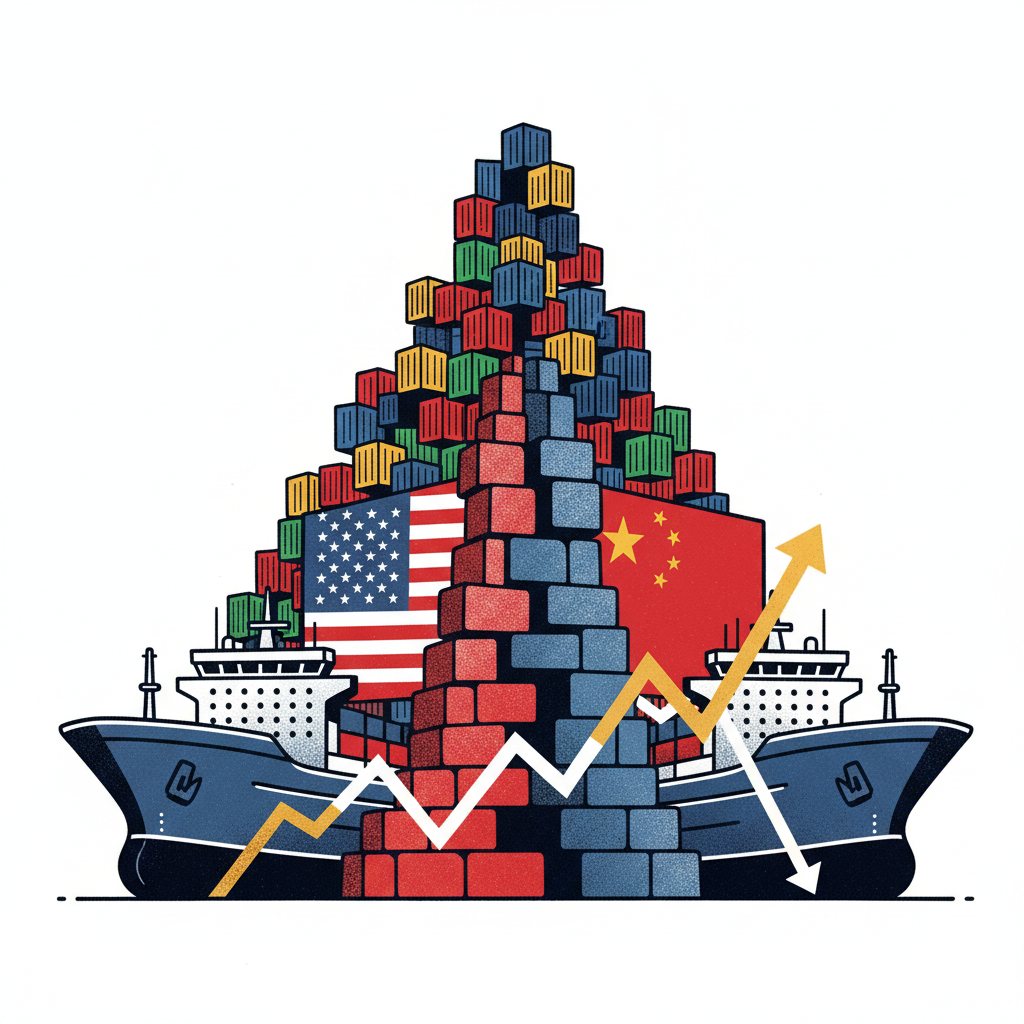
The Enduring US-China Trade Conflict
The US-China trade war originated under the Trump administration in 2018 with the imposition of broad tariffs on Chinese imports, ostensibly to address trade imbalances and intellectual property theft. While the Biden administration has adjusted some aspects, many of these tariffs remain in place, signaling a continuity in Washington’s strategic approach to Beijing. GeoGazet tracking extensively monitors this dynamic, with recent signals including "Tracking the Impact of the Trump Tariffs & Trade War," underscoring the ongoing assessment of its effects.
Current Geopolitical and Economic Dynamics
The trade conflict is embedded within a broader geopolitical rivalry encompassing technological dominance, regional security, and ideological differences. Analysis of the current situation indicates a complex interplay of factors, with GeoGazet tracking registering 100 total tracked events related to this sphere. The current influence score for this ongoing trade dynamic stands at 12/100, suggesting its significance within the broader spectrum of global intelligence monitoring. Top connections by signal volume reflect intense analytical focus on "Tariffs & Trade" with 84 tracked signals, "China" with 47 tracked signals, and the "United States" with 17 tracked signals, confirming these as core components of the current geopolitical discourse.
Recent Tariff Developments
The imposition of new tariffs on specific Chinese goods highlights the evolving nature of the trade war. Recent GeoGazet signals indicate "China urges US to immediately withdraw Section 232 tariffs on drones; expert warns tariffs could backfire on US users." Another signal, "China urges US to immediately withdraw drone tariffs," reinforces Beijing's strong opposition to these measures. Such targeted tariffs, particularly on advanced technology like drones, reveal a strategic effort by the United States to limit China's technological advancement and secure its own industrial base. However, experts caution that such tariffs could inadvertently harm US businesses and consumers reliant on these products.
Historical Context and Precedent
The current US-China trade conflict draws parallels to historical periods of protectionism and economic rivalry. Episodes such as the 1930 Smoot-Hawley Tariff Act and various Cold War era trade restrictions demonstrate past attempts by major powers to use economic levers for strategic advantage. Unlike previous disputes often centered on specific industries, the current US-China trade war is notable for its comprehensive scope and its entanglement with broader geopolitical competition, including technological decoupling efforts.
What to Watch For Next
Observers should monitor several key areas. These include potential retaliatory measures from China in response to new US tariffs, particularly regarding high-tech sectors. The impact of these tariffs on global supply chains and inflation will also be crucial. Furthermore, any shifts in rhetorical tone or direct diplomatic engagements between Washington and Beijing regarding trade policy will offer insights into the future trajectory of this critical bilateral relationship.