Background and Evolution of the Trade War
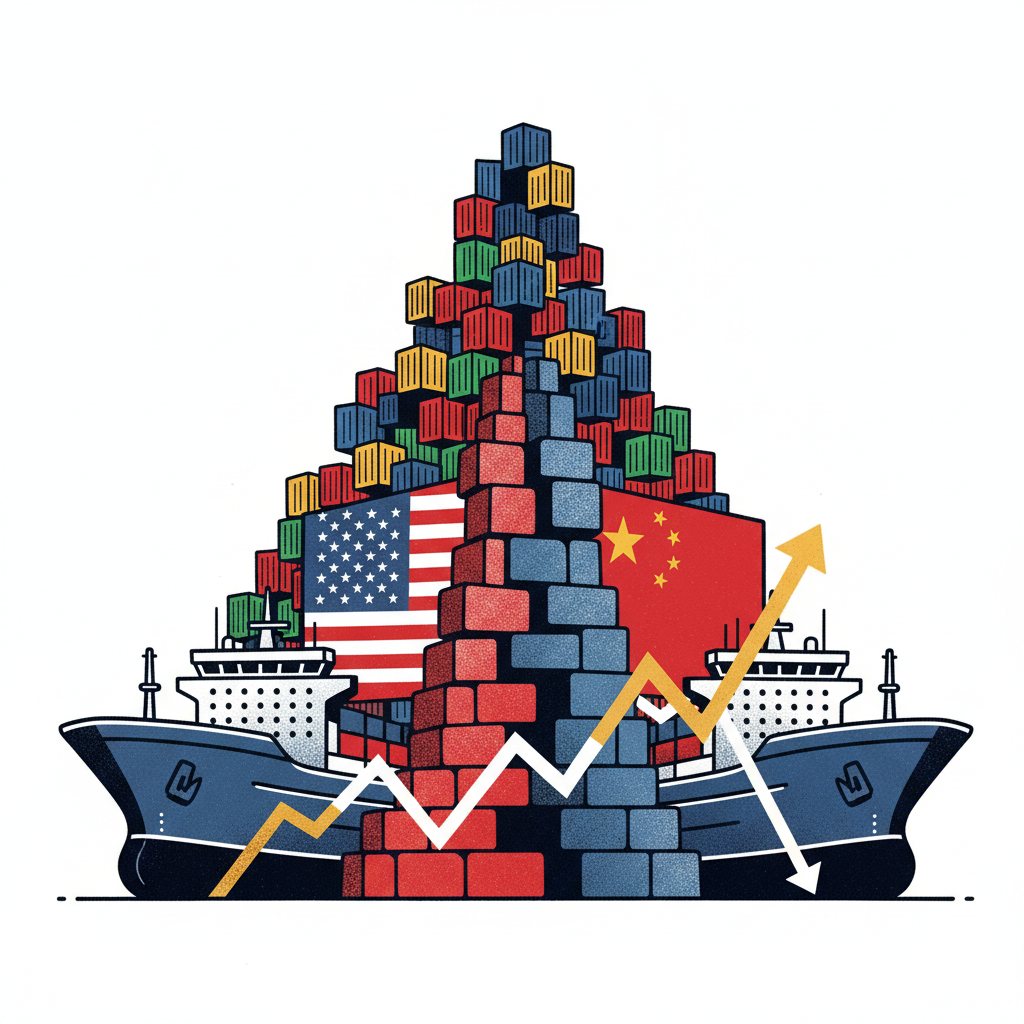
The trade conflict between the United States and China intensified significantly beginning in 2018, characterized by the imposition of tit-for-tat tariffs on hundreds of billions of dollars worth of goods. This escalation has been a sustained feature of geopolitical dynamics, with GeoGazet tracking "Eight Years of Escalating United States-China Trade War." The stated aims of the US were to address perceived unfair trade practices, intellectual property theft, and the trade deficit with China. These economic tensions are deeply intertwined with broader geopolitical competition, including technological rivalry and strategic influence in the Indo-Pacific.
Economic Impacts and Consequences
The primary economic consequence has been a restructuring of global trade flows. Tariffs made goods from China more expensive for American importers and vice versa, leading companies to seek alternative suppliers in countries such as Vietnam, Mexico, and Taiwan. This "diversification" or "decoupling" introduced new inefficiencies and costs, even if it mitigated direct tariff exposure for some entities. GeoGazet signals indicate "Trump’s "forever" tariffs are kicking in for the long haul – and US consumers are footing the bill," highlighting that the economic burden of tariffs is often passed onto consumers and businesses in the importing country, rather than being borne solely by the exporting nation.
Supply chains have also experienced substantial disruption and re-evaluation. Businesses adjusted sourcing strategies, leading to increased investment in other manufacturing hubs and accelerated nearshoring or reshoring efforts. GeoGazet monitoring has observed analyses, such as "Peter Navarro rips into China in White House report that is more about other countries aiding tariff avoidance," underscoring the complexities and continuous adaptations within the global supply chain to navigate tariff regimes and trade barriers. While these shifts provided resilience for some companies, they also introduced higher logistics costs and longer lead times in many sectors.
Limited Global Systemic Influence
Despite the persistent nature of the conflict and its high profile, the overall direct systemic influence on the global economy has been somewhat limited when viewed against the scale of major historical economic crises. GeoGazet currently assigns an "influence score" of 2/100 to the trade war, suggesting that while it remains a significant factor, it is not currently seen as a primary driver of global economic instability. This relatively low score reflects the adaptability of global markets and the sheer size and interconnectedness of the world economy, which can absorb shocks from even major bilateral trade disputes without collapsing. GeoGazet data shows "Tariffs & Trade" as a top connection by signal volume with 82 tracked signals, followed by "China" with 45 and "United States" with 17, indicating concentrated attention on specific aspects of the conflict among the "Total tracked events in GeoGazet graph: 100." However, this focused tracking does not translate into a widespread contagion across all economic indicators globally.
Historically, events such as the 2008 financial crisis or the Great Depression of the 1930s demonstrated a far more profound and immediate global systemic impact, characterized by widespread financial collapse, massive unemployment, and precipitous declines in global trade and GDP. The US-China trade war, while contributing to a marginal drag on global GDP growth and increasing inflation in specific sectors, has not triggered a comparable worldwide recession or systemic financial meltdown.
What to Watch For Next
Future developments hinge on political leadership in both the United States and China, particularly concerning the longevity and scope of existing tariffs. Continued geopolitical tensions could drive further technological decoupling and supply chain diversification, potentially creating more resilient but also more fragmented global economic systems. Observers should monitor negotiations for trade agreements, shifts in manufacturing investment, and the broader integration or disintegration of global technological standards.