Persistence of Trade Tensions
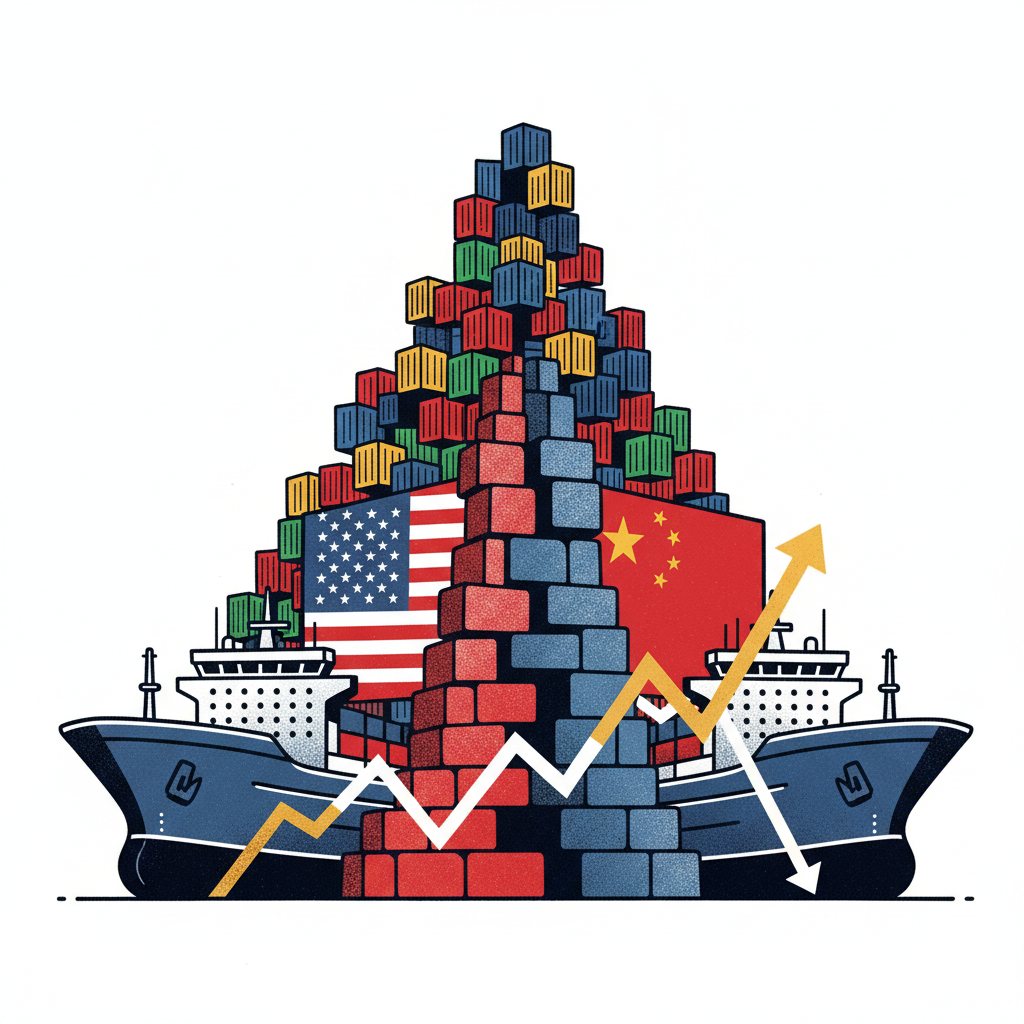
The initial phase of the US-China trade war involved the imposition of significant tariffs on hundreds of billions of dollars worth of goods by both nations, driven by US concerns over intellectual property theft, forced technology transfer, and trade imbalances. While a "Phase One" trade deal was signed in January 2020, it did not eliminate the bulk of the tariffs, nor did it fundamentally resolve the deeper structural issues. GeoGazet tracking reveals that "Tariffs & Trade" remains the most significant connection by signal volume with 81 tracked signals, indicating ongoing policy activity and discussion around trade barriers. The connections to "China" (38 tracked signals) and "United States" (14 tracked signals) further underscore the bilateral nature of these persistent issues. Despite these ongoing developments, the current influence score for the issue stands at 21/100, suggesting it is an active, but not singularly dominant, geopolitical driver amidst a broader array of global concerns.
Evolving Tariff Landscape
Recent signals confirm that tariffs remain a live policy instrument and a subject of legal and political debate. GeoGazet tracking indicates continued focus on the impact and legality of such measures:
- "Trump’s Replacement Tariffs Will Have Unintended Consequences for USMCA" points to the complex interplay of tariff policies, even those initially aimed at China, with other international trade agreements. This illustrates how tariff actions have ripple effects beyond their primary target.
- "Trump's Tariffs, Government Revenue, and the Cost of Living: The Case of Food and the Agricultural Tariff Exemptions" highlights the domestic economic ramifications of tariffs, prompting policy adjustments and debates over their impact on consumers and specific sectors.
- "US appeals court extends block on ruling against Trump's 10% global tariff" demonstrates ongoing legal challenges and administrative battles surrounding the implementation and reach of tariff policies.
These signals indicate that even past or proposed tariff actions continue to shape the trade environment, irrespective of a formal "truce." The total tracked events in the GeoGazet graph, numbering 100, reflect the complex and interconnected nature of global trade and geopolitical dynamics, where trade tensions are an enduring feature.
Broader Geopolitical Context
The US-China trade conflict has expanded beyond traditional tariffs into a broader strategic competition. This new phase encompasses technology export controls, particularly in critical sectors such as semiconductors, restrictions on investment, supply chain resilience initiatives, and competition over international standards. Historically, great power rivalries have often manifested in economic spheres; this current period echoes aspects of Cold War economic competition, albeit within a highly integrated global economy. The objective for the United States now extends to limiting China's technological advancement and reducing reliance on Chinese supply chains, framing trade policy as a component of national security strategy. China, in turn, is prioritizing domestic innovation and self-sufficiency.
What to Watch For Next
Observers should monitor several key areas. Upcoming US election cycles could introduce shifts in trade policy, potentially resurrecting or altering tariff regimes. Continued efforts by both nations to "de-risk" or "decouple" supply chains in strategic industries will be significant. Developments in international trade organizations, such as the World Trade Organization, and any new bilateral agreements or disputes will also signal the future trajectory of US-China economic relations.