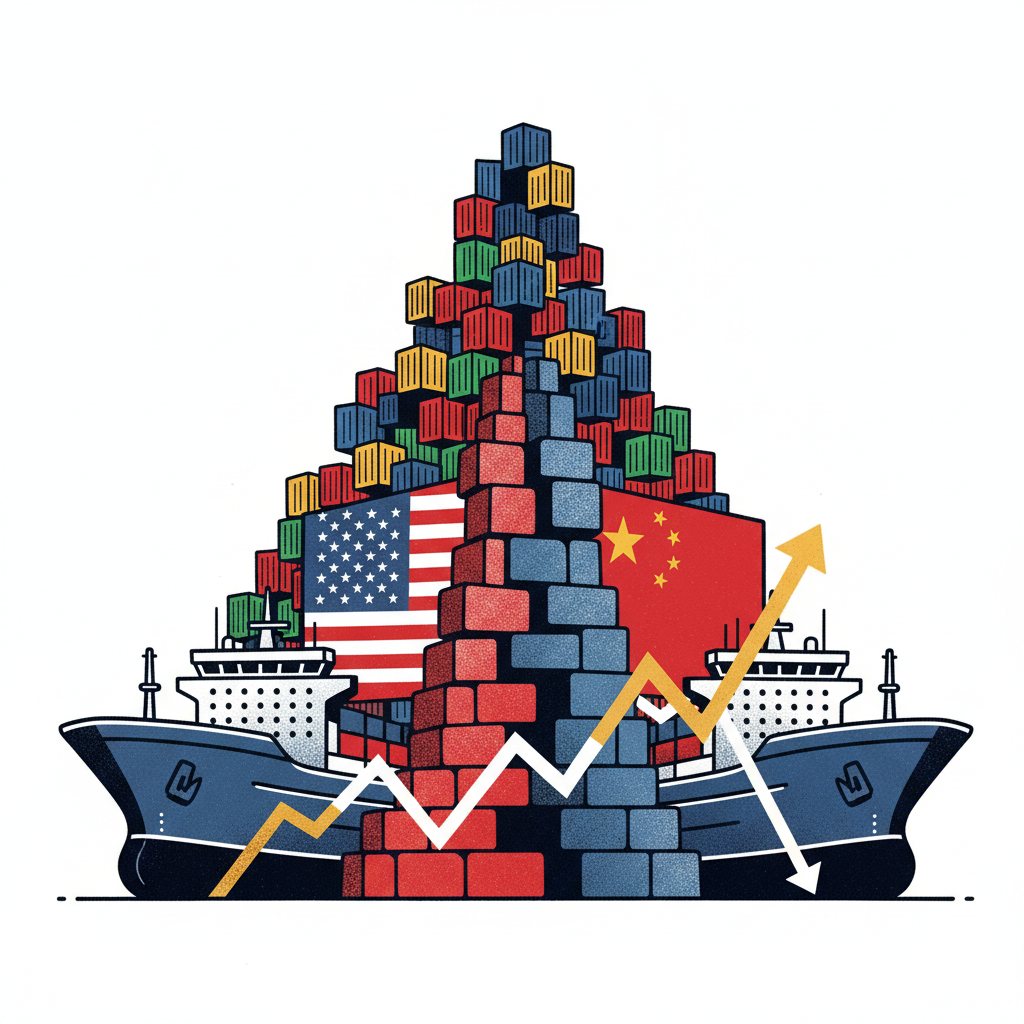
The Evolving Landscape of US-China Trade
The initial phase of the US-China trade war, characterized by the imposition of Section 301 tariffs under the Trump administration in 2018, marked a significant escalation. These measures aimed to address concerns over intellectual property theft, forced technology transfer, and other perceived unfair trade practices by China. While a "Phase One" trade deal in early 2020 temporarily de-escalated some tensions, many of the core tariffs remained in place. The current geopolitical situation sees the trade dynamic intertwined with broader strategic competition, including technology rivalry, supply chain resilience, and national security concerns, preventing a return to pre-2018 trade relations.
Current Indicators and Signal Analysis
Despite a shift in rhetoric, geopolitical intelligence indicates that the underlying mechanisms and potential for renewed trade friction are active. GeoGazet tracking registers a current influence score of 19/100 for the US-China trade relationship, suggesting it is a consistently monitored yet not always overtly escalating issue. Key connections by signal volume underscore its relevance: "Tariffs & Trade" accounts for 75 tracked signals, "China" for 42 signals, and "United States" for 11 signals, reflecting sustained analytical focus.
Recent signals confirm this ongoing activity. For instance, "US tariffs could return to previous levels if Section 301 probes succeed: Bessent" directly points to the latent potential for tariff re-escalation. This is further reinforced by the signal "Bessent: Tariffs Will Snap Back to 'Exactly Where They Were' Before Supreme Court's IEEPA Ruling," indicating that legal and policy frameworks for re-imposing tariffs are still active considerations. The presence of a signal like "Soumaya Keynes on the right way to fight a trade war" illustrates that strategic discussions about the nature and execution of trade conflicts remain pertinent among policymakers and analysts. With a total of 100 tracked events in the GeoGazet graph related to these dynamics, continuous monitoring is evident.
Historical Context and Future Trajectory
Historically, trade disputes between major powers are not uncommon, but the scale and strategic depth of the US-China trade war are particularly significant, reflecting a broader contest for global economic and technological leadership. The current state is more accurately described as a persistent, low-to-medium intensity trade friction rather than a definitive cessation of hostilities. While the peaks of tariff imposition from 2018-2019 represented a more acute phase, the structural issues that ignited the conflict remain largely unresolved.
What to watch for next includes the outcomes of ongoing Section 301 probes, which could trigger new or expanded tariffs. Additionally, policy shifts stemming from upcoming elections in either country, further developments in critical technology sectors like semiconductors, and broader geopolitical events impacting supply chains will all shape the future trajectory of the US-China trade dynamic.