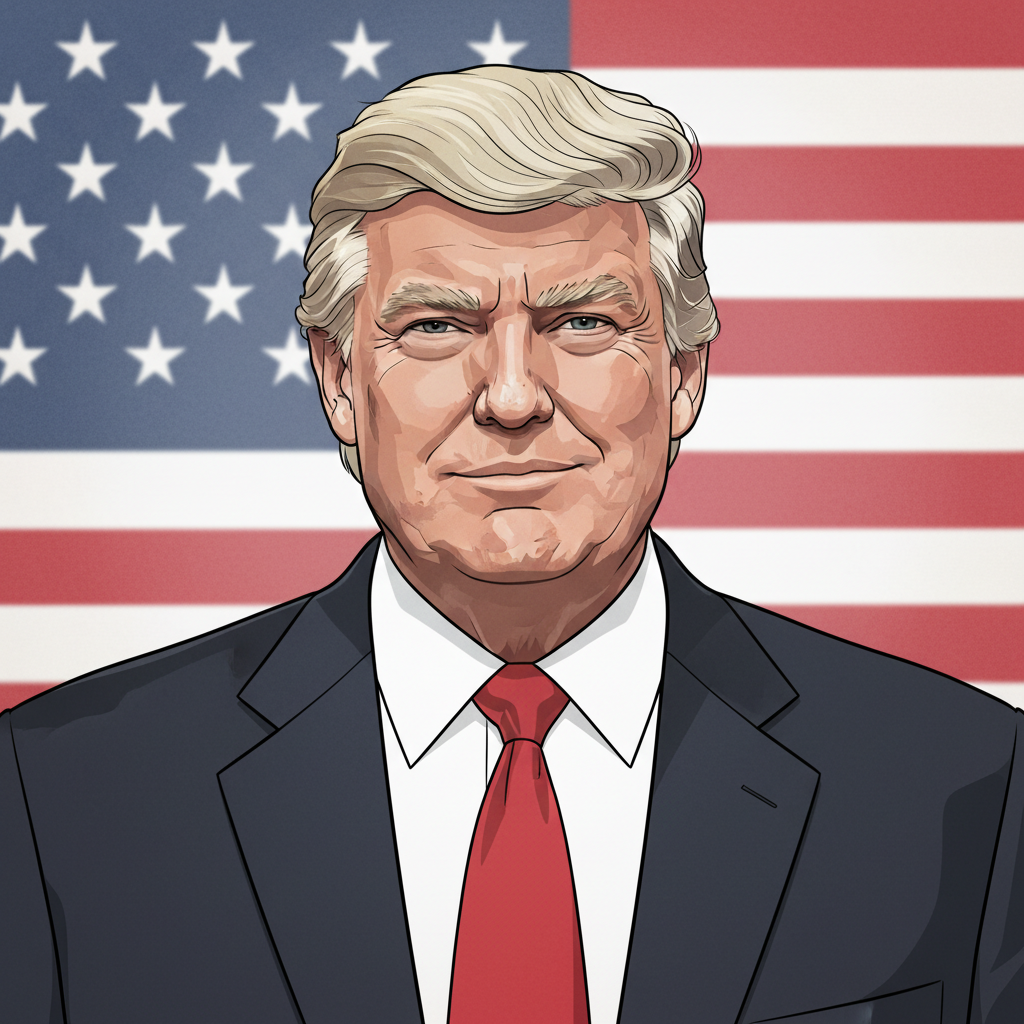
Donald Trump, the 45th President of the United States, maintains a substantial geopolitical footprint, evidenced by a current influence score of 100/100 according to GeoGazet tracking. His past and potential future policies continue to shape domestic economic strategy and international relations, with top connections by signal volume including the United States (18 tracked signals), Iran (16 tracked signals), and France (5 tracked signals). The total tracked events in the GeoGazet graph stand at 100, underscoring the breadth of his impact.
Domestic Economic Policies and Outcomes
Domestically, Trump’s administration pursued a strategy built on the Tax Cuts and Jobs Act of 2017, which significantly reduced corporate and individual income taxes. Proponents argued these cuts would stimulate investment and job creation, leading to increased economic growth. Deregulation across various sectors, particularly environmental and financial, was another cornerstone, intended to reduce business costs and spur activity. Unemployment reached historic lows during his term, and GDP saw consistent, albeit not unprecedented, growth prior to the COVID-19 pandemic. Wage growth also occurred, particularly for lower income brackets. However, these policies also led to a substantial increase in the national debt.
Trade and Geopolitical Economic Impact
Internationally, Trump’s "America First" agenda manifested in significant trade policy changes, including the imposition of tariffs on goods from China and other nations. These actions aimed to protect domestic industries but also introduced uncertainty into global supply chains and prompted retaliatory measures, impacting various economic sectors, including manufacturing and agriculture. The geopolitical dimension of his policies, particularly concerning nations like Iran, also held direct economic consequences. For instance, recent signals from GeoGazet tracking, such as "Iran war live: Trump says deal to be signed today; Tehran urges caution," illustrate how his foreign policy stances directly influence global markets, particularly oil prices and investor confidence, given the significant signal volume related to Iran. Similarly, the signal "Godlewski: ‘You betcha’ Tiffany sides with Trump on cutting healthcare, dragging U.S. into war with Iran" highlights how foreign policy decisions are perceived to intersect with domestic economic issues like healthcare costs and the potential for increased defense spending, creating market volatility.
Historical Context and Continued Relevance
Historically, Trump’s approach to trade represented a notable departure from decades of American policy favoring free trade agreements, reminiscent more of early 20th century protectionism than post World War II multilateralism. His policies generated both strong economic performance in some areas and increased instability in others. The question of his continued influence is pertinent, especially considering signals such as "As Trump turns 80, what's it really like to work as an octogenarian?", which underscores his sustained personal and political engagement and potential for future impact.
What to Watch Next
Future economic impact directly or indirectly linked to Donald Trump will likely revolve around the ongoing debate concerning fiscal policy, trade relations, and the geopolitical stability of regions like the Middle East. Any renewed political involvement would undoubtedly bring his characteristic economic and foreign policy approaches back into sharp focus, potentially influencing investor sentiment, international trade agreements, and domestic spending priorities. The interplay of his continued influence with evolving global dynamics remains a critical area for observation.