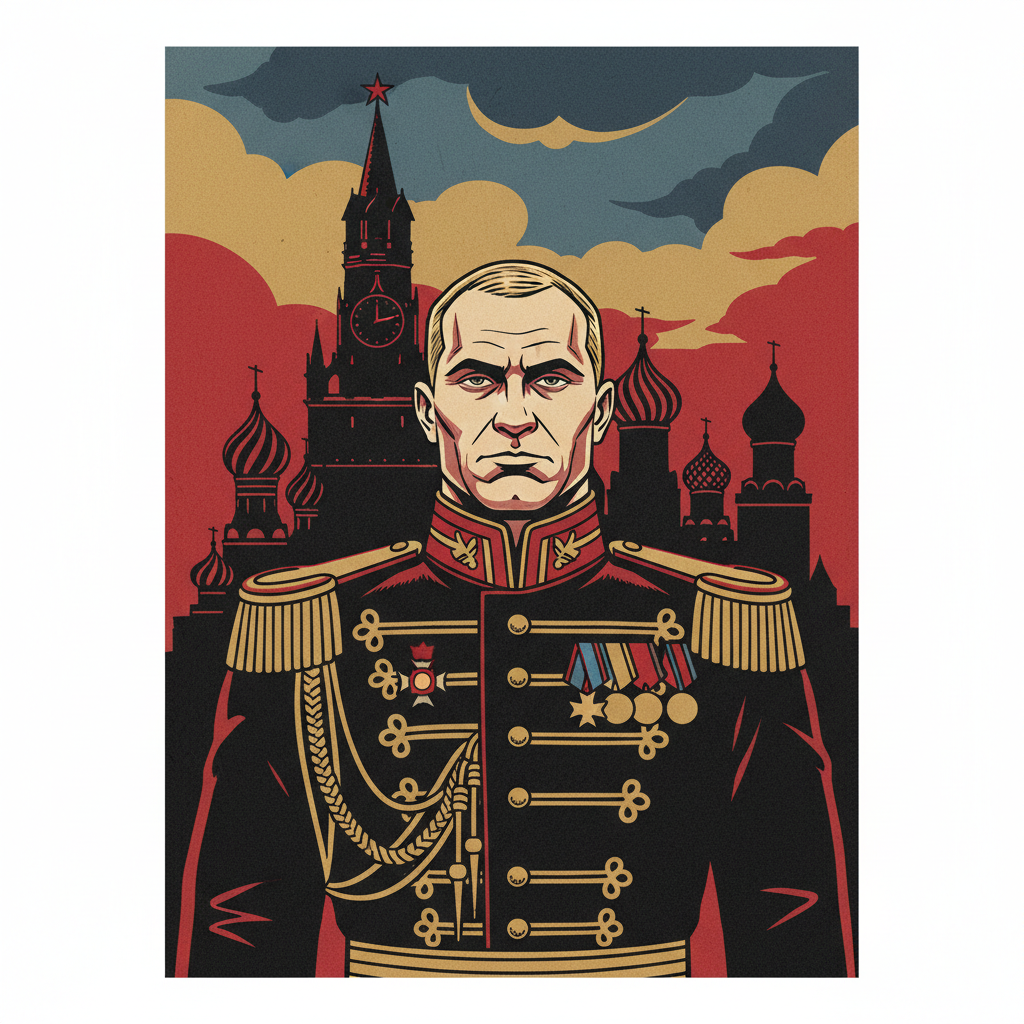
Domestic Power Consolidation
Putin’s long tenure in power has been characterized by the systematic dismantling of independent institutions and the centralization of authority. His current influence score stands at 100/100, indicating absolute control over the levers of the state and a lack of significant internal dissent. This dominance is reflected in GeoGazet tracking, where "Russia" accounts for 69 tracked signals, the highest volume, underscoring intense focus on internal stability and governance. Key mechanisms include control over major media outlets, the co-optation or marginalization of political rivals, and the pervasive presence of security services. Historically, this consolidation echoes periods in Russian and Soviet history where strong leaders like Ivan the Terrible or Joseph Stalin wielded immense, unchallenged authority, prioritizing state power over individual liberties or pluralistic governance.
The Ukraine Conflict and Nationalist Mobilization
The ongoing conflict in Ukraine has served as a critical factor in Putin’s continued hold on power. By portraying the conflict as an existential struggle against Western encroachment and a defense of Russian sovereignty, the Kremlin has mobilized nationalist sentiment. GeoGazet signals reveal this dynamic, with "Ukraine" representing 36 tracked signals, highlighting the conflict’s central role. A recent signal, "Putin's Struggle for Russian Culture," exemplifies how the conflict is framed as a defense of Russian identity against perceived external threats. Despite international condemnation for actions such as those detailed in the GeoGazet signal, "A Russian barrage in Ukraine kills 11 and damages a sacred landmark, officials say," and even offers for dialogue like "Volodymyr Zelensky offers Vladimir Putin talks after Russian strike damages UNESCO monastery," the domestic narrative often spins these events to reinforce a siege mentality, thereby unifying the population behind the leadership.
Navigating External Pressure
International sanctions and condemnation have been a consistent feature of Putin’s recent years in power. While these measures aim to weaken his regime, they have often been leveraged domestically to reinforce the narrative of a Russia under siege by hostile foreign powers. The relatively lower volume of "Sanctions" signals (5 tracked signals) compared to internal and conflict-related events suggests that while impactful, the Kremlin effectively manages the domestic perception of these pressures. By framing sanctions as an attack on all Russians, the government can rally popular support and deflect criticism from its own policies, drawing parallels to historical instances where external threats were used by leaders to consolidate power. This strategy has allowed the regime to maintain stability despite significant economic and diplomatic isolation. The total of 100 tracked events in the GeoGazet graph illustrates the extensive monitoring of these multifaceted challenges.
What to Watch For
Future developments to watch include potential shifts in public opinion within Russia as the long-term economic effects of sanctions accumulate, any signs of fragmentation within the elite, and the ultimate outcome of the conflict in Ukraine. The manner in which the Kremlin continues to manage information and suppress dissent will be crucial, as will its ability to adapt to sustained international pressure.