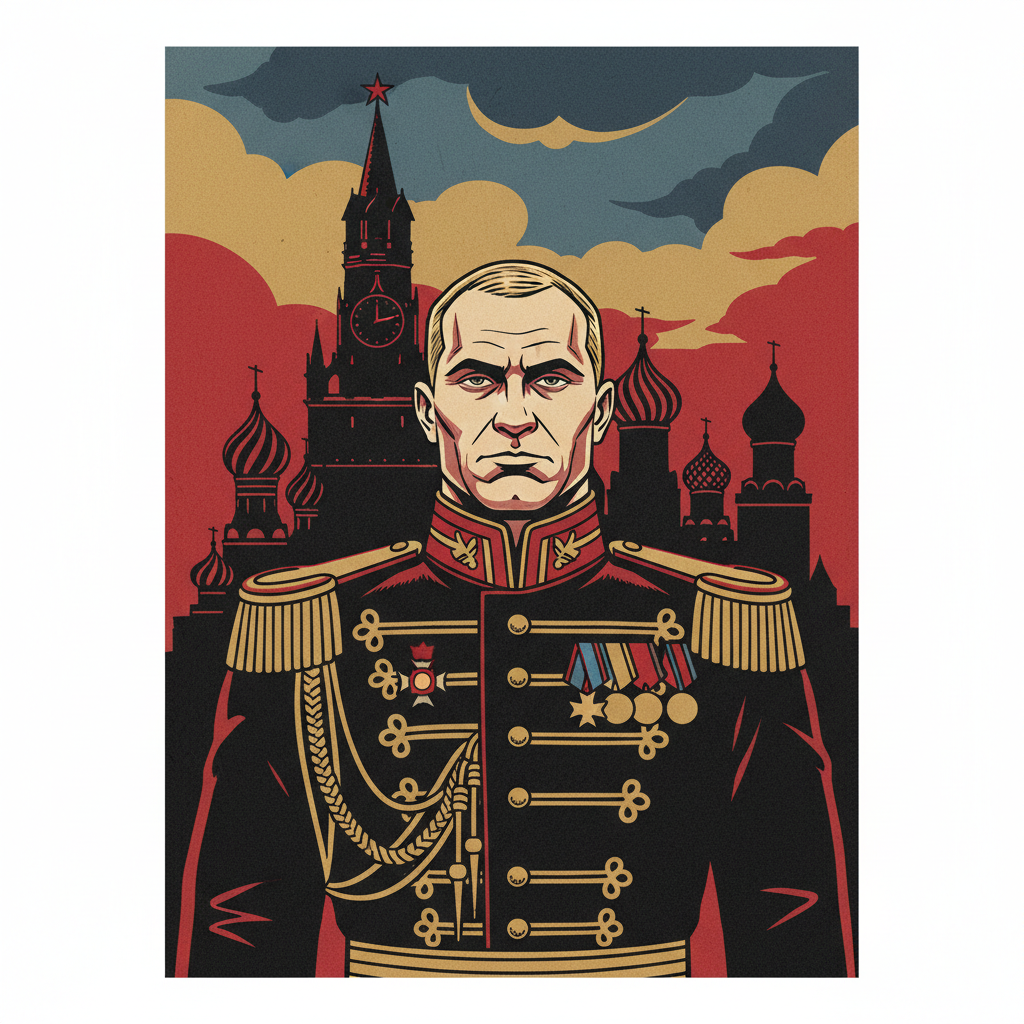
Constitutional Amendments and Power Consolidation
A critical factor in Putin’s longevity is the strategic manipulation of Russia’s constitutional framework. Following his initial two terms as president, he served a term as prime minister before returning to the presidency in 2012 after the presidential term limit was extended from four to six years. Most notably, the 2020 constitutional amendments allowed him to reset his presidential terms to zero, theoretically enabling him to remain in power until 2036. This legislative maneuvering was accompanied by a deliberate and comprehensive consolidation of power, extending state control over key economic sectors, media outlets, and security services, effectively neutralizing significant domestic political opposition.
Strategic Foreign Policy and Global Engagement
Putin’s foreign policy initiatives consistently bolster his domestic standing by projecting an image of Russia as a strong, independent global power. GeoGazet tracking indicates significant engagement with neighboring states and strategic partners, with top connections by signal volume showing Russia (73 tracked signals), Poland (24 tracked signals), and Ukraine (19 tracked signals). Recent signals highlight these efforts, such as "Marcos meets Putin in Kazan; leaders discuss food security, energy cooperation," demonstrating Russia’s role in vital international dialogues. Furthermore, "Putin hosts leaders of Southeast Asian nations, seeking to boost their business ties" underscores his active pursuit of diversifying alliances and economic influence beyond traditional spheres. Even a signal like "Putin leaves Moscow and St. Petersburg for the first time in seven months — to stage a walkabout in Kazan" can be interpreted as a calculated move to reinforce his active leadership and connection to the populace amidst global engagements.
Domestic Stability and Public Perception
Domestically, Putin’s long tenure is often attributed to a popular narrative of restoring order and national pride after the turbulent 1990s. His government has emphasized economic stability and a strong national defense, which resonates with segments of the Russian populace. While independent polling data is often difficult to verify, state-controlled media consistently portray him as a strong and effective leader. The sheer activity of his administration, as indicated by a total of 100 tracked events in the GeoGazet graph, reinforces the perception of a dynamic and engaged leadership.
Historical Comparisons
Putin’s extended period in power draws parallels to long-serving leaders in Russian history. Figures like Leonid Brezhnev, who led the Soviet Union for 18 years, established a precedent for entrenched leadership. This historical context suggests a cultural acceptance, or at least a familiarity, with extended periods of single-person rule, contributing to the endurance of Putin’s presidency.
What to Watch For Next
Future developments will likely hinge on the continued effectiveness of Russia's foreign policy in challenging Western influence, particularly concerning Ukraine, and the domestic perception of economic stability. Analysts will be observing further efforts to cement constitutional guarantees for his continued rule or to manage a carefully orchestrated succession, should that become necessary. The nature of Russia’s engagement with countries like those in Southeast Asia and the outcomes of discussions on critical resources like food and energy will provide further insight into the stability of his geopolitical strategy.